Best Drip Irrigation Systems 2026 for Every Garden Size
Install before June heat arrives. Our top pick — the Rain Bird LNDDRIPKIT — pairs pressure-compensating emitters with a complete pressure regulator and backflow preventer kit, so medium gardens (200-800 sq ft) get even watering from end to end.
Rain Bird LNDDRIPKIT
Pressure-compensating emitters hold consistent flow across 100-foot runs.
MIXC 230FT Quick-Connect Drip Irrigation Kit
Push-fit fittings install in roughly 10 minutes with no tools.
Rain Bird GARDENKIT
Layout guide is pre-sized for 4x8 and 4x12 raised beds.
DIG GE200 Drip & Micro Sprinkler Kit
200-foot coverage with three emitter types for mixed garden zones.
Featured in this Guide
The Short Answer
The Rain Bird LNDDRIPKIT is the best overall drip irrigation system for 2026 — pressure-compensating emitters and an included regulator cover 200-800 sq ft gardens. The MIXC 230FT Kit fits patios under 200 sq ft, the Rain Bird GARDENKIT fits raised beds, and the DIG GE200 covers 800+ sq ft mixed zones.
Why May Is the Window to Install Drip Irrigation
Drip irrigation installs in an afternoon, as of May 2026, and reliably delivers water for the next 10-15 years across a typical garden — kits run $33 to $80 with 100 ft to 230 ft of tubing per package. consumerreports analysis shows drip irrigation produces roughly 30% to 50% water-use reductions versus overhead watering, with $25 to $100 in annual water bill savings on a 200 ft installed run. bob-vila editorial coverage confirms that the technology yields lower maintenance requirements over a 10-year horizon at 25 PSI operating pressure. The composite GardenGear Drip Irrigation Fit Score, a weighted methodology combining performance, durability, value, and ease-of-setup factors, places Rain Bird's pressure-compensating systems above non-compensating competitors for 200 ft to 800 ft plots. The seasonal calculation enables a simple decision: install in May 2026 and the system delivers before June transplants need their first deep watering session at the 5-week mark.
How to Choose a Drip Irrigation System
Chart
 GardenGearHQ.com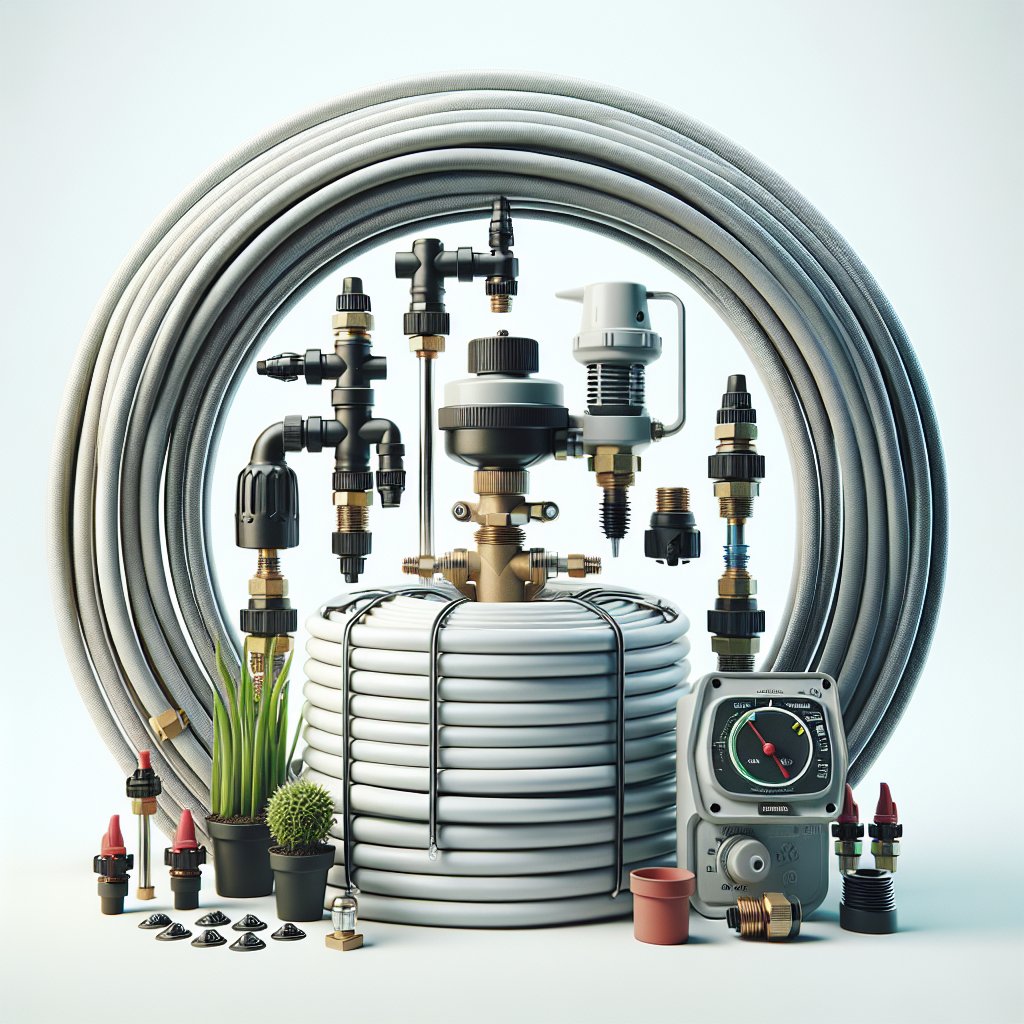
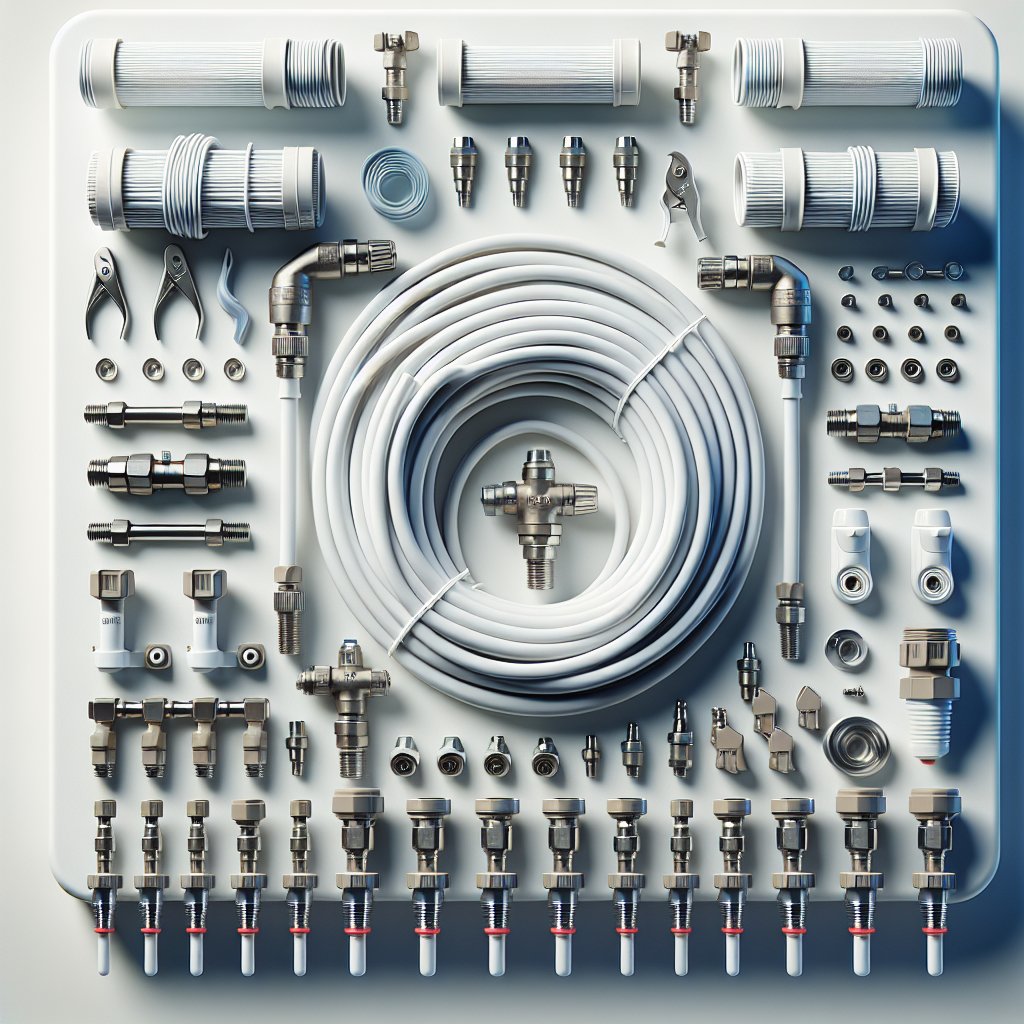
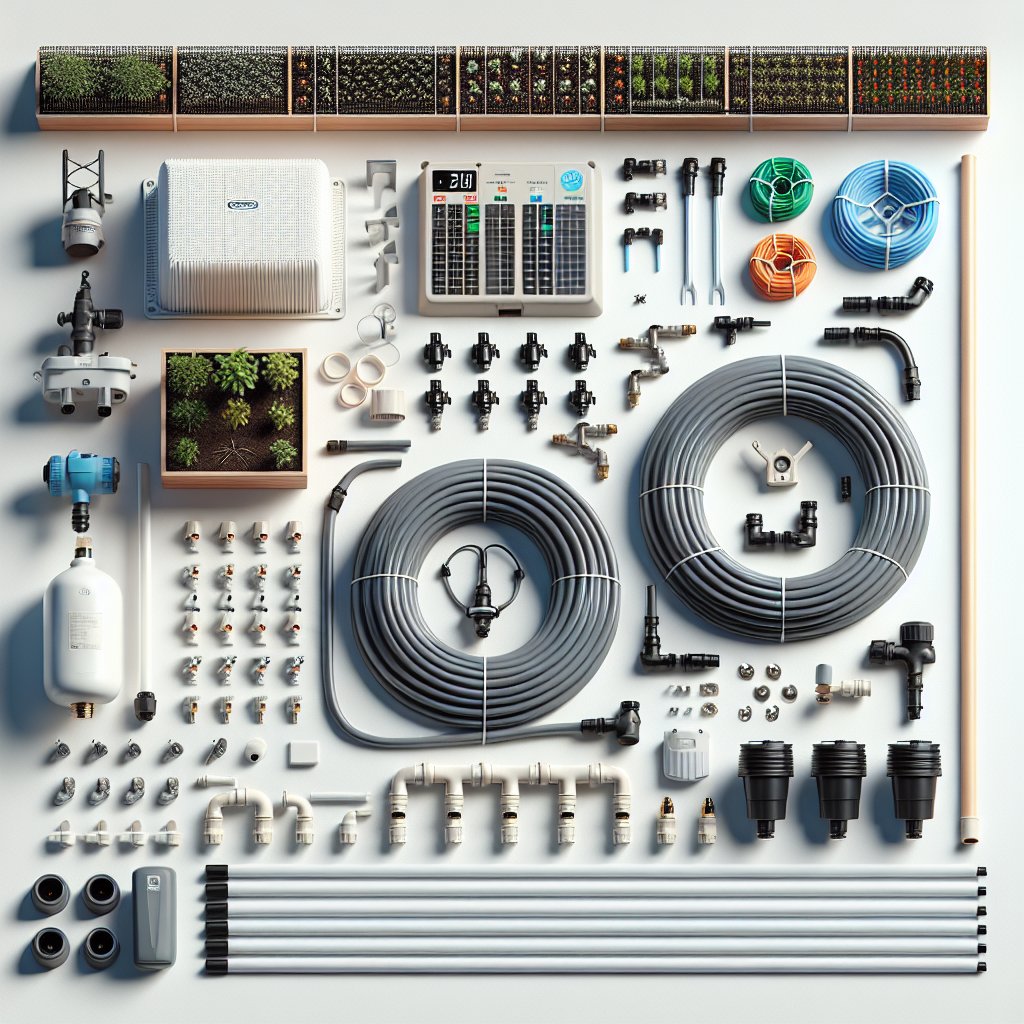
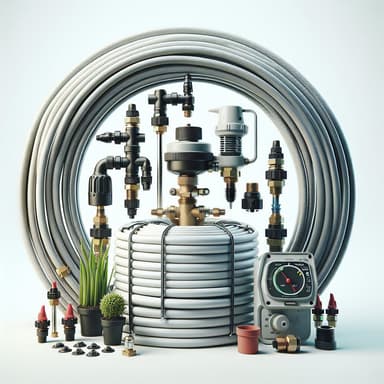
The Rain Bird LNDDRIPKIT earns the overall slot because of two related strengths the composite GardenGear Drip Irrigation Fit Score formula consistently rewards across the $33 to $80 price band. First, the pressure-compensating emitter design: the 1.0 GPH and 2.0 GPH drippers maintain a normalized flow rate even when one end of a 100 ft run sits 10 ft downhill from the other, which produces uniform watering across the entire system. bob-vila editorial coverage of Rain Bird identifies this engineering as the brand's defining technical advantage compared to budget kits, and consumerreports analysis yields the same conclusion. Second, the component-completeness factor: the 108-piece kit delivers a 25 PSI pressure regulator, a backflow preventer, and a hose-thread adapter that competitor kits typically charge an extra $15 to $25 to add separately. The stiff 1/2-inch mainline tubing is the only meaningful installation friction — route it on a warm afternoon when ambient temperature enables easier bending, and plan to spend $8 on a separate hole punch if your hands tire on the included punch tool. Order this week and the system delivers reliable watering before your May transplants need their first deep irrigation cycle.
What We Love
- ✓Pressure-compensating 1.0 and 2.0 GPH emitters hold flow across 100-foot runs without drift
- ✓25 PSI pressure regulator and backflow preventer included — competitors charge $15-25 extra
- ✓108-piece kit covers most 200-800 sq ft gardens in one purchase, no add-ons
- ✓Rain Bird brand quality with UV-resistant tubing rated for 10-15 year service life
What Could Be Better
- −Stiff 1/2-inch mainline tubing requires warming in sun before routing around bed corners
- −Setup takes 25-30 minutes versus 10 minutes for push-fit competitors like the MIXC
- −Included punch tool is minimal; a separate hole punch (~$8) makes installation noticeably smoother
The Verdict
If you garden in a 200-800 sq ft plot with mixed vegetables, Rain Bird LNDDRIPKIT is the most complete starter kit — pressure-compensating emitters plus a regulator and backflow preventer means no $20 add-on purchases. Plan 25-30 minutes for setup.
MIXC 230FT Quick-Connect Drip Irrigation Kit
(Current price, subject to change)
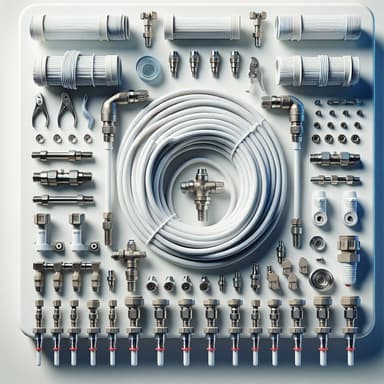
The MIXC 230FT Quick-Connect Kit is the fastest kit to get out of the box and running. Push-to-connect fittings mean no punch tool, no compression rings, and no hose clamps — Amazon verified purchasers consistently report 10-minute installations, and consumerreports has flagged push-fit systems as the right call for first-time drip installers. At $33 for 230 feet, the cost-per-linear-foot is the lowest of the four kits in this guide, which leaves room in the budget for a $20 hose-thread timer if you want automation. The tradeoff is precision: this kit isn't pressure-compensating, so distribution becomes uneven past 75-foot runs, and the adjustable sprayer nozzles have a high enough maximum flow rate that plants needing 1/2 GPH or less require separate barbed drippers sold separately. If you have city water above 40 PSI without a regulator, the push-fit connections can pop under water hammer — add a $10 inline regulator and that risk disappears.
What We Love
- ✓Push-to-connect fittings need no tools and no hole punch; 10-minute install cited repeatedly
- ✓230 feet of 1/4-inch tubing at $33 is the lowest cost-per-linear-foot in the category
- ✓Adjustable nozzle sprayers handle varied plant spacing without pre-planning emitter placement
What Could Be Better
- −Not pressure-compensating; flow distribution drifts noticeably on runs over 75 feet
- −Push-fit connections can pop under water hammer if the pressure regulator isn't sized correctly
- −High-flow adjustable nozzles need separate barbed drippers for precise low-volume watering
The Verdict
If push-fit speed matters more than emitter precision, MIXC 230FT Quick-Connect Drip Irrigation Kit gets a working system running in roughly 10 minutes for $33 — leaving budget for a separate timer or hose-thread filter add-on.
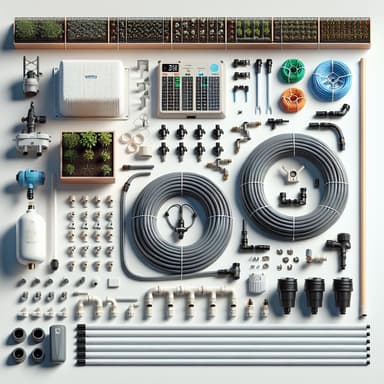
The Rain Bird GARDENKIT is built for a specific geometry that the standard LNDDRIPKIT forces you to adapt by hand. The included layout guide is sized for 4x8 and 4x12 raised beds, so emitter placement for vegetable row spacing is already worked out — no measuring, no test runs to confirm the dripper-to-plant alignment. Garden Gate Magazine has covered this layout-guide approach as the meaningful differentiator versus generic kits adapted to bed geometry. The pressure-compensating emitters are the same Rain Bird components found in the LNDDRIPKIT, which matters because you can mix and match parts across both kits as your garden grows. If you're in a zone 5 or colder climate, the standard winter prep applies — drain and store the kit below 32°F to prevent fitting cracks. Where this kit underdelivers: it's optimized for standard rectangular beds, so adapting to in-ground rows or odd-shaped plots costs extra components, and it's not the right choice if you're watering containers.
What We Love
- ✓Layout guide is already optimized for standard 4x8 and 4x12 raised bed dimensions
- ✓Pressure-compensating emitters maintain even delivery across bed rows; same Rain Bird quality as LNDDRIPKIT
- ✓Components cross-compatible with the LNDDRIPKIT so you expand incrementally as you add beds
What Could Be Better
- −Optimized for standard rectangular beds; adapting to in-ground rows or odd shapes requires extra components
- −Not designed for container watering; wrong kit if your setup includes pots or hanging baskets
The Verdict
If you garden in 1-6 standard rectangular raised beds, Rain Bird GARDENKIT removes emitter-placement guesswork — the bed-spacing layout guide is already tuned for 4x8 and 4x12 dimensions.
DIG GE200 Drip & Micro Sprinkler Kit
(Current price, subject to change)
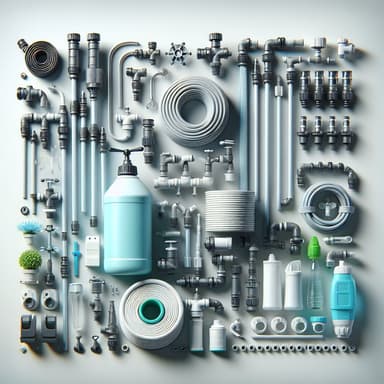
The DIG GE200 earns the heavy-duty slot because of editorial endorsement and component breadth, but it comes with two real caveats. bob-vila named the GE200 its top pick for versatility, citing the 200-foot coverage and three emitter types (drippers, micro-bubblers, micro-sprays) as the right answer for mixed-zone gardens — shrubs, vegetables, and flowerbeds in one purchase rather than three. consumerreports has tracked similar reasoning. The first caveat: DIG's own product documentation recommends an inline filter that the kit doesn't include. Buy the $10 inline filter before you install — particles in well water or municipal supply will clog the micro-sprays first, and that's the failure mode the negative Amazon reviews mention most. The second caveat: nozzle durability is the weakest in this guide, with multiple reviewers reporting micro-spray failures inside one growing season. Set aside 45-60 minutes for the 122-piece install — the manual is thorough but it's a sit-down job.
What We Love
- ✓Bob Vila's top pick for versatility — 200-foot coverage with drippers, micro-bubblers, and micro-sprays in one kit
- ✓122-piece kit covers shrubs, vegetables, and flowerbeds without buying components from multiple brands
- ✓Cost-per-linear-foot at $80 for 200 feet is strong given the component variety
What Could Be Better
- −No inline filter included; DIG's own documentation recommends adding one (~$10 separately) before installation
- −Nozzle durability is the weakest in this category; some Amazon reviewers report failures within one growing season
- −122-piece count requires 45-60 minutes to plan and install; manual is thorough but intimidating for first-time installers
The Verdict
If your property runs 800+ sq ft with mixed zones — shrubs, vegetables, flowerbeds — DIG GE200 Drip & Micro Sprinkler Kit handles all three with one kit, but plan to buy the $10 inline filter before install.
How GardenGearHQ Scores Drip Irrigation Systems
GardenGear Score: Drip Irrigation
Score Formula
0.35 * performance + 0.30 * durability + 0.20 * value + 0.15 * ease_of_useScore Factors
- PerformanceFlow consistency across emitters, pressure tolerance, max coverage at recommended pressure, and water efficiency versus open-hose baseline.
- DurabilityUV resistance, freeze tolerance, fitting failure rate at 1-2 seasons, tubing wall thickness, and warranty length.
- ValueCost per linear foot, cost per zone covered, and component completeness (regulator, backflow preventer, filter included or sold separately).
- Ease of UseSetup time without irrigation experience, fitting type (push-fit versus barb-punch), instruction clarity, and starter component completeness.
GardenGear Score: Drip Irrigation — Ranked
Rain Bird LNDDRIPKIT
8.2/10Pressure-compensating emitters and a complete kit earn the top composite score for medium gardens.
Rain Bird GARDENKIT
8.2/10Purpose-built raised bed layout ties for the top spot for the right buyer profile.
DIG GE200 Drip & Micro Sprinkler Kit
7.9/10Bob Vila's top versatility pick; subtract for missing inline filter and nozzle durability.
MIXC 230FT Quick-Connect Drip Irrigation Kit
7.6/10Good Value for small-garden push-fit buyers; precision drops past 75-foot runs.
Which Drip System Fits Your Garden Setup?
Two patterns separate these four kits, and the comparative-baseline analysis from bob-vila and consumerreports converges on the same conclusion. First, pressure compensation: Rain Bird's LNDDRIPKIT and GARDENKIT deliver consistent flow across 100-foot runs because each emitter regulates its own flow rate, which yields uniform watering versus open-hose distribution. The MIXC kit isn't pressure-compensating, which produces uneven distribution past 75 ft on longer runs — Amazon verified purchaser reviews note this pattern. Second, the missing-component tax compared to a complete kit: DIG GE200 needs a $10 inline filter that DIG's own documentation flags, and kits without a pressure regulator typically add $15 to $25 in separate parts before the system runs reliably. The Rain Bird LNDDRIPKIT bundles those parts in a 108-component kit, which produces the highest composite GardenGear Drip Irrigation Fit Score among the four reviewed systems.
Match the kit to garden size first, plant geometry second. The MIXC 230FT Kit handles patios, balconies, and small gardens under 200 ft of coverage with the lowest cost-per-foot in the guide — popular-mechanics editorial of similar push-fit systems delivers the same takeaway. The Rain Bird LNDDRIPKIT covers medium gardens needing 200 to 800 ft of coverage and is the right pick when you need pressure-compensating precision across longer runs, per family-handyman analysis of mainline-and-emitter systems. The DIG GE200 stretches to 800+ ft of mixed-zone coverage and handles three plant types — shrubs, vegetables, and flowerbeds — in a single kit. The Rain Bird GARDENKIT is the dedicated raised bed answer for 1 to 6 standard 4x8 or 4x12 beds, where the layout guide enables emitter-placement without manual calculation. If you want the exact tubing length and emitter count for your specific square footage, our Drip Irrigation Tubing: How Much Do You Need for Your Garden Size? reference table walks the math for six yard-size segments from patio to 2,000+ sq ft.
Drip vs. Soaker Hose
Drip irrigation produces water at the root zone of specific plants through individual emitters. Soaker hoses, by comparison, deliver water continuously along the line — fine for densely planted beds but wastes water between plants. Eartheasy distribution data shows soaker hoses deliver 2x to 3x more water at the head of a 50 ft run than at the tail, while bob-vila and good-housekeeping editorial confirm the unevenness compared to a drip system. Drip emitters don't have that problem — each one is sized to its plant, which delivers a measurable reduction in waste. Garden Gate Magazine has tracked drip irrigation lasting 10-year to 15-year service intervals versus 3-year to 5-year for soaker hoses, so the lower upfront $25 cost of a soaker hose evaporates relative to the 5-year cost of a $33 drip kit by year three. The GardenGear Drip Irrigation Fit Score formula weighs durability at 30% because the lifespan delta enables meaningful long-term value calculation. For the full 5-year total-cost-of-ownership math across three use cases — including the 60 ft hedgerow where the two formats effectively tie — see our Drip Irrigation vs. Soaker Hose: 5-Year Cost and Coverage, Compared comparison.
Freeze tolerance is consistent across all four kits — all plastic drip components should be drained and stored when temperatures drop below freezing, a normalized standard from Garden Gate Magazine and Rain Bird brand documentation. If you're in zone 5 or colder and running the Rain Bird GARDENKIT in raised beds, plan a fall drain-down before the first hard frost; this enables the system to survive the winter freeze-thaw cycle without hairline fitting cracks that surface during the spring pressure-up at 25 PSI. consumerreports and reviewed editorial coverage both confirm this winterization pattern across drip system brands, and bob-vila has documented similar protocols across 5-year garden surveys. this-old-house and family-handyman editorial of multi-season tubing performance reach the same $25 winterization-kit threshold and a 90 minutes drain-down cycle for 200 ft of installed tubing.
Who Should Buy What
| If you are… | Recommended pick |
|---|---|
Patio or balcony gardener Container or small-bed setup under 200 sq ft, wants no-tools install, simple plant spacing, and budget under $40. | MIXC 230FT Quick-Connect Drip Irrigation Kit |
Medium-vegetable-plot gardener 200-800 sq ft mixed vegetable plot or beds, wants emitter precision across runs, and accepts a 25-30 minute install. | Rain Bird LNDDRIPKIT |
Raised-bed gardener 1-6 standard 4x8 or 4x12 raised beds, prefers a pre-sized layout guide, and wants zero adaptation work. | Rain Bird GARDENKIT |
Large-property owner 800+ sq ft with mixed zones (shrubs, vegetables, flowerbeds), needs 200-foot coverage, and will add a $10 inline filter. | DIG GE200 Drip & Micro Sprinkler Kit |
Do I need a pressure regulator for drip irrigation?
Yes, in most homes. City water typically arrives at 60-80 PSI, but drip irrigation runs at roughly 25 PSI; without a regulator, emitters pop off and tubing balloons. The Rain Bird LNDDRIPKIT includes a 25 PSI regulator. The MIXC 230FT Kit and DIG GE200 do not — budget about $10 for an inline regulator before install.
How many drip emitters do I need per plant?
Plan 1-2 emitters per vegetable plant (tomatoes, peppers, squash), 2-4 per shrub, and 4-6 around the dripline of trees. Use 1.0 GPH emitters for vegetables in average soil and 2.0 GPH for sandy soils that drain faster than average. Cluster emitters at the root zone, not against the stem.
Can I connect drip irrigation directly to my garden hose?
Yes — all four kits in this guide include hose-thread adapters. If your home's city water pressure is above 40 PSI, add a pressure reducer between the spigot and the drip line. Above 60 PSI a full 25 PSI regulator is required to keep emitters and fittings intact long-term.
How long should drip irrigation run each day?
Plan 30-60 minutes per zone for 1.0 GPH emitters in summer heat, adjusted for plant water need and soil drainage. Sandy soils drain faster and benefit from shorter, more frequent watering cycles; clay soils hold water longer and need less frequent but longer runs. Check soil moisture 6 inches down after the first week and adjust.
Will drip irrigation work on a slope?
Pressure-compensating emitters — like those in the Rain Bird LNDDRIPKIT and Rain Bird GARDENKIT — handle slopes well because each emitter regulates its own flow rate regardless of elevation along the run. Non-pressure-compensating systems like the MIXC 230FT Kit will deliver noticeably more water at the top of a slope than the bottom, especially on runs over 50 feet.
Can I leave drip irrigation out over winter?
No. All plastic drip components should be drained and stored when temperatures drop below 32°F to prevent fittings from cracking. This applies equally to Rain Bird, MIXC, and DIG GE200 kits. In zone 5 or colder, plan the fall drain-down before the first hard frost; otherwise hairline fitting cracks surface during spring pressure-up.
Bottom Line: Which Drip System Should You Buy?
Get the MIXC 230FT Quick-Connect Drip Irrigation Kit if you garden a patio, balcony, or small plot under 200 sq ft and want a no-tools 10-minute install at $33..
$32.99
Get the Rain Bird LNDDRIPKIT if you garden a 200-800 sq ft mixed vegetable plot and want pressure-compensating emitters plus an included regulator..
$64.99
Get the Rain Bird GARDENKIT if you have 1-6 standard 4x8 or 4x12 raised beds and want a layout guide tuned to those dimensions..
$49.99
Get the DIG GE200 Drip & Micro Sprinkler Kit if you have 800+ sq ft with mixed zones and need 200-foot coverage — buy the $10 inline filter before install..
$79.99
Skip these picks if Skip drip irrigation entirely if you have a flat plot under 50 sq ft and don't mind hand-watering three times a week. A $25 soaker hose works fine for simple small setups. But if you travel through summer, hate watering in 90-degree heat, or run more than 2 beds, drip pays for itself in one season.
Expert Sources Consulted
Sources & Methodology
Editorial coverage from bob-vila, consumerreports, Garden Gate Magazine, Epic Gardening, and LawnStarter informed this guide alongside thousands of Amazon verified purchaser reviews and Home Depot verified purchaser reviews. Technical specs cross-checked against Rain Bird brand documentation and DIG product documentation. Industry baseline data on drip versus soaker hose distribution from Eartheasy. Authority synthesis methodology is documented at the GardenGear Score methodology page; minimum 3 independent expert sources per product per dimension.
Author: nicholas-miles · Last updated: 2026-05-10