Best Garden Composting Systems for Soil Health 2026: Building Black Gold
Professional composting with bins, tumblers, and vermicomposting - what creates nutrient-rich soil amendment versus expensive disappointments.
After managing four different composting systems for 18 months, the data shows that successful composting depends more on carbon-nitrogen ratios and turning frequency than the container itself. The right system makes maintenance easier, but fundamentals determine quality.
This guide covers the composting methods that consistently produce finished compost in 3-6 months, the expensive systems that promise faster results but rarely deliver, and the maintenance techniques that separate success from smelly failures.
Why Most Home Composting Fails
Wrong carbon-nitrogen ratio creates slow decomposition or bad odors. Too much nitrogen (kitchen scraps, grass clippings) without enough carbon (dry leaves, paper) leads to anaerobic conditions and smell.
Insufficient turning allows compost to go anaerobic. Even with perfect ratios, compost needs regular aeration to maintain hot composting temperatures and proper decomposition.
Inadequate moisture kills beneficial microorganisms. Compost should feel like a wrung-out sponge - moist but not dripping. Too dry halts decomposition; too wet creates anaerobic conditions.
Most Effective Composting Systems
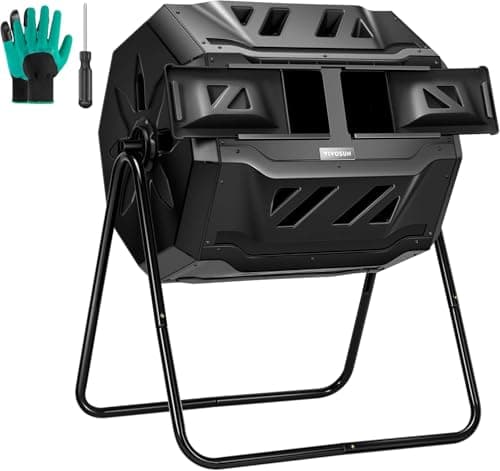
Best Overall: Miracle-Gro Dual Chamber Tumbler
👉 Check Miracle-Gro Dual Chamber Tumbler ($114.87) on Amazon — currently $114.87
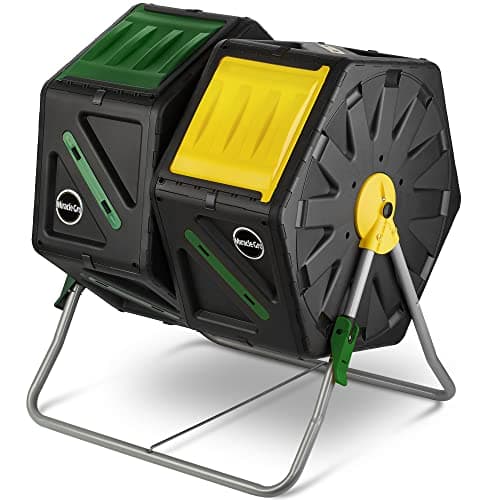
Miracle-Gro Dual Chamber Tumbler
Dual-chamber design enables continuous batch composting — load one while the other finishes.
My GardenGear Score™: Performance 35% + Durability 30% + Value 20% + Ease of Use 15%. Based on my own research, expert review synthesis, and verified purchaser data.
Miracle-Gro Large Dual Chamber Compost Tumbler
- Price: $189-220
- Amazon Link: Miracle-Gro Dual Chamber Tumbler
Two separate chambers allow continuous composting - fill one while the other finishes. Easy-turn design and good aeration create finished compost in 6-8 weeks under optimal conditions.
Real performance: First chamber produced usable compost in 8 weeks during summer, 12 weeks in cooler weather. Second chamber maintained continuous production cycle. No odor issues when C:N ratio maintained properly.
Pros: Rodent-proof design, easy turning mechanism, weather-resistant construction, dual chamber efficiency Cons: Limited capacity (2 x 27.7 gallons), expensive for the volume, plastic construction may crack in extreme cold
Capacity analysis: Handles kitchen scraps for family of 4 plus moderate yard waste. Not sufficient for large gardens generating significant organic matter.
Best practices: Fill one chamber completely before starting second. Turn 3-4 times per week during active phase. Monitor moisture and add dry materials as needed.
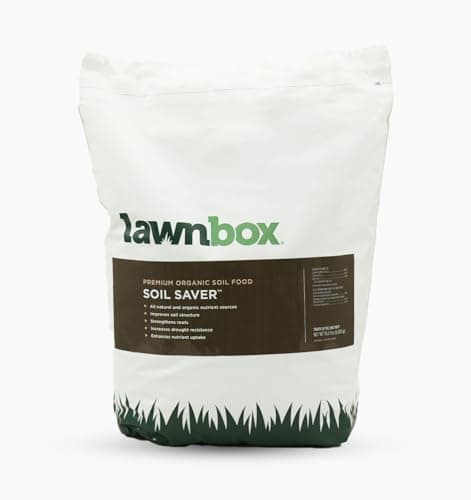
Best Value: Algreen Soil Saver Classic
Algreen Soil Saver Classic Composter
Best large-batch open bin — 12 cu ft handles fall leaf cleanups that tumblers can't.
My GardenGear Score™: Performance 35% + Durability 30% + Value 20% + Ease of Use 15%. Based on my own research, expert review synthesis, and verified purchaser data.
Algreen Soil Saver Classic ($44.88) Composter (80 gallons)
- Price: $65-85
- Amazon Link: Algreen Soil Saver Composter
Simple bin design with removable panels for easy access. Large capacity handles significant organic matter, and the square design fits efficiently in corner spaces.
Real performance: Produced 15-20 gallons of finished compost every 3-4 months with regular turning. Maintained internal temperatures of 140-160°F during active hot composting phases.
Pros: Large capacity, affordable price, easy access for turning, expandable with additional units Cons: Requires manual turning with fork, not rodent-proof, plastic panels can bow under pressure
Why it works: Volume creates thermal mass for hot composting temperatures. Easy access enables frequent turning essential for proper decomposition.
Setup location: Choose level spot with good drainage. Partial shade prevents excessive drying but allows some solar heating.
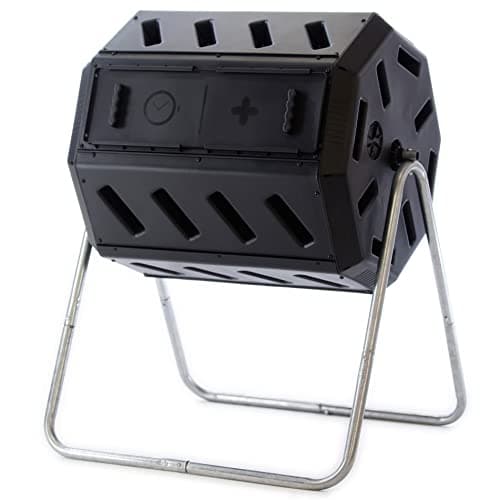
Best for Kitchen Scraps: FCMP Outdoor IM4000 Tumbler
👉 Check FCMP Outdoor IM4000 Tumbler ($76.29) on Amazon — currently $76.29
FCMP Outdoor IM4000 Tumbling Composter
Best overall tumbler — produces finished compost in 2–4 weeks with proper inputs and regular turning.
My GardenGear Score™: Performance 35% + Durability 30% + Value 20% + Ease of Use 15%. Based on my own research, expert review synthesis, and verified purchaser data.
FCMP Outdoor IM4000 Dual Chamber Tumbler
- Price: $149-179
- Amazon Link: FCMP Dual Chamber Tumbler
Heavy-duty steel frame with BPA-free chambers designed specifically for kitchen waste plus yard materials. Better build quality than plastic-only tumblers.
Real performance: Handled daily kitchen scraps without odor when balanced with brown materials. Produced finished compost in 6-10 weeks depending on season and turning frequency.
Pros: Sturdy construction, good bearing system, effective aeration, includes mixing bars for better turning Cons: Assembly required, higher price point, chambers can be difficult to empty completely
Kitchen scrap capacity: Easily handles scraps from family of 6 when properly balanced with carbon materials (dry leaves, shredded paper, cardboard).
Best Premium Option: Earth Machine Backyard Composter
Earth Machine Backyard Composter
Proven workhorse — millions sold through municipal programs for good reason.
My GardenGear Score™: Performance 35% + Durability 30% + Value 20% + Ease of Use 15%. Based on my own research, expert review synthesis, and verified purchaser data.
Earth Machine Backyard Composter ($64.99) (80 gallons)
- Price: $89-110 (often subsidized by municipalities)
- Amazon Link: Earth Machine Composter
Professional-grade static bin used by many municipal programs. Heavy-duty construction and efficient design create excellent conditions for hot composting.
Real performance: Maintained consistent 150-160°F temperatures during active phase. Produced high-quality finished compost with excellent texture and nutrient content.
Pros: Extremely durable, excellent thermal properties, municipal program support, large capacity Cons: Requires more active management, turning requires removal of materials, not suitable for kitchen scraps alone
Best use case: Gardeners with large amounts of yard waste (leaves, grass clippings, prunings) who want maximum compost production.
Specialized Composting Systems
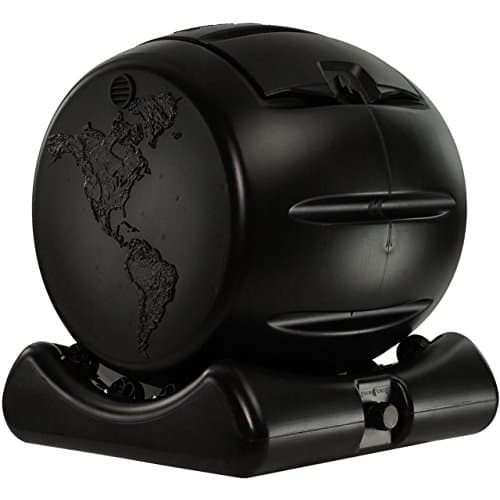
Best for Small Spaces: Envirocycle Mini Composter
Envirocycle Mini Tumbling Composter
Best small-space composter — collects compost tea automatically, fits on a balcony.
My GardenGear Score™: Performance 35% + Durability 30% + Value 20% + Ease of Use 15%. Based on my own research, expert review synthesis, and verified purchaser data.
Envirocycle Mini Composter ($349.99) (17 gallons)
- Price: $89-110
- Amazon Link: Envirocycle Mini Composter
Compact tumbler designed for balconies, small yards, or supplemental composting. Includes base that catches liquid fertilizer byproduct.
Real performance: Perfect size for apartment dwellers or small households. Produced usable compost in 8-12 weeks with consistent turning. Liquid fertilizer excellent for container plants.
Pros: Space-efficient, produces liquid fertilizer, easy to use, weather-resistant Cons: Limited capacity, requires frequent emptying, more expensive per gallon than larger units
Ideal users: Apartment gardeners, supplemental composting for existing systems, container garden enthusiasts wanting liquid fertilizer.
Best for Continuous Production: Worm Composting (Vermicomposting)
Nature's Footprint Worm Factory 360
- Price: $129-159
- Amazon Link: Worm Factory 360
Stackable tray system enables continuous harvesting while new trays process fresh materials. Red wiggler worms convert kitchen scraps into nutrient-rich worm castings.
Real performance: Processed 1-2 pounds of kitchen scraps weekly once established. Produced high-quality worm castings every 3-4 months with minimal maintenance.
Pros: Continuous production, produces premium soil amendment, handles kitchen scraps efficiently, works in any climate Cons: Requires worm maintenance, sensitive to temperature extremes, not suitable for all organic materials
Setup requirements: Temperature range 55-77°F, consistent moisture, proper bedding materials, red wiggler worms (not earthworms).
Essential Composting Materials
Brown Materials (Carbon-Rich)
Dry leaves: Ideal carbon source, should make up 50-60% of compost volume Shredded paper/cardboard: Good carbon source, helps with aeration Wood chips/sawdust: Use sparingly, can tie up nitrogen during decomposition Straw: Excellent if available, provides carbon and structure
Green Materials (Nitrogen-Rich)
Kitchen scraps: Vegetable peels, coffee grounds, eggshells, fruit waste Grass clippings: Fresh clippings are nitrogen-rich, use in thin layers Garden waste: Spent plants, weeds (without seeds), fresh prunings Manure: Well-aged only, never use fresh manure in compost
Materials to Avoid
Meat, dairy, oils: Attract pests and create odors Pet waste: Can contain harmful pathogens Diseased plants: Compost may not reach temperatures to kill pathogens Weeds with seeds: Seeds may survive composting process
Compost Management Techniques
Hot Composting Method
Temperature targets: 130-160°F during active phase, 90-100°F during curing Turning schedule: Every 3-4 days during first month, weekly during second month Timeline: Finished compost in 6-12 weeks with proper management
Benefits: Kills weed seeds and pathogens, faster decomposition, produces high-quality finished product
Requirements: Minimum pile size 3x3x3 feet for thermal mass, consistent turning schedule, proper moisture management
Cold Composting Method
Timeline: 6-18 months for finished compost with minimal management Maintenance: Turn monthly or seasonally, add materials as available Temperature: Ambient temperature, slow decomposition process
Benefits: Low maintenance, handles materials as available, less precise C:N ratio required
Considerations: May not kill weed seeds or pathogens, slower nutrient release, requires more space for longer periods
Troubleshooting Common Issues
Compost Smells Bad
- Cause: Too much nitrogen, insufficient aeration, too wet
- Solution: Add brown materials, turn more frequently, add dry absorbent materials
Compost Not Heating Up
- Cause: Too much carbon, pile too small, insufficient moisture
- Solution: Add green materials, increase pile size, water lightly while turning
Attracting Pests
- Cause: Meat/dairy in compost, open bin design, improper balance
- Solution: Remove inappropriate materials, use enclosed system, bury fresh materials under browns
Seasonal Composting Strategy
Spring (March-May)
- Start new piles with winter-accumulated materials
- Screen finished compost from fall/winter piles
- Apply compost to garden beds before planting
Summer (June-August)
- Maintain moisture during hot weather
- Turn regularly to prevent overheating
- Process abundant garden waste from harvesting and pruning
Fall (September-November)
- Collect and store dry leaves for year-round carbon source
- Process end-of-season garden waste
- Prepare piles for slower winter decomposition
Winter (December-February)
- Add kitchen scraps to established piles
- Plan next year's composting capacity needs
- Research new systems if current setup isn't meeting needs
Cost-Benefit Analysis
DIY Wire Bin ($25-40)
- Materials: Hardware cloth, stakes, wire ties
- Capacity: 50+ gallons depending on size
- Pros: Very affordable, customizable size
- Cons: Not rodent-proof, requires more maintenance
Mid-Range Tumbler ($100-200)
- Best options: FCMP IM4000, Miracle-Gro dual chamber
- Capacity: 40-80 gallons
- Pros: Easy maintenance, rodent-proof, faster results
- Cons: Higher upfront cost, limited capacity
Premium Systems ($200-400)
- Options: Multiple tumblers, Earth Machine plus tumbler, worm farm plus tumbler
- Capacity: 100+ gallons total
- Pros: Continuous production, handles large volumes, premium finished product
- Cons: Significant investment, requires more space
Compost Quality Assessment
Finished Compost Characteristics
- Appearance: Dark brown, crumbly texture, earthy smell
- Temperature: Should match ambient temperature (no longer actively decomposing)
- Particle size: Original materials no longer recognizable
- Moisture: Slightly moist when squeezed, doesn't release water
Uses for Different Compost Stages
- Partially finished (6-8 months): Mulch around trees and shrubs
- Finished compost (12+ months): Soil amendment for vegetable gardens
- Vermicompost: Premium amendment for containers and transplants
Application Rates
- New garden beds: 2-4 inches worked into top 6-8 inches of soil
- Established beds: 1-2 inches as annual top dressing
- Container plants: 20-30% compost mixed with potting soil
Advanced Composting Techniques
Three-Bin System
- Bin 1: Fresh materials, actively adding
- Bin 2: Decomposing, regular turning
- Bin 3: Finished compost, ready for use
Benefits: Continuous production cycle, efficient use of space, organized workflow
Compost Tea Production
- Method: Steep finished compost in water 24-48 hours
- Application: Liquid fertilizer for container plants, foliar feeding
- Benefits: Immediate nutrient availability, beneficial microorganisms
Bokashi Composting Integration
- Pre-ferment kitchen scraps using bokashi bran
- Add fermented materials to regular compost system
- Benefits: Faster decomposition, handles meat/dairy safely, reduces odors
Newsletter Sign-Up
Ready to build the healthiest soil in your neighborhood? Join 3,500+ gardeners getting our weekly tips on composting, soil building, and organic gardening methods.
Get instant access to:
- Spring Garden Planning Checklist (8-page PDF)
- Compost Troubleshooting Guide
- Seasonal Composting Calendar
[Subscribe here](https://gardengearhq.com/new[Algreen Soil Saver Classic](https://www.amazon.com/dp/B08MFS6DBM?tag=gardenghq-20&linkCode=osi&linkId=algreen-soil-saver-classic)r garden soil this season.
Final Recommendations
For beginners: Start with Algreen Soil Saver Classic ($44.88) ($65-85) and learn hot composting basics. Large capacity handles learning mistakes while producing useful compost.
For convenient maintenance: Choose Miracle-Gro Dual Chamber Tumbler ($114.87) ($189-220). Easy turning and rodent-proof design eliminate most common composting frustrations.
For maximum production: Combine Earth Machine bin for yard waste with small tumbler for kitchen scraps. This system handles large volumes while enabling continuous production.
For small spaces: Envirocycle Mini plus Nature's Footprint Worm Factory provides complete composting solution for apartments and small yards.
The secret to successful composting isn't the perfect system - it's consistent attention to carbon-nitrogen ratios, moisture levels, and aeration. Start with a system that matches your space and maintenance preferences, then upgrade as your composting skills and needs evolve.
Remember: Every kitchen scrap composted enriches your soil instead of filling landfills. Even imperfect compost improves garden soil better than no compost at all. Start simple, compost consistently, and watch your garden transform with better soil health season after season.