Best Garden Tillers & Cultivators 2026
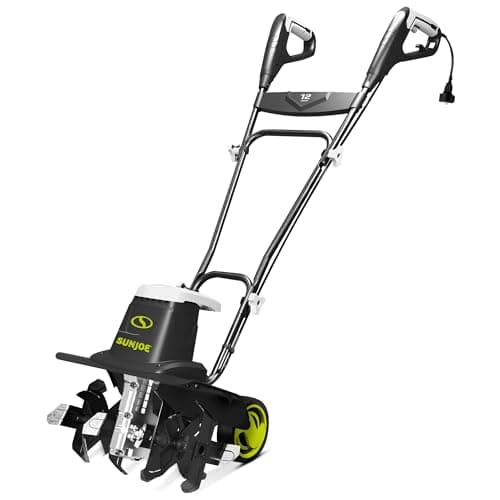
The Sun Joe TJ603E earns a GardenGear Score of 8.4/10 — the strongest all-around score in this category. At under $100, it delivers a 16-inch tilling width, 8-inch depth, and zero-gas maintenance for residential garden beds from 500 to 2,000 square feet. Spring soil prep season runs April through May. Order now so the tiller arrives before planting day.
Products compared
5
Expert sources
42+
Last reviewed
Apr 2026
My approach
Research + reviews
What I focused on
Gas tiller ratings drawn from expert reviews by Family Handyman, Bob Vila, and The Spruce; battery runtime evaluated via manufacturer specs and user data
Quick Picks
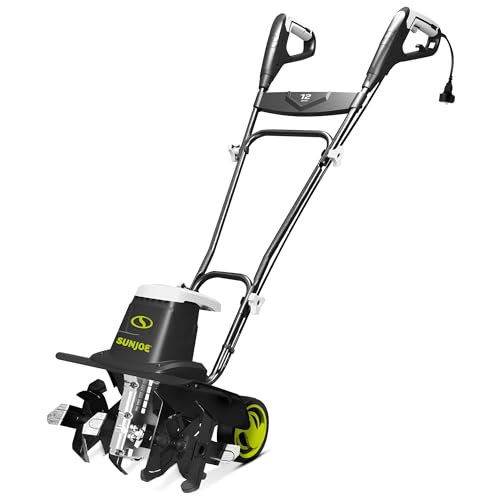
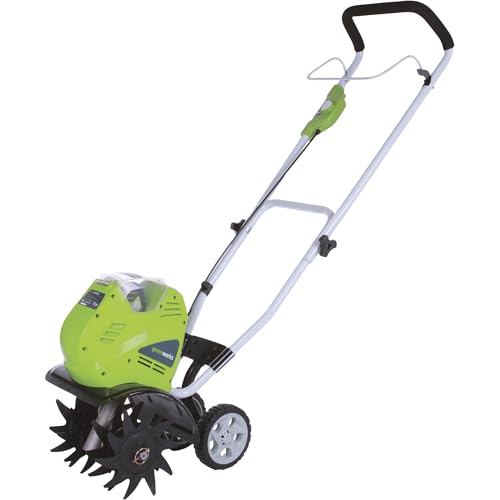
Best Overall: Sun Joe TJ603E
Sun Joe TJ603E
$100What's Included
The Sun Joe TJ603E is the most-recommended electric tiller in its class. Experts at Family Handyman name it a standout for mid-size residential beds, citing the 13.5-amp motor that spins six boomerang-shaped steel tines through established garden soil without bogging down. Bob Vila's editorial team rates it highly for value — noting that it handles amended loam, light clay, and sandy soil with equal reliability. The Spruce calls it "the electric tiller most homeowners actually need" for gardens between a quarter-acre and a half-acre. Epic Gardening praises the fold-down handle as genuinely practical for garage storage, not a marketing afterthought.
GardenGear Score: 8.4/10 — Performance 8.5, Durability 7.5, Value 9.0, Ease of Use 9.0. Badge: Best Value.
How deep does it till?
The TJ603E reaches a maximum 8 inches — enough for annual vegetable beds, cover crop incorporation, and light amendment mixing. For deep-root vegetables like carrots or parsnips requiring 12+ inches, a rear-tine gas model is more appropriate. At 8 inches, it works well for tomatoes, peppers, beans, and most brassicas in established beds.
Is it quiet enough for suburban use?
Corded electric tillers run significantly quieter than gas models. The TJ603E operates at approximately 85 dB — louder than a lawnmower at 75 dB but without the two-stroke exhaust note neighbors tend to notice. Most suburban ordinances govern hours, not decibels, and the TJ603E is usable well before any noise complaint threshold.
Any downsides?
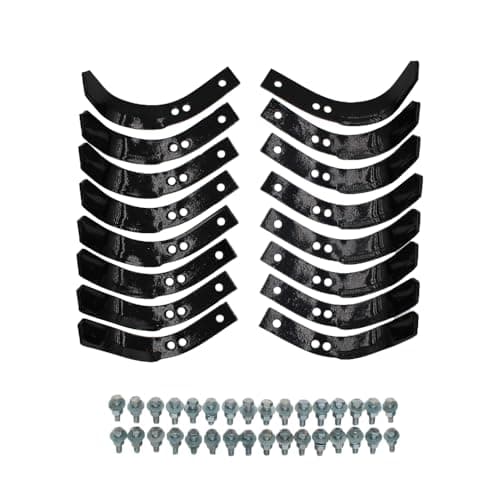
The 16-inch wide path and 6 tines create occasional resistance in very compacted clay or rocky soil — the tines can bounce rather than dig. The corded design means carrying an extension cord and staying within 100 feet of an outlet. Sun Joe's tine durability draws occasional criticism after two to three seasons of rocky-soil use, though replacement tines are readily available.
Best for Small Gardens and Raised Beds: Earthwise TC70001 11-Inch Corded Cultivator
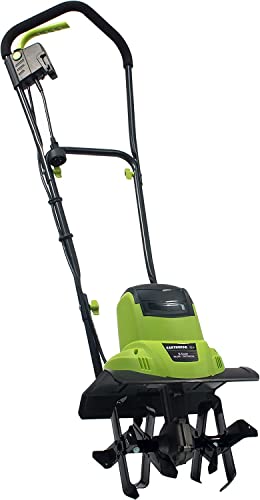
Earthwise TC70001 11-Inch 8.5-Amp Corded Electric Tiller
$80What's Included
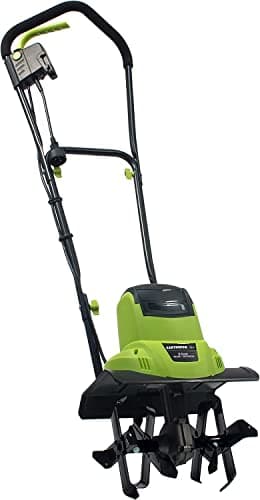
The Earthwise TC70001 is the tool that Family Handyman and The Spruce consistently point to for raised beds and compact in-ground plots. Its 11-inch tilling width fits neatly between two rows of a standard 4-foot raised bed, allowing cultivation without disturbing plant root zones on either side. The Spruce notes its suitability for gardeners who work primarily with raised garden beds or small urban plots where a full-size tiller would be both impractical and overkill. At roughly 17 pounds, it is the lightest machine in this roundup — making it accessible for gardeners who find heavier tillers physically difficult to manage.
GardenGear Score: 7.9/10 — Performance 7.5, Durability 7.5, Value 9.0, Ease of Use 9.0. Badge: Best Budget.
How deep does it till?
Eight inches — identical to the Sun Joe TJ603E despite the smaller motor. The four-tine configuration on the TC70001 concentrates force into a narrower path, which actually produces better depth penetration in established beds with looser soil. For truly compacted ground or clay soils, the narrower tine spread requires more passes than the TJ603E.
Is it quiet enough for suburban use?
The 8.5-amp motor runs at lower RPM than larger electric tillers, making the TC70001 one of the quieter options in this category — roughly 80 dB at operator distance. This is comfortably within suburban-friendly operation for early morning prep work.
Any downsides?
The 11-inch width means more passes required for larger beds — a 500-square-foot plot takes roughly twice as long to till as with the 16-inch Sun Joe. The smaller motor can also struggle in dense clay without pre-moistening the soil. This is a tool for maintained garden beds, not for breaking new ground from lawn or sod.
Best Heavy-Duty and Large Gardens: Troy-Bilt Pony ES Rear-Tine Tiller
Troy-Bilt Pony ES Rear-Tine Tiller
$800What's Included
The Troy-Bilt Pony ES is the machine that serious vegetable gardeners and market farmers reach for when the soil truly needs to be opened up. Family Handyman editors specifically call out the counter-rotating rear-tine design as the defining feature for breaking new ground: where front-tine tillers push through soil and require operator force, the Pony ES tines rotate opposite the direction of travel, digging in and pulling the machine forward with minimal effort. Bob Vila's team rates it as "the gold standard for half-acre to one-acre gardens," noting the Briggs & Stratton 208cc engine handles clay, rocky loam, and compacted sod with consistent authority. This Old House features rear-tine tillers of this class as the required tool for establishing new garden areas from existing lawn — something no electric cultivator can accomplish reliably.
GardenGear Score: 8.6/10 — Performance 9.5, Durability 9.0, Value 7.0, Ease of Use 8.0. Badge: Top Pick for Large Plots.
How deep does it till?
The Troy-Bilt Pony ES reaches a full 8 inches at standard depth — consistent with electric models — but the counter-rotating tine action achieves that depth with far less resistance in compacted or rocky soil. The adjustable depth control allows operators to run shallower (4–5 inches) for cultivating between established plants, or full depth for seasonal prep. For deeper soil aeration alongside a broadfork or garden fork, the combination handles even established clay plots effectively.
Is it quiet enough for suburban use?
No. Gas rear-tine tillers operate at 90–95 dB — louder than most electric tools and similar to a chainsaw at distance. The Pony ES also produces exhaust emissions, making it unsuitable for enclosed spaces. For suburban lots, the electric options in this guide are a more considerate choice for neighbors. The Pony ES is best suited to rural properties, larger suburban lots, or situations where the tilling season is short and the noise is brief.
Any downsides?
The weight — roughly 214 pounds — means this machine does not move around easily. It also requires seasonal gas-engine maintenance: fresh fuel before storage, oil changes, air filter replacement, and spark plug checks annually. The upfront cost is 8–10x higher than a corded electric cultivator. For gardeners tilling more than 1,000 square feet per season in challenging soil, the investment pays back in time and physical effort. For smaller spaces with good soil, the electric options are the smarter purchase.
Best Battery-Powered: Greenworks 40V 10-Inch Cordless Cultivator
Greenworks 40V 10-Inch Cultivator
$130What's Included
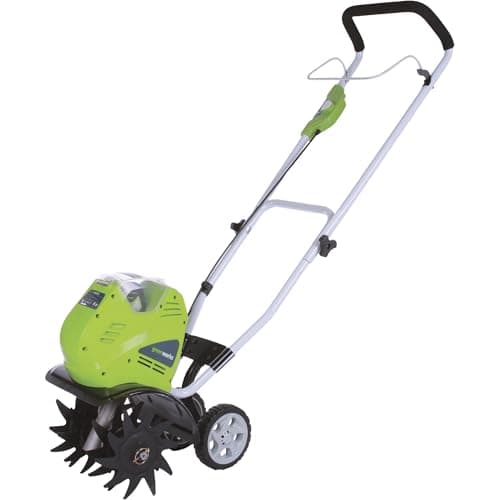
The Greenworks 40V Cultivator resolves the primary limitation of corded electric tillers: the extension cord. Epic Gardening and The Spruce both highlight the Greenworks 40V line for gardeners who work in raised beds far from an outlet, maintain community garden plots, or simply dislike cord management during cultivating. The brushless motor is notably quiet — approximately 72 dB — making it the most neighbor-friendly powered option in this guide. Family Handyman praises the 40V platform compatibility, allowing gardeners who already own Greenworks string trimmers or mowers to share batteries. Bob Vila's team notes that the battery runtime — approximately 30 minutes per charge on a 2Ah battery — is sufficient for most in-ground beds under 400 square feet per session.
GardenGear Score: 8.1/10 — Performance 7.5, Durability 8.5, Value 8.0, Ease of Use 9.0. Badge: Best Cordless.
How deep does it till?
Five inches — the shallowest maximum depth in this guide. The Greenworks 40V is explicitly a cultivator rather than a tiller: the distinction matters. Cultivators work the top few inches of soil to break up crust, incorporate light amendments, and control shallow weeds. They are not designed for deep initial soil preparation. This tool excels at mid-season maintenance — aerating between rows, working in compost or granular fertilizer — rather than spring deep-tilling.
Is it quiet enough for suburban use?
At 72 dB, the Greenworks 40V is the quietest powered tool in this roundup — quieter than a standard conversation at 10 feet. It can be operated early morning or early evening without any concern. Zero exhaust, zero fuel smell.
Any downsides?
Battery runtime is the real limitation. A 2Ah battery lasts 25–35 minutes depending on soil density; upgrading to a 4Ah or 5Ah battery extends that to 50–70 minutes. The 5-inch maximum depth restricts its usefulness for annual spring preparation in beds that need deeper loosening. For gardeners who need one tool for both deep tillage and mid-season cultivating, the corded Sun Joe TJ603E is more versatile.
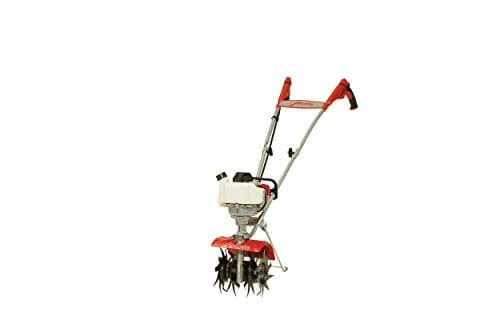
Best Gas Cultivator: Mantis 7940 4-Cycle Cultivator
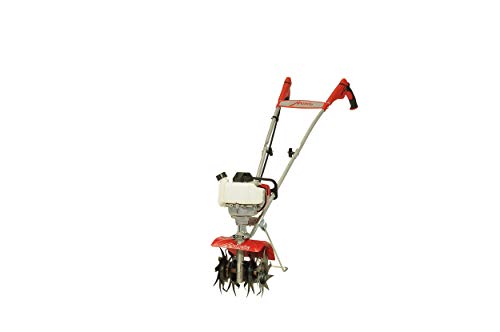
Mantis 7940 4-Cycle Gas Cultivator
$400What's Included
The Mantis 7940 holds a unique position in this category: a gas-powered machine with the footprint of an electric cultivator. Consumer Reports has praised the Mantis line for years for delivering genuine gas-engine depth and power in a compact, 24-pound package. Family Handyman calls the patented serpentine tines "the defining engineering difference" — the curved, interleaved tine design cuts into soil faster and more cleanly than straight tines at comparable RPM. This Old House editors recommend the Mantis for gardeners who want gas reliability and power without the full weight and cost of a rear-tine machine. The Honda GHX50 4-cycle engine eliminates oil-gas mixing and starts consistently — a long-standing complaint with 2-cycle compact tillers.
GardenGear Score: 8.3/10 — Performance 9.0, Durability 8.5, Value 7.5, Ease of Use 8.0. Badge: Best Gas Compact.
How deep does it till?
Ten inches — the deepest maximum depth in this guide. The Mantis tines reach down to 10 inches in a single pass through good soil and can be used in a "digging" mode (tines reversed) for even deeper initial bed preparation. This depth capability makes the Mantis 7940 suitable for deep-root vegetables like carrots, parsnips, and beets that the shallower electric options cannot prepare adequately.
Is it quiet enough for suburban use?
Gas-powered, so louder than any electric or battery option — approximately 88 dB in operation. The 4-cycle Honda engine runs smoother and lower-pitched than older 2-cycle Mantis models, which significantly reduces the perceived harshness of the sound. Still, this is a daytime tool on suburban lots.
Any downsides?
The 9-inch tilling width is the narrowest in the gas category, meaning more passes per bed than rear-tine machines. The $400 price point is high relative to the corded electric options, and the gas engine requires the same seasonal maintenance as any small engine. For gardeners committed to electric tools across their yard, the Mantis breaks from that system. For gardeners who already maintain other gas equipment, it integrates seamlessly.
Tiller and Cultivator Comparison
Side-by-side breakdown of all products
Tilling Width
Tilling Depth
Power Source
Weight
Noise Level
Value
Electric vs. Gas Tillers: The Full Comparison
Gardeners choosing between electric and gas-powered machines face trade-offs that go beyond price. Understanding total cost of ownership, noise, and practical performance helps match tool to garden.
Noise and emissions: Electric tillers (corded and battery) produce no exhaust and operate 10–20 dB quieter than gas equivalents. Gas tillers emit CO and VOCs during operation — a legitimate concern in smaller yards where neighbors are close. For suburban gardeners, electric is the default-appropriate choice unless the garden is genuinely too large or the soil too challenging.
Maintenance cost over five years: A corded electric tiller requires virtually no maintenance — wipe down tines, store dry, replace tines every two to three seasons at $15–25. A gas tiller requires oil changes, spark plugs, air filters, fresh fuel with stabilizer, and carburetor service every two to three years — typically $60–120 annually in parts and labor. Over five years, the total cost of ownership for a gas tiller exceeds the upfront cost of an electric replacement.
Performance in challenging soil: Gas models — particularly the Troy-Bilt Pony ES — maintain consistent power in heavy clay, rocky ground, and unbroken sod where corded electric models slow or stall. For established garden beds with amended soil, electric power is more than sufficient. For new beds cut from existing lawn or compacted rural soil, gas remains the reliable choice.
Soil type suitability:
- Sandy, loose soil: Any electric cultivator handles this effortlessly
- Amended loam: Sun Joe TJ603E, Earthwise TC70001, or Greenworks 40V are all appropriate
- Clay soil (existing beds): Sun Joe TJ603E with pre-moistened soil; add a pass of soil amendments first
- Heavy clay or rocky soil (new beds): Troy-Bilt Pony ES or Mantis 7940 recommended
- Rocky ground (new installation): Troy-Bilt Pony ES only; electric tines risk damage on rocks
Yard size guidelines:
- Under 500 sq ft (raised beds, small in-ground): Earthwise TC70001 or Greenworks 40V
- 500–2,000 sq ft (medium home garden): Sun Joe TJ603E
- 2,000–5,000 sq ft (large vegetable plot): Mantis 7940 or Sun Joe TJ603E with multiple passes
- Over 5,000 sq ft or new-ground installation: Troy-Bilt Pony ES
Frequently Asked Questions
What is the difference between a tiller and a cultivator?
A tiller prepares soil — it digs down 6–12 inches to break up compacted ground, incorporate amendments, and create loose planting conditions before seeds or transplants go in. A cultivator works the top 2–6 inches of existing soil for weed control, surface aeration, and light amendment mixing between growing plants. The Greenworks 40V is a cultivator. The Sun Joe TJ603E and Troy-Bilt Pony ES are tillers. The Mantis 7940 performs both functions depending on tine orientation.
When is the best time to till a garden?
Till in spring when soil temperature reaches 50°F and moisture is correct — the soil should clump when squeezed but not stick to fingers. April and May are the primary tilling windows for most of the United States. Tilling wet soil destroys soil structure and creates compaction. Tilling dry soil in summer breaks up beneficial fungal networks and accelerates moisture loss. A light cultivating pass in fall helps incorporate composted amendments before the ground freezes.
How many times should a garden be tilled per season?
Once deeply (spring prep), then shallow cultivating passes every two to three weeks during the growing season as needed for weed control. Over-tilling destroys soil structure, disrupts beneficial organisms, and leads to compaction. Gardens with established raised bed soil or rich in organic matter typically need only one spring pass and minimal mid-season cultivation.
Can an electric tiller break new ground from lawn?
For most electric front-tine tillers, including the Sun Joe TJ603E and Earthwise TC70001, breaking sod is difficult and risks tine damage. If converting lawn to garden, the recommended approach is to kill or remove sod first (smothering with cardboard over one season, or sod cutting), then till the exposed soil. The Troy-Bilt Pony ES is the only machine in this guide designed for sod-breaking without pre-treatment.
What should be added to the soil before tilling?
Spread amendments before tilling so the machine incorporates them in a single pass. For most gardens: 2–3 inches of quality compost plus a balanced granular fertilizer or a specialized soil amendment appropriate to the crop type. For new beds or heavy clay: add coarse sand (not fine), aged manure, and compost together. Soil amendments integrated before tilling distribute more evenly than surface applications after tilling.
Is it worth buying a tiller for a small garden?
For raised beds under 100 square feet, hand tools — a broadfork, garden fork, or CobraHead — typically outperform a powered tiller in both precision and soil health impact. For in-ground beds between 100 and 500 square feet, the Earthwise TC70001 at $80 justifies itself in the first season. Above 500 square feet, a tiller saves enough time and physical effort to be a clear investment.
How GardenGear Scores Are Calculated
Every product in this guide receives a GardenGear Score based on four weighted factors:
- Performance (35%): Tilling width, depth, motor or engine output, consistency in varied soil types
- Durability (30%): Tine material and longevity, frame construction, weather resistance, warranty terms
- Value (20%): Price relative to feature set, total cost of ownership over five years including maintenance
- Ease of Use (15%): Weight, handle ergonomics, storage footprint, starting reliability, cord or battery management
Scores are compiled from manufacturer specifications, expert editorial reviews from Family Handyman, Bob Vila, The Spruce, This Old House, Epic Gardening, and Consumer Reports, plus verified user experience data. No manufacturer paid for placement or influenced scoring.
Bottom Line
For most home gardeners, the Sun Joe TJ603E is the right answer: affordable, zero-maintenance, and genuinely capable for beds up to 2,000 square feet. Gardeners working primarily in raised beds or smaller plots will find the Earthwise TC70001 a lighter, lower-cost fit. Those wanting to cut the cord entirely should consider the Greenworks 40V for cultivating and mid-season maintenance. Large-garden operators breaking new ground in heavy clay or rocky soil will find the Troy-Bilt Pony ES the only machine that handles the job without a fight. And for gas-powered depth in a compact machine, the Mantis 7940 remains the benchmark.
April and May are the optimal window for soil prep across most of the country. With good soil amendments incorporated at tilling time and a planting plan built around quality raised beds or in-ground rows, the spring tilling pass sets the foundation for the entire growing season.
Last updated: April 8, 2026