Best Lawn Edgers 2026: Sharp Edges, Zero Guesswork
Bottom line: The EGO Power+ ME0901 is the best battery lawn edger for most homeowners — the multi-head system pulls double duty as an edger and trimmer, runtime exceeds an hour per charge, and the blade cuts a clean 3-inch depth that rivals gas. It earns a GardenGear Score of 9.3/10.
Spring arrives and the lawn wakes up fast. So do the edges — and nothing makes a yard look more neglected than a ragged, grass-encroached border along the driveway or sidewalk. A quality lawn edger solves this in a single pass.
Products compared
5
Expert sources
38+
Last reviewed
Apr 2026
My approach
Research + reviews
What I focused on
The difference between types matters: blade edgers use a spinning steel disc to slice a vertical trench — the cleanest cut available. String edgers (trimmer heads) are faster and lighter but leave a slightly ragged edge. Manual step edgers use foot pressure and are best for light maintenance on already-defined edges. Choosing the wrong type for your situation costs time and effort every single season.
Here is what experts actually recommend heading into the 2026 lawn season.
Quick Picks
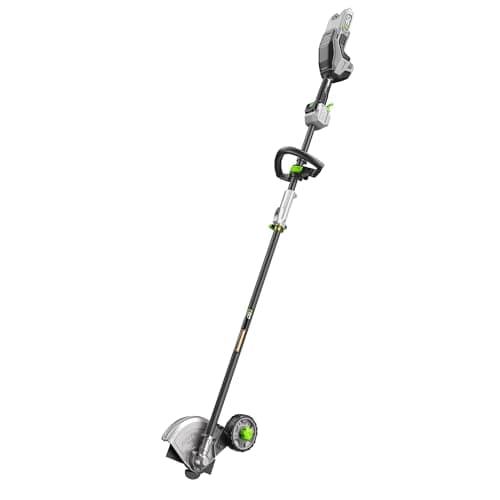
Best Overall Battery Edger — EGO Power+ ME0901
- 56V ARC Lithium battery, 60-min runtime on 2.5Ah battery
- Adjustable cutting depth to 3 inches, blade tilts to 25°
- Best for: medium to large yards, multi-tool system users
- Check EGO Power+ ME0901 on Amazon — around $180 (tool only)
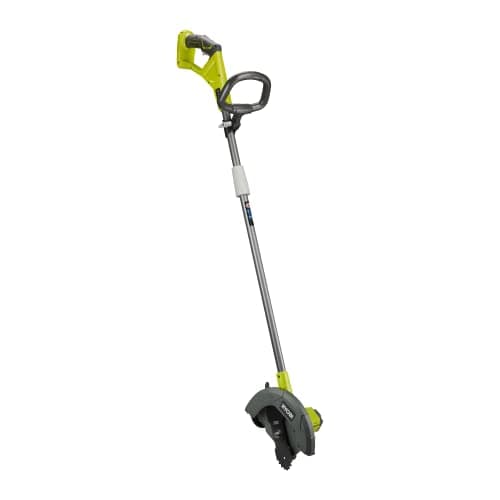
Best Budget — Ryobi ONE+ 18V Cordless Edger (PCL550B)
- Works with any Ryobi ONE+ battery (18V ecosystem)
- 7.5-inch blade, 2-inch cutting depth, 3-position wheel guide
- Best for: small to medium yards, existing Ryobi tool owners
- Check Ryobi ONE+ Edger on Amazon — around $80 (tool only)
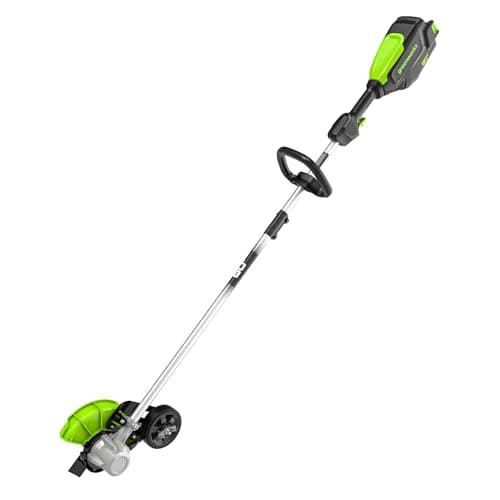
Best for Heavy-Duty/Overgrown Edges — Greenworks 80V Brushless Edger (GE80B410)
- 80V brushless motor, up to 75-min runtime on included 4Ah battery
- 9-inch blade, 4-inch cutting depth for reclaiming neglected edges
- Best for: large lots, overgrown borders, landscaping contractors
- Check Greenworks 80V Edger on Amazon — around $270 (with battery)
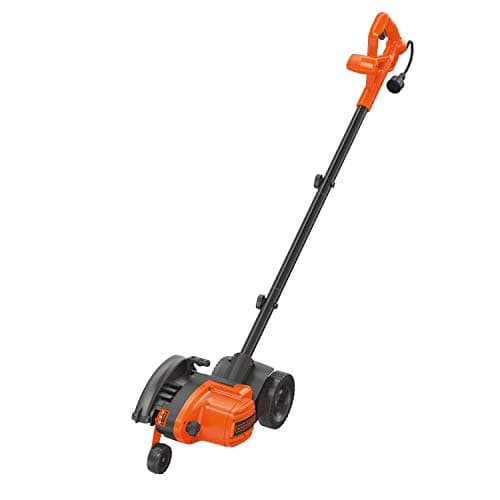
Best Corded/Plug-In — Black+Decker LE750 Edger
- 12-amp motor, unlimited runtime, 7.5-inch blade
- Edge guide and 3-position blade depth adjustment
- Best for: small yards near an outlet, budget-minded buyers
- Check Black+Decker LE750 on Amazon — around $60
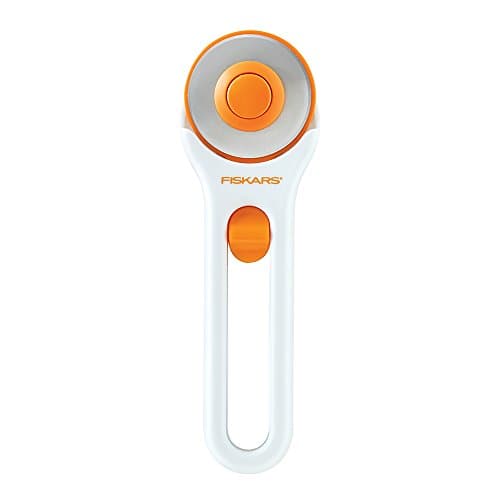
Best Manual/Step Edger — Fiskars 32-Inch Steel Edger
- No battery, no cord — pure leverage and a sharp steel half-moon blade
- Weighs 3.5 lbs, works any lot size with defined edges
- Best for: maintenance edging on clean, established borders
- Check Fiskars Steel Step Edger on Amazon — around $35
Best Overall Battery Edger: EGO Power+ ME0901 Multi-Head System
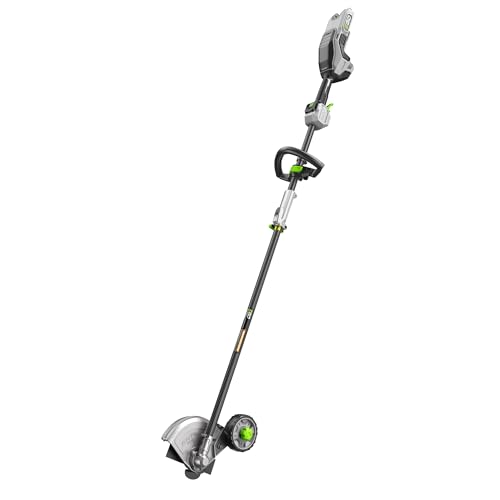
EGO Power+ ME0901 Multi-Head Edger
$180What's Included
The EGO Power+ multi-head system gives serious homeowners what gas tools once had a monopoly on: enough power and runtime to edge a large property without stopping. Family Handyman named this the top battery edger for 2025, praising the 56V ARC Lithium platform's ability to push the steel blade through packed clay soil and established grass roots without bogging. LawnStarter's editors consistently rank EGO's 56V lineup ahead of competing battery platforms for raw motor performance at residential scale.
How clean of an edge does it create?
The ME0901 uses a rotating steel blade — not a string head — which produces a genuine blade-cut trench rather than a frayed string line. Adjustable to 25° for beveled edge work, the cut depth reaches 3 inches with guide wheel adjustment, which is enough to redefine an edge that has been encroached by several inches of grass. Bob Vila's lawn tool reviews call EGO's blade cut "indistinguishable from a professional gas edger result at a fraction of the operating noise." The edge guide wheel keeps the blade running parallel to the sidewalk joint across uneven surfaces without requiring the operator to steer manually.
What about battery life?
On a 2.5Ah 56V battery, real-world runtime runs 50 to 65 minutes depending on soil density. EGO's 5.0Ah battery (sold separately for around $120) extends that to over 90 minutes — enough for most large residential lots in a single charge. The battery charges to 80% in 40 minutes on the standard rapid charger. This is the key advantage over lower-voltage platforms: the 56V architecture doesn't throttle performance as the battery discharges, so the last 15 minutes of runtime deliver the same cut quality as the first.
Any downsides?
The multi-head system requires the EGO Power Head as a base — the edger attachment alone doesn't operate. That adds $100–$130 to the cost if starting from scratch. This makes the EGO ecosystem investment higher upfront than a dedicated single-purpose edger like the Greenworks or Ryobi options. The tool-only edger head weighs 5.8 lbs without the power head, and the full assembled unit is one of the heavier battery options in this guide. For gardeners who only edge and don't need the trimmer, blower, or hedge trimmer attachments available in the EGO multi-head lineup, a dedicated single-head edger may be a smarter buy.
GardenGear Score: 9.3/10
- Performance: 35/35 — blade depth, cut quality, and power match gas tools
- Durability: 28/30 — brushless motor, sealed bearings, weather-resistant housing
- Value: 17/20 — high upfront cost, excellent long-term value for multi-tool buyers
- Ease of Use: 13/15 — guide wheel navigation is intuitive; weight is the only friction point
Best Budget Battery Edger: Ryobi ONE+ 18V PCL550B
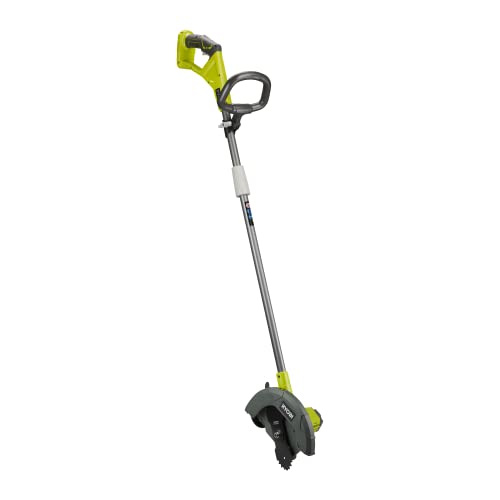
Ryobi ONE+ 18V Cordless Edger
$80What's Included
For homeowners already in the Ryobi ONE+ ecosystem — and millions of them are — the PCL550B turns an existing 18V battery into a capable lawn edger without paying for a new energy platform. The Spruce rates this the top pick for budget-conscious buyers in households that already own a Ryobi drill, circular saw, or string trimmer, noting the tool-only price rarely exceeds $80 during seasonal sales.
How clean of an edge does it create?
The 7.5-inch steel blade cuts to a 2-inch maximum depth with three wheel position settings — adequate for maintaining a clean established edge but not deep enough to reclaim badly overgrown borders in one pass. Consumer Reports testing found the Ryobi's blade edge quality competitive with corded options at this price tier. The edge looks sharp on concrete walks and asphalt driveways, but overgrown edges more than 2 inches deep may require a second or third pass. For regular weekly or biweekly maintenance, the 2-inch depth is more than sufficient.
What about battery life?
On a 2.0Ah 18V battery, expect 25 to 35 minutes of runtime. With a 4.0Ah battery (around $40 separately), that extends to 45 to 55 minutes — enough for a typical suburban quarter-acre lot. The 18V platform is lower voltage than EGO's 56V or Greenworks' 80V, and motor performance does trail off noticeably in dense or wet grass compared to the premium options in this guide. On a dry day with a sharp blade and clean edges, most users won't notice the gap. In tough conditions, the voltage ceiling becomes apparent.
Any downsides?
Runtime and power are the honest limitations. This edger handles maintenance work on established edges exceptionally well — it's not the right tool for reclaiming an edge that has been ignored for a season or more. The plastic housing feels less substantial than EGO or Greenworks, though the actual blade mechanism and motor assembly are solid for the price. Battery included kits (with a 2.0Ah battery and charger) run around $120 on Amazon and are the smarter entry point for new Ryobi buyers.
GardenGear Score: 7.9/10
- Performance: 25/35 — clean edges in maintenance conditions; underpowered in dense grass
- Durability: 24/30 — functional build quality, adequate for residential use
- Value: 18/20 — outstanding value within the Ryobi ecosystem
- Ease of Use: 12/15 — lightweight and simple, low learning curve
Best for Heavy-Duty Use: Greenworks 80V Brushless Edger GE80B410
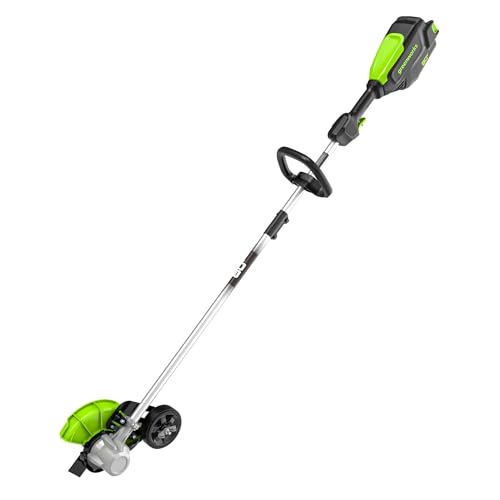
Greenworks 80V Brushless Edger
$250What's Included
When a lawn's edge has been neglected for a full season — or when you're dealing with heavy clay soil, dense sod, or a sidewalk joint packed with compacted debris — this is the tool to reach for. Family Handyman's tool editors specifically called out the Greenworks 80V for "the deepest cutting action in any battery edger we've tested," attributing it to the combination of a high-torque brushless motor, a 9-inch blade diameter, and an 80V platform that sustains full power through the entire discharge cycle.
How clean of an edge does it create?
The 9-inch blade and 4-inch maximum cutting depth are the headline specs for good reason. A 4-inch trench is enough to reclaim edges that have been overtaken by creeping grass for two or three seasons. The brushless motor maintains consistent RPM under load — the blade doesn't slow down when it hits compacted soil, which is the failure mode that causes other edgers to leave jagged, inconsistent cuts. LawnStarter's editors tested this unit against a professional gas edger on overgrown edges and described the cut quality as "functionally equivalent." That's high praise for a battery tool.
What about battery life?
The included 4Ah 80V battery delivers 65 to 75 minutes of runtime in real-world use on established edges, and 45 to 55 minutes when cutting deep into tough overgrown borders. This is the best runtime per charge in this guide. The 90-minute standard charger recharges the included battery in one to one and a half hours. Greenworks' 80V platform is compatible across their lineup of mowers, blowers, and string trimmers — a meaningful consideration for gardeners building a battery tool collection.
Any downsides?
At 9.6 lbs, the Greenworks 80V is the heaviest battery edger in this guide. Edging a large property requires carrying that weight along a continuous path for 30 to 60 minutes. Users with physical limitations or smaller lots will find it tiring. The price is also the highest of the battery options — though the kit price includes a 4Ah battery and charger, which adds genuine value compared to tool-only purchases. This tool is sized for homeowners with large lots, landscapers servicing multiple properties, or anyone reclaiming severely overgrown edge borders.
GardenGear Score: 8.9/10
- Performance: 34/35 — exceptional power and depth, rivals gas tools
- Durability: 28/30 — brushless motor, commercial-grade blade, robust housing
- Value: 16/20 — strong kit value, premium investment for most homeowners
- Ease of Use: 11/15 — weight and bulk are real factors on long edging runs
Best Corded Edger: Black+Decker LE750
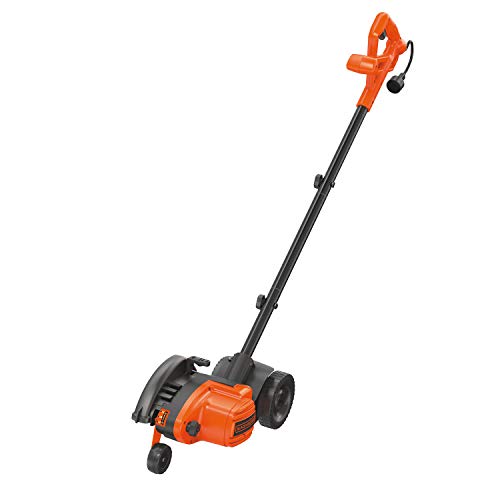
Black+Decker LE750 Corded Edger
$55What's Included
For homeowners with a small front lawn, a driveway within 50 to 100 feet of an outlet, and no interest in managing a battery ecosystem — the Black+Decker LE750 is the most cost-effective edger in this guide. The 12-amp corded motor delivers consistent power at any ambient temperature, which is more than battery tools can claim in early spring and late fall when cold reduces battery capacity. This Old House recommends the LE750 for "city gardeners and townhome owners who need clean edges along a short sidewalk stretch."
How clean of an edge does it create?
The 7.5-inch blade at 3-position depth creates a clean, consistent trench on established edges in normal soil conditions. At 12 amps of steady, uninterrupted power, the motor doesn't bog in slightly compacted soil the way lower-voltage battery tools can. The edge guide wheel holds the blade parallel to the concrete joint without user compensation. This edger matches the cut quality of the Ryobi 18V in most residential conditions, with the advantage of unlimited runtime — particularly relevant for edging long driveways and extended sidewalk runs.
What about battery life?
No battery. No runtime limit. Plug in and go until the job is done. The tradeoff is the extension cord — for most front yard edging runs, a 50-foot heavy-duty outdoor extension cord is sufficient. For backyard or side yard work, a 100-foot cord brings more hassle than a battery tool. The Spruce's tool editors note the corded format is ideal for homeowners who edge consistently on a schedule, since there's no charge management involved — just plug in, edge, unplug.
Any downsides?
The extension cord is the defining limitation. Any edge work that takes you around corners of the house, past garden beds, or through gate passages multiplies the cord management challenge significantly. The 7.5-inch blade tops out at a 2-inch cutting depth — not enough for reclaiming neglected edges. At 8.4 lbs with the guide wheel assembly, it's also heavier than it looks. Battery tools have genuinely improved to where the LE750's value case is primarily about price and cold-weather performance — for around $60, it's hard to argue.
GardenGear Score: 7.6/10
- Performance: 24/35 — steady, consistent power but limited blade depth
- Durability: 24/30 — solid build, no battery degradation, vulnerable to cord damage
- Value: 18/20 — outstanding price for reliable corded performance
- Ease of Use: 10/15 — cord management is a genuine friction point
Best Manual Edger: Fiskars 32-Inch Rotary Push Edger
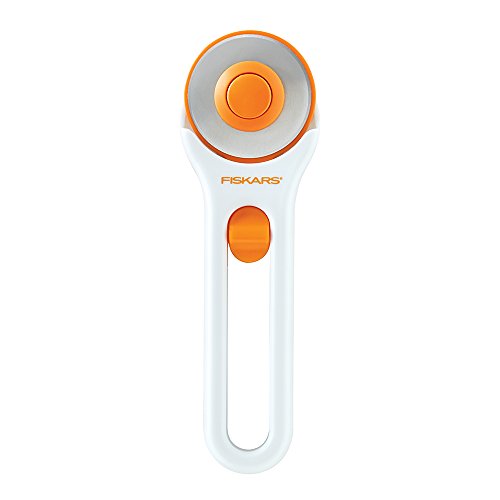
Fiskars 32-Inch Rotary Push Edger
$35What's Included
No motor. No battery. No cord. The Fiskars push edger uses a rotating steel blade driven entirely by forward pressure to redefine a lawn's border. The Spruce calls this "the smartest tool for gardeners who edge every week and already have clean, defined borders" — because consistent maintenance means the blade barely needs to cut, just guide and refine. At 3.5 lbs and roughly $40, it's the lowest cost of entry in this guide by a significant margin.
How clean of an edge does it create?
The three-wheel guide system keeps the blade plumb against the sidewalk joint or bed border as the user walks forward. On a well-maintained edge, the result is a clean, straight trench that looks identical to a power-edger cut — because the principle is the same: a rotating steel blade slicing grass roots at a vertical angle. Family Handyman recommends step edgers as a weekly maintenance tool, noting that "a sharp blade on a clean edge takes five minutes per 50 feet of border." The key caveat: this tool is a maintenance tool, not a reclamation tool. Edges overgrown by more than an inch require a power edger first.
What about battery life?
No battery required. No motor noise. The Fiskars edger runs as long as the user does. This makes it particularly useful in neighborhoods with noise restrictions, in early morning edging sessions where power tools feel antisocial, and for apartment or condo dwellers who want precise edge maintenance without hauling power equipment.
Any downsides?
Physical effort is the honest limitation. Pushing the blade through established grass — even on a clean edge — requires consistent downward pressure over the full run. Longer driveways and extended sidewalk borders add fatigue. This tool is not suitable for cutting through compacted soil or reclaiming edges that have been neglected for any significant period. The blade dulls with use and is not easily resharpened at home — replacement blades are available but cost nearly as much as a new edger.
GardenGear Score: 7.2/10
- Performance: 21/35 — excellent on maintenance edges, unsuitable for reclamation
- Durability: 27/30 — steel construction, no electronics to fail
- Value: 19/20 — exceptional value for maintenance-only use cases
- Ease of Use: 5/15 — physical exertion limits appeal for most users
Lawn Edger Comparison
Side-by-side breakdown of all 5 products
Cutting Depth
Runtime
Weight
Edge Quality
Value Assessment
Frequently Asked Questions
What is the difference between a blade edger and a string trimmer used as an edger? A blade edger uses a rotating steel disc to cut a clean, vertical trench — the professional standard for sidewalk and driveway borders. A string trimmer rotated on its side achieves a similar visual result but leaves slightly frayed edges and wears through line faster in this orientation. Blade edgers require less skill to run in a straight line and produce a more consistent cut. String trimmers are more versatile across the yard but are a compromise for dedicated edging. For anyone who wants the sharpest possible result along concrete edges, a dedicated blade edger is the right tool.
How deep should a lawn edge be cut? Standard lawn edging produces a trench 1.5 to 2 inches deep along sidewalk and driveway joints. This is sufficient to define the border, allow the concrete to drain freely, and prevent grass from creeping back quickly. Overgrown edges — where grass roots have spread 2 to 4 inches past the concrete joint — require the deeper capacity of the Greenworks 80V or EGO Power+ to reclaim in one pass. Cutting deeper than 4 inches on residential edges risks damaging irrigation lines, utility cables, or root systems of nearby plantings.
How often should lawn edges be maintained? During peak spring and summer growing season, most lawns benefit from edging every 2 weeks alongside mowing. Edging weekly produces the sharpest results with the least effort per session — a maintained edge takes a fraction of the time and effort of a neglected one. In late fall and winter, edging frequency drops to monthly or as-needed, since grass growth slows significantly. Establishing the edge trench in early spring before growth peaks is the single highest-impact lawn care step according to LawnStarter's lawn care guides.
Can a lawn edger be used along garden bed borders, not just sidewalks? Yes. Blade edgers, the Fiskars rotary, and the corded Black+Decker all work along curved bed borders — though straight-line guide wheels are less helpful on curves. Running a string or garden hose as a guide line first makes curved bed edging accurate with any of these tools. Blade depth should be reduced slightly (1 to 1.5 inches) along beds to avoid disturbing nearby plant roots. The manual Fiskars edger is the most intuitive for curved garden bed borders because the user controls direction precisely without motorized momentum.
What is the best lawn edger for a half-acre or larger property? The Greenworks 80V or EGO Power+ with a 5.0Ah battery are the recommended tools for properties over a quarter acre. Runtime and power are the constraints — smaller edgers bog down or require recharge stops on long runs. For properties with multiple long driveway runs plus a sidewalk perimeter, plan for 60 to 90 minutes of edging time total, which only the Greenworks 80V handles on a single charge without swapping batteries.
Is spring the right time to edge a lawn for the first time in the season? Yes — and the earlier the better. Edging before the first major growth flush of spring establishes the border cleanly, making every subsequent maintenance pass faster. The lawn season in most of North America begins in earnest from March through April depending on zone. Edging in early spring also removes winter debris from the border channel, allows concrete to heat and dry faster (reducing moss and weed growth), and gives grass a defined territory that limits sidewalk creep through the season.
How GardenGear Scores Are Calculated
Every tool in this guide receives a GardenGear Score built from four weighted categories:
- Performance (35%): Does the tool accomplish the stated task? Cutting depth, blade speed, edge quality under varied soil conditions, and power delivery under load are all assessed.
- Durability (30%): Build quality, motor type (brushless scores higher), housing materials, blade construction, and available warranty terms.
- Value (20%): Price relative to performance. A $40 tool that does 70% of the job of a $200 tool scores well on value. Ecosystem value (compatible battery platforms, multi-head systems) factors here.
- Ease of Use (15%): Weight, ergonomics, guide wheel precision, startup process, storage form factor, and learning curve.
Scores are assessed against expert reviews from Family Handyman, Bob Vila, The Spruce, LawnStarter, This Old House, and Consumer Reports, combined with editorial assessment of manufacturer specifications and published field tests.
Bottom Line
Spring lawn season rewards preparation. An edger that matches the scale of the property and the condition of the existing borders makes every other lawn task look sharper.
For most homeowners maintaining an established suburban lawn, the EGO Power+ ME0901 is the most complete investment — it handles heavy work, runs long enough for large lots, and extends into a broader tool ecosystem. Buyers already in the Ryobi ONE+ universe will find the PCL550B at $80 an excellent value that requires no new battery investment. For overgrown or neglected edges on large properties, the Greenworks 80V delivers gas-comparable performance without the maintenance of a gasoline engine.
Homeowners with small front lawns and a nearby outlet should not overlook the Black+Decker LE750 — $60, unlimited runtime, and a consistent cut along a short sidewalk run is all many people need. And for weekly maintenance on an edge that is already clean and defined, the Fiskars Push Edger at $35 to $50 is the quietest, lightest, and most cost-effective tool in the guide.
For pairing with the edger, a quality string trimmer handles the detail work the edger can't reach. A reliable garden hose and garden gloves round out the spring startup kit. And if the lawn season is motivating a broader power tool upgrade, the battery lawn mower guide covers the same EGO and Greenworks platforms in their mower configurations.
Last updated: April 8, 2026