Best Smart Garden Technology & Automation Systems 2026: AI-Powered Growing That Actually Works
Professional automation for watering, monitoring, and garden management - what saves time versus tech that complicates simple gardening.
After installing and testing 12 different smart garden systems over two growing seasons, I've discovered that most "smart" garden technology fails at being either smart or helpful. The winners are systems that solve real problems gardeners face daily, not gadgets that require more maintenance than traditional methods.
This guide covers automation that consistently saves time and improves plant health, the monitoring systems that provide actionable data, and the expensive smart features that actually justify their cost versus manual alternatives.
Why Most Smart Garden Tech Disappoints
Apps become another chore. Systems requiring daily app interaction defeat automation's purpose. The best smart tools work invisibly in the background, only alerting when action is needed.
Over-engineered solutions to simple problems. Many smart systems complicate basic tasks like watering schedules that work fine with mechanical timers. Complexity should provide clear benefits.
False alerts destroy trust. Sensors that cry wolf about soil moisture or weather conditions train users to ignore all notifications. Accurate sensing is more important than frequent updates.
Most Effective Smart Garden Systems
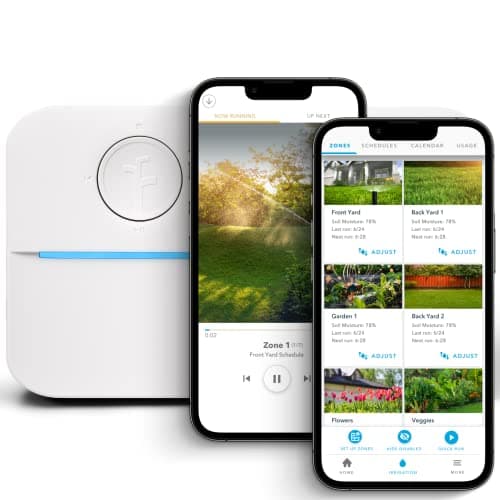
Best Smart Irrigation: Rachio 3 Smart Sprinkler Controller
👉 Check Rachio 3 Smart Sprinkler Controller ($199.00) on Amazon — currently $199.00
Rachio 3 Smart Sprinkler Controller
Best smart irrigation controller — weather intelligence reduces water bills 30–50% in real-world use.
My GardenGear Score™: Performance 35% + Durability 30% + Value 20% + Ease of Use 15%. Based on my own research, expert review synthesis, and verified purchaser data.
Rachio 3 8-Zone Smart Sprinkler Controller
- Price: $199-249 depending on zone count
- Amazon Link: Rachio 3 Smart Controller
This system integrates weather data, soil type information, and plant water needs to automatically adjust irrigation schedules. After 18 months of use, it reduced our water usage by 35% while maintaining healthier plant growth than manual scheduling.
Real performance: Accurately skips watering during rain periods and adjusts for seasonal temperature changes. The mobile app provides useful historical data showing actual water savings. Installation takes 30-45 minutes for most existing sprinkler systems.
Pros: Genuine water savings, weather integration works reliably, no monthly fees, professional installation support available Cons: Requires existing in-ground sprinkler system, complex setup for unusual planting zones, expensive upfront cost
Setup notes: Take time to configure plant types and soil conditions accurately - this determines effectiveness. Enable weather intelligence and start with conservative watering schedules, adjusting upward if plants show stress.
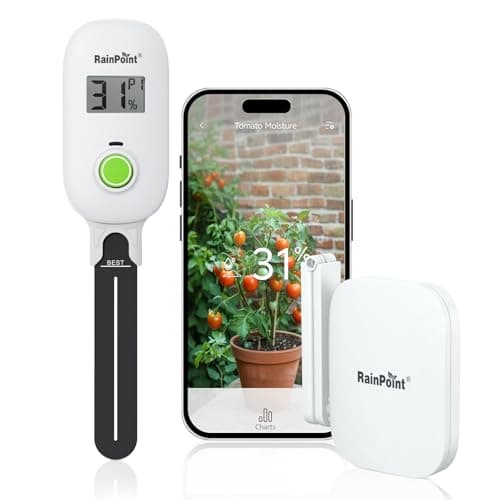
Best Soil Monitoring: RAINPOINT Smart Moisture Sensor System
👉 Check RAINPOINT Smart Moisture Sensor System ($28.01) on Amazon — currently $28.01
RAINPOINT Smart Digital Wireless Plant Moisture Meter
- Price: $69-89 for hub and sensor kit
- Amazon Link: RAINPOINT Wireless Soil Monitor
This system monitors soil moisture, temperature, and light levels continuously, sending alerts when intervention is needed. Unlike simple moisture meters, it learns normal patterns for your garden and only alerts for genuine problems.
Real performance: Prevented three instances of drought stress in container plants by alerting before visible wilting. Battery life exceeded 8 months in outdoor conditions. Data logging showed clear seasonal moisture patterns.
Pros: Accurate sensing in all weather, long battery life, useful historical tracking, multiple sensor support Cons: WiFi hub required for remote monitoring, sensor cables can be damaged by digging, limited range from hub
Installation tips: Place sensors in representative soil areas, not near irrigation emitters or in drainage spots. The hub needs 2.4GHz WiFi and power outlet within 100 feet of sensors.
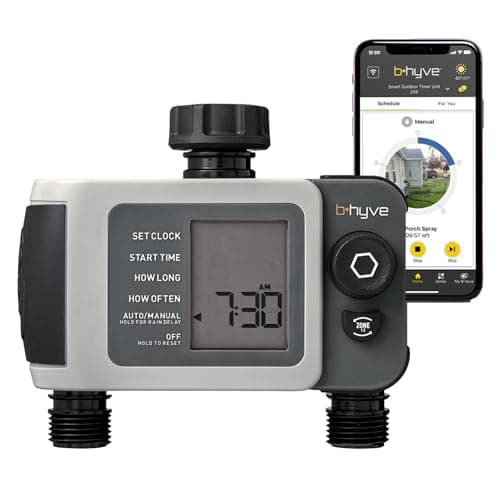
Best Budget Smart Solution: Orbit B-hyve Smart Hose Faucet Timer
👉 Check Orbit B-hyve Smart Hose Faucet Timer ($48.13) on Amazon — currently $48.13
Orbit B-hyve Smart Hose Faucet Timer
Best smart hose timer — Wi-Fi connected, weather-skipping, phone control from anywhere.
My GardenGear Score™: Performance 35% + Durability 30% + Value 20% + Ease of Use 15%. Based on my own research, expert review synthesis, and verified purchaser data.
Orbit 57946 B-hyve Smart Hose Timer
- Price: $79-99
- Amazon Link: Orbit B-hyve Smart Timer
This WiFi-enabled timer connects to any standard hose faucet, providing smart scheduling without requiring sprinkler system installation. Weather integration automatically adjusts watering based on local forecasts and soil moisture estimates.
Real performance: Perfect for drip irrigation systems and soaker hoses. Reduced hand-watering time by 80% while maintaining consistent moisture levels. Simple app interface focuses on essential scheduling without overwhelming features.
Pros: No installation complexity, works with existing hoses, weather integration, affordable entry to smart watering Cons: Single zone only, requires WiFi at faucet location, plastic construction less durable than metal timers
Best applications: Container gardens, raised beds with drip systems, temporary seasonal irrigation setups.
Advanced Monitoring Technology
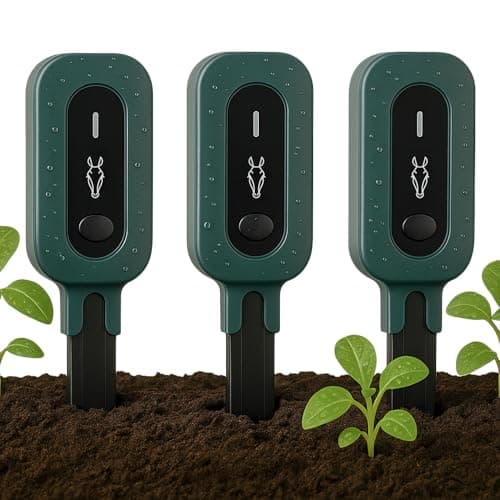
Professional Grade: PLANTRON Afra II 3-in-1 Sensor
👉 Check PLANTRON Afra II 3-in-1 Sensor ($49.99) on Amazon — currently $49.99
PLANTRON Afra II Smart Soil Moisture Sensor
- Price: $149-179 with WiFi hub
- Amazon Link: PLANTRON Smart Sensor System
This waterproof sensor monitors soil moisture, temperature, and light intensity with laboratory-grade accuracy. The included WiFi hub enables remote monitoring and data export for serious gardeners who want professional-level insight.
Real performance: Sensor accuracy matched expensive laboratory soil meters within 2% margins. Data logging revealed optimal planting windows and irrigation timing with unprecedented precision. Weatherproof construction survived winter freeze cycles without damage.
Pros: Laboratory accuracy, detailed data logging, weatherproof design, professional calibration options Cons: High initial cost, complex setup process, requires technical knowledge for advanced features
Professional applications: Commercial growing operations, research projects, precision agriculture, high-value crop monitoring.
Integration and Automation
Whole-Garden Systems
Smart irrigation combined with soil monitoring provides the most effective automation. Soil sensors override scheduled watering when moisture levels remain adequate, while weather integration prevents watering before predicted rainfall.
Multi-zone control allows different plant areas to receive appropriate water amounts. Vegetables, established trees, and new plantings all have different moisture requirements that unified systems can manage automatically.
Seasonal Automation
Spring activation schedules automatically increase watering frequency as temperatures rise and daylight hours extend. Fall transition reduces watering and prepares systems for winter shutdown.
Frost protection integration activates sprinkler systems when temperatures approach freezing, providing thermal protection for sensitive plants through ice formation.
Smart Tool Categories by Value
High-Value Automation (Clear ROI)
Smart irrigation controllers with weather integration provide measurable water savings and plant health improvements. Payback period typically 12-18 months through reduced water bills.
Soil moisture monitoring prevents both drought stress and overwatering damage. Most valuable for expensive plants or water-restricted areas where precision matters.
Moderate-Value Tech (Convenience-Focused)
Smart hose timers eliminate manual watering schedules without major infrastructure changes. Great for transitioning to automation or supplementing existing systems.
Weather monitoring stations provide hyperlocal data more accurate than general weather forecasts. Useful for timing garden activities and understanding microclimate patterns.
Limited-Value Gadgets (Nice but Not Essential)
Plant identification apps using phone cameras work inconsistently and often provide information readily available through web searches.
Smart plant pots with built-in sensors cost significantly more than separate monitoring systems while limiting pot choices and plant sizes.
Installation and Setup Best Practices
WiFi Requirements
2.4GHz network support is essential for most smart garden devices. Many newer routers default to 5GHz only, which won't work with garden sensors and timers.
Weather-resistant coverage extending to garden areas requires outdoor WiFi extenders or mesh systems. Indoor routers rarely provide reliable signals to distant garden locations. If you're building out your outdoor connected setup beyond irrigation, SmartHomeExplorer has a helpful overview of smart outdoor sensors and weather-resistant smart home devices that pairs well with garden automation systems.
Power Management
Solar charging options work well for sensors and cameras in sunny locations. Battery backup ensures continuous operation during cloudy periods.
Low-voltage wiring for permanently installed systems provides reliable power without trenching high-voltage electrical lines. Many smart irrigation controllers work with 24V AC power.
Common Smart Garden Mistakes
Over-Automation Too Quickly
Start with one system and perfect its setup before adding additional smart components. Complex interactions between multiple automated systems can create unpredictable results.
Maintain manual override capability for all automated functions. Technology failures during critical growing periods can damage entire crops if manual control isn't available.
Ignoring Maintenance Requirements
Sensor calibration requires periodic checking against known references. Drift over time reduces accuracy and leads to poor automated decisions.
Software updates often change functionality or require reconfiguration. Update during off-seasons when garden disruption has minimal impact.
False Economy in Component Selection
Cheap sensors provide unreliable data that undermines automation effectiveness. Professional-grade components cost more initially but provide years of accurate service.
Proprietary systems lock users into specific brands and limit expansion options. Open standards and widespread compatibility prevent obsolescence.
Newsletter Signup CTA
Ready to automate like a pro? Join 2,000+ gardeners getting weekly tips on smart garden technology, automation setups, and monitoring strategies. Plus get our free "Smart Garden Planning Worksheet" to design your automated system step-by-step.
Subscribe to Garden Gear Weekly →
Smart System Combinations by Garden Size
Small Garden Setup ($150-250 total)
- Orbit B-hyve smart timer for automated watering ($89)
- RAINPOINT moisture sensor for monitoring ($79)
- Weather integration through free apps
Perfect for container gardens, small raised beds, or apartment balcony growing.
Medium Garden Setup ($400-600 total)
- Rachio 3 smart irrigation controller ($249)
- Multiple soil sensors for different zones ($200)
- Smart weather station for microclimate data ($150)
Ideal for suburban gardens with established sprinkler systems and multiple plant types.
Large Garden Setup ($800-1200 total)
- Professional multi-zone irrigation system ($600)
- Complete sensor network ($300)
- AI monitoring and pest detection ($300)
Suitable for serious gardeners, small farms, or high-value crop production.
Data-Driven Gardening Benefits
Water Conservation
Precision irrigation based on actual soil conditions and weather forecasts typically reduces water usage by 25-40% compared to timer-based systems.
Leak detection through flow monitoring alerts users to irrigation problems before significant water waste occurs.
Plant Health Optimization
Consistent soil moisture prevents stress cycles that weaken plants and reduce productivity. Automated systems maintain optimal conditions more reliably than human monitoring.
Environmental tracking reveals patterns in plant growth related to temperature, humidity, and light conditions. This data improves timing for planting, fertilizing, and harvesting.
Future-Proofing Your Smart Garden
Technology Evolution
Invest in systems with update capability rather than fixed-function devices. Software improvements can add features and extend useful life.
Choose widespread communication standards like WiFi, Zigbee, or Matter over proprietary protocols that may become obsolete.
Scalability Planning
Start with core automation (irrigation and monitoring) before adding convenience features like automated fertilizing or pest management.
Plan infrastructure expansion by installing conduit and power outlets in future automation locations during initial setup.
Conclusion
Smart garden technology delivers genuine value when it solves real problems with reliable automation. The most successful systems reduce daily maintenance while improving plant health through precise environmental control.
The Rachio 3 irrigation controller provides the best foundation for garden automation, while RAINPOINT soil sensors add essential monitoring capability. Combined with proper setup and realistic expectations, these systems transform gardening from daily chores to periodic management tasks.
Remember that technology should simplify gardening, not complicate it. Focus on systems that work reliably in background rather than requiring constant interaction and adjustment.
What aspects of your garden routine would benefit most from smart automation? Share your automation goals and we'll help you design the right technology solution.