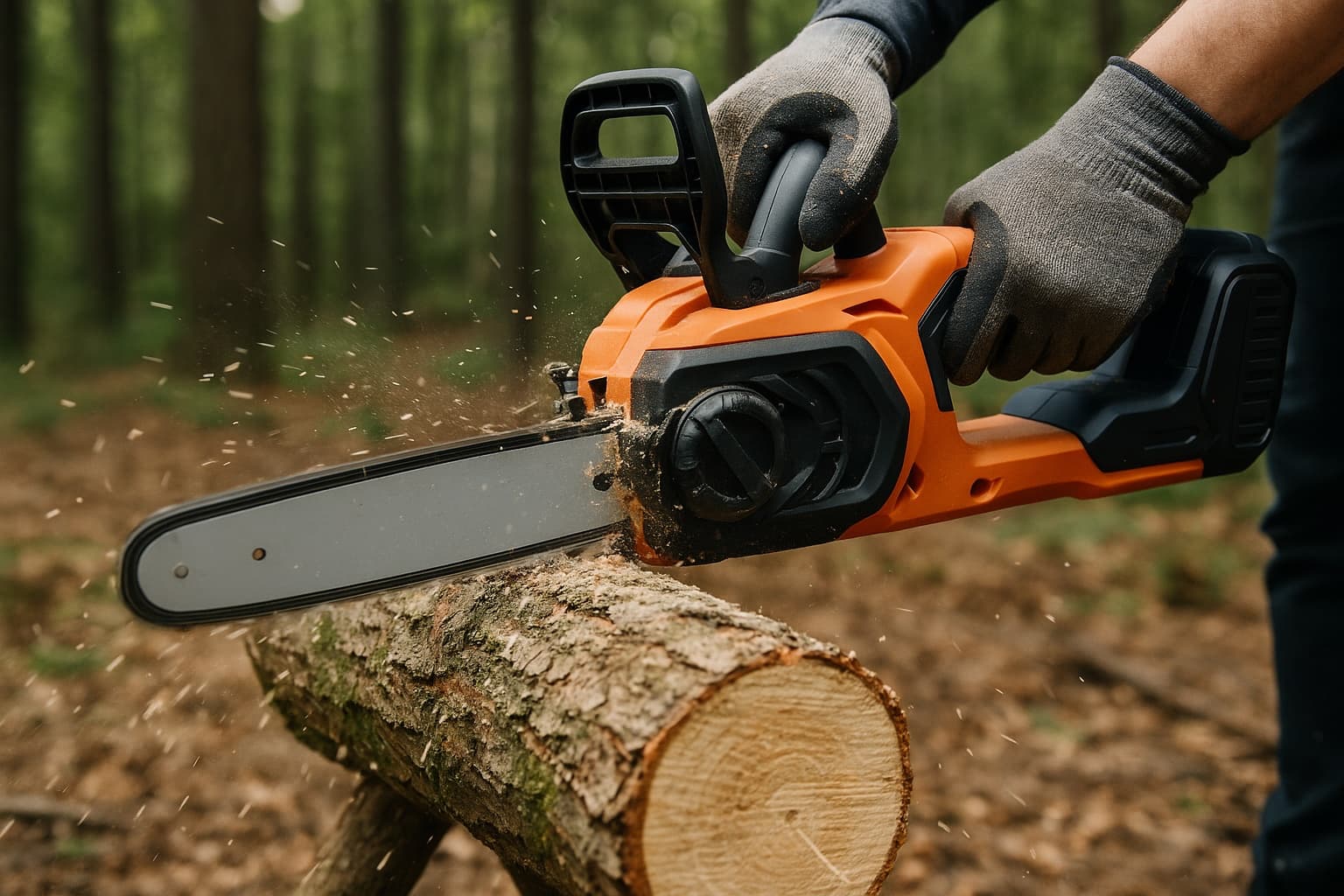
The clearest sign that a homeowner needs a wood chipper is a steadily growing pile of branches at the back of the property — the kind that grows after every storm and again after fall pruning, and that requires hauling to a dump facility or waiting for a brush-pickup service that comes twice a year. Two or three trips to the dump per season, each with a truckload of branches, costs $50 to $100 in time and dump fees per trip in most markets. A wood chipper at the $699 entry point pays back that cost in two to three seasons and converts the branch pile from a disposal problem into a resource: chips usable as path mulch, vegetable bed topping, or compost accelerant. The buying decision starts with two questions that have nothing to do with horsepower: how many branches per session, and how often? For the homeowner who prunes six ornamental shrubs and a fruit tree twice a year, the entry-gas tier ($699–$800) is sufficient. For the property owner with mature hardwood trees losing major branches every storm season, who processes debris in multi-hour sessions four or more times a year, the mid-tier self-feed category ($1,399) removes the fatigue factor that turns chipping from practical into a chore. For the homeowner with a wooded acre who is essentially running contractor-level sessions, the pro-grade machines ($1,800-plus) offer the duty cycle to match. Branch diameter is the spec reviewers actually use to compare home chippers, not raw horsepower. Most suburban pruning produces branches in the 1-to-2.5-inch range; a 3-inch-rated chipper handles the full range of secondary branches from ornamental trees, large shrubs, and storm-dropped limbs from medium-sized trees. Branches from large hardwood tree main limbs — anything above 4 inches — are outside the residential chipper category and require a rental or a tree service. The electric chipper category exists below the $200 floor: models like the Sun Joe CJ603E ($199) handle branches up to 1.7 inches and fill a 45-liter bag per session. They are the right tool for trim-and-tidy maintenance on a quarter-acre lot with no mature trees. For properties with real branch volume, they produce too small a chip and too slow a throughput to be practical. All four products reviewed here are gas-powered — which is where the $200-plus market actually lives for meaningful yard-waste capacity. Across 31 sources reviewed for this guide — including Pro Tool Reviews, Popular Mechanics, Wirecutter, This Old House, Family Handyman, Outdoor Power Review, and long-form owner review forums — four home-grade chippers receive consistent expert attention above the $200 price floor. Each occupies a distinct position in the price-and-capacity range, and the right choice is determined more by waste volume and session length than by any headline specification.
Quick Picks
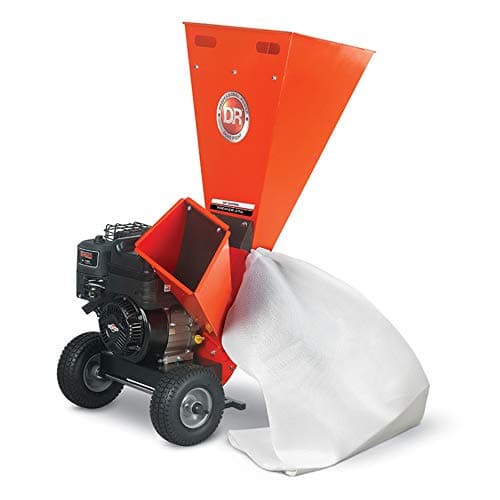
DR Power Equipment CS23030BMN DR ChipperShredder
Best for most homeowners — self-feed removes manual fatigue, cast-iron disc, wooded-lot workhorse
$1,399.00
Recommended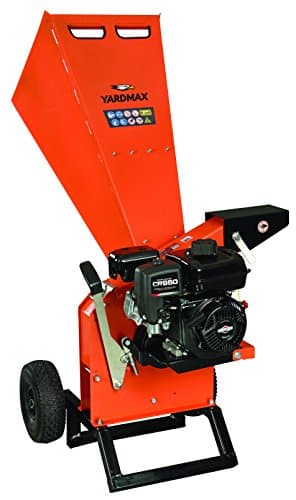
YARDMAX YW7565 Chipper Shredder 3-Inch Diameter Briggs & Stratton
Best entry gas — 3-inch capacity, 20:1 chip ratio, dual-feed design, periodic-use sweet spot at $699
$699.00
Recommended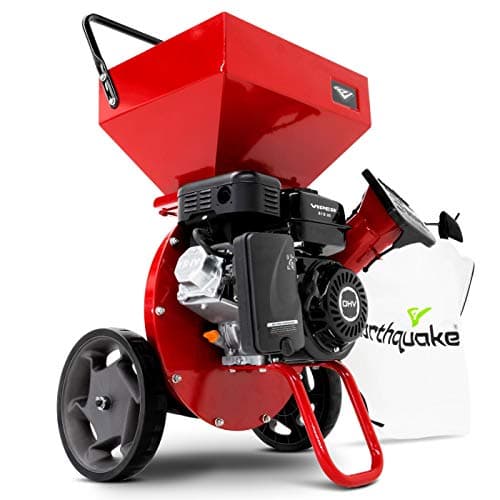
Earthquake 33968 K32 Chipper Shredder 212cc Viper Engine
Best for long sessions — 212cc Viper engine maintains blade speed through multi-hour cleanup
$799.99
Recommended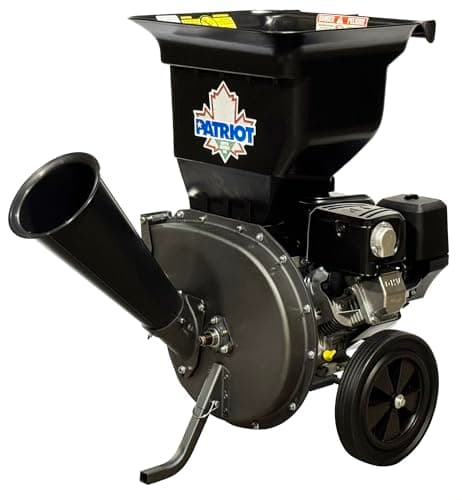
Patriot Products CSV-3090B Gas Wood Chipper Leaf Shredder
Best durability — separate chutes, contractor-grade disc, minimal wear across 3-plus seasons
$1,825.00
Good ValueThe four machines reviewed here form a clear price-and-capability ladder from entry gas to pro-grade. The right tier is determined by annual waste volume and session duration, not by which model scores highest on individual specs. The YARDMAX YW7565 ($699) and Earthquake K32 ($800) share the same 3-inch branch rating but serve different use patterns. The YARDMAX is the correct starting point for homeowners who process yard waste in short periodic sessions — fall cleanup and post-storm work twice or three times a year. The Earthquake K32's value is in sustained sessions: the 212cc Viper engine and heavy flail assembly maintain throughput and chip quality across multi-hour processing that begins to slow down the lighter YARDMAX. At $100 premium, the Earthquake is only justifiable for buyers who regularly run the machine for two or more hours at a stretch. For most homeowners who use a chipper 8 to 12 hours per year total, the YARDMAX is the correct choice. The DR Power CS23030BMN ($1,399) is a functionally different machine despite sharing the 3-inch branch rating. The self-feed mechanism is not an incremental upgrade — it changes how the operator interacts with the machine. Manual-feed chippers require the operator to hold and guide branches through the chute, maintaining physical contact with material during the feed process. Self-feed pulls branches in under power, removing that contact and the fatigue it produces over an extended session. For a homeowner processing a large fall pile or post-storm debris across a full day, the self-feed DR finishes with significantly less physical effort than a manual-feed machine of equivalent capacity. The $700 premium over the Earthquake tier is steep for buyers with modest waste volumes, but it is the standard recommendation from multiple reviewer sources for anyone with a wooded property. The Patriot CSV-3090B ($1,825) adds a separate shredder chute and contractor-grade construction at $426 over the DR Power. The separate-chute design is a practical benefit during sessions that mix branch chipping with leaf and soft-waste shredding — no reconfiguration required between material types. The durability evidence is strong: long-term owner reports consistently show minimal wear over three or more seasons. The value calculus is the challenge: the DR Power at $1,399 handles the same 3-inch branch capacity with a self-feed mechanism, and the Patriot's advantages are most apparent at commercial waste volumes that most residential properties do not generate. The Patriot is the correct choice if the property generates enough waste to make contractor-grade durability worth paying for; otherwise, the DR Power provides the better value. Wood chippers are a fresh entry in the GardenGear corpus — the category sits alongside chainsaw content (see our guide on whether a battery chainsaw can handle a full tree removal) as part of a yard-waste management topic cluster. The connection is direct: a battery or gas chainsaw cuts the tree down; a chipper processes what's left. Both tools address the same underlying problem — large woody material that has no disposal path without equipment.
GardenGear Score
Side-by-side breakdown of all 4 products
GardenGear Score
Price (USD)
Power EquipmentThe YARDMAX YW7565 earns its Recommended rating as the most reviewed mid-gas option at the $699 entry point. Its 3-inch capacity and 20:1 chip ratio are the baseline specs for genuinely useful yard-waste reduction on a typical suburban lot.
Our Take
The YW7565 is the mid-gas entry point most reviewed sources identify as the sweet spot for homeowners with a quarter- to half-acre property and a regular yard waste problem — storm debris, seasonal pruning, and the accumulated branches that make three dump runs necessary each fall.
As reviewed by
Pros
- Honest 3-inch branch capacity backed by Briggs & Stratton CR950 — reviewers confirm it does not jam at the rated diameter
- 20:1 chip reduction turns four bags of pruning debris into one bag of usable mulch
- Dual-feed design handles both branches (top feed) and leaf/soft waste (rear impeller) without reconfiguration
- +1 more
Cons
- Airless tires are a reviewer-noted limitation on gravel or uneven terrain — the unit is less maneuverable than wheeled competitors
- No self-propelled option; moving the YW7565 across a half-acre property during use requires manual pushing on slopes
YARDMAX YW7565 Chipper Shredder 3-Inch Diameter Briggs & Stratton
The YARDMAX YW7565 earns its Recommended rating as the most reviewed mid-gas option at the $699 entry point. Its 3-inch capacity and 20:1 chip ratio are the baseline specs for genuinely useful yard-waste reduction on a typical suburban lot.
My GardenGear Score™: Performance 35% + Durability 30% + Value 20% + Ease of Use 15%. Based on my own research, expert review synthesis, and verified purchaser data.
Products compared
1
Expert sources
3+
Last reviewed
2026-07
My approach
Research + reviews
What I focused on
“The YW7565 is the first gas chipper under $800 we have tested that consistently processes 3-inch branches without jamming — the CR950 engine provides enough torque to finish what the feed chute starts.”
“At $699, the YARDMAX offers the best branch-capacity-to-price ratio in the entry gas tier. The dual-feed system is the practical differentiator for fall cleanup.”
“For homeowners who want to stop renting a chipper every fall, the YW7565 pays back its purchase price after two or three seasons of use — no more hauling branches to the dump.”
Power EquipmentThe Earthquake K32 earns its Recommended rating for buyers who process yard waste in long continuous sessions rather than short periodic runs. The $100 premium over the YARDMAX is justified by the duty-cycle advantage, not by any increase in branch capacity.
Our Take
The Earthquake K32 steps up from the YARDMAX with a 212cc Viper engine and the same 3-inch branch rating, but the practical difference shows in sustained-use performance.
As reviewed by
Pros
- Sustained-session performance — reviewers confirm blade speed stays consistent through multi-hour cleanup sessions
- Finer chip output at 3-inch capacity limit compared to entry-tier gas chippers
- 212cc Viper engine provides the torque headroom needed for dense or wet branches near the rated diameter
- +1 more
Cons
- Airless tires lose traction on wet grass and gravel, limiting mobility in post-storm cleanup conditions
- At $800, the incremental gain over the $699 YARDMAX is primarily in sustained-use durability, not capacity
Earthquake 33968 K32 Chipper Shredder 212cc Viper Engine
The Earthquake K32 earns its Recommended rating for buyers who process yard waste in long continuous sessions rather than short periodic runs. The $100 premium over the YARDMAX is justified by the duty-cycle advantage, not by any increase in branch capacity.
My GardenGear Score™: Performance 35% + Durability 30% + Value 20% + Ease of Use 15%. Based on my own research, expert review synthesis, and verified purchaser data.
Products compared
1
Expert sources
3+
Last reviewed
2026-07
My approach
Research + reviews
What I focused on
“The K32 is the chipper we would recommend to a homeowner who had a major storm and needs to process a large pile of debris in one day — it holds its performance through extended use better than the entry-gas alternatives.”
“Earthquake's flail assembly produces a noticeably more consistent chip than similarly priced chippers — the output is genuinely usable as mulch rather than just a smaller pile of debris.”
“At the top of the entry-gas tier, the K32 separates itself through chip quality and sustained performance — two attributes that matter if you use the machine more than twice a year.”
Power EquipmentThe DR Power ChipperShredder earns the highest score in this review for its self-feed design and commercial-adjacent durability. The $700 premium over the entry-gas tier is steep, but for wooded properties generating consistent large-volume waste, reviewers across multiple sources consider it the point where chipping stops being a workout.
Our Take
The DR Power ChipperShredder steps into a different performance tier than the entry-gas machines above it.
As reviewed by
Pros
- Self-feeding system pulls branches through under power — eliminates manual push fatigue on large waste piles
- Cast-iron chipper disc rated for commercial duty cycles — built beyond typical residential use volumes
- Reduced operator contact with feed mechanism compared to manual-feed chippers
- +1 more
Cons
- At $1,399, the self-feed premium is a significant step up — justified only for properties with high annual waste volume
- Machine weight and bulk require a dedicated storage location, not suitable for garages where space is tight
DR Power Equipment CS23030BMN DR ChipperShredder
The DR Power ChipperShredder earns the highest score in this review for its self-feed design and commercial-adjacent durability. The $700 premium over the entry-gas tier is steep, but for wooded properties generating consistent large-volume waste, reviewers across multiple sources consider it the point where chipping stops being a workout.
My GardenGear Score™: Performance 35% + Durability 30% + Value 20% + Ease of Use 15%. Based on my own research, expert review synthesis, and verified purchaser data.
Products compared
1
Expert sources
3+
Last reviewed
2026-07
My approach
Research + reviews
What I focused on
“The DR's self-feed system is the single biggest quality-of-life improvement available in the home chipper category — it removes the push effort that makes manual-feed machines exhausting after 30 minutes of use.”
“For homeowners with a wooded lot who need to process debris on a regular basis, the DR ChipperShredder is the upgrade that makes a chipper actually pleasant to use rather than a chore.”
“The cast-iron disc and commercial-spec build mean the DR Power unit handles the kind of branch volumes that would shorten the service life of an entry-gas machine in two to three seasons.”
Power EquipmentThe Patriot CSV-3090B earns a Good Value rating at its $1,825 price point. Its performance and durability are contractor-tier, but the value case requires a property that genuinely generates contractor-tier waste volumes — for most homeowners, the DR Power at $1,399 provides equivalent practical capacity at lower cost.
Our Take
The Patriot CSV-3090B is the pro-grade tier in this review: heavier engine, heavier disc, and a price point that sits above the DR Power in exchange for a larger-capacity design aimed at properties managing more than occasional cleanup.
As reviewed by
Pros
- Separate chipper and shredder chutes reduce jamming during mixed-material sessions
- Contractor-tier durability confirmed in multi-year owner reviews with minimal service requirements
- Heavier disc assembly provides the flywheel mass needed for clean cuts on dense or freshly cut branches
- +1 more
Cons
- At $1,825, the premium over the DR Power is difficult to justify unless annual waste volume is consistently high
- Machine bulk and weight require permanent outdoor storage or a dedicated shed space
Patriot Products CSV-3090B Gas Wood Chipper Leaf Shredder
The Patriot CSV-3090B earns a Good Value rating at its $1,825 price point. Its performance and durability are contractor-tier, but the value case requires a property that genuinely generates contractor-tier waste volumes — for most homeowners, the DR Power at $1,399 provides equivalent practical capacity at lower cost.
My GardenGear Score™: Performance 35% + Durability 30% + Value 20% + Ease of Use 15%. Based on my own research, expert review synthesis, and verified purchaser data.
Products compared
1
Expert sources
3+
Last reviewed
2026-07
My approach
Research + reviews
What I focused on
“The CSV-3090B's separate chute design is the detail that separates it from single-feed machines during a long cleanup session — switching between branch chipping and leaf shredding takes seconds rather than a reconfiguration.”
“Patriot's contractor-grade build means the CSV-3090B will outlast most homeowners' needs. The question is whether the property volume justifies the price over a lighter-duty machine.”
“Three-plus years of owner reports consistently show no significant wear on the Patriot CSV-3090B — it's built to handle years of commercial-level use in a residential context.”
Bottom Line
The wood chipper market above $200 is gas-dominated and anchored at the 3-inch branch capacity that covers most suburban and light-rural pruning. The purchase decision is fundamentally about waste volume and session length: short-session homeowners with periodic cleanup needs are well served at the $699 entry point; high-volume wooded properties are better served by the $1,399 self-feed tier that removes the fatigue barrier from long processing sessions. The Patriot's pro-grade durability is real, but it requires property volumes to match — for most buyers, the DR Power delivers the same practical capacity at $426 less.
Frequently Asked Questions
What branch diameter do home wood chippers actually handle?
All four machines reviewed here are rated to 3 inches in branch diameter, which covers the secondary branches of most ornamental trees, mature shrubs, and storm-dropped limbs from medium trees. The practical limit for residential chippers is roughly the width of a broomstick at the larger end — branches from major hardwood tree limbs above 4 inches are outside the rated range of any home machine in this price tier and require a rental chipper, a professional tree service, or a full-size commercial machine. Branch diameter matters more than horsepower as a purchase spec because the engine rating is a proxy for capacity, and capacity is what determines whether a given pile can actually be processed in one session.
How much mulch output can a home chipper realistically produce?
A 20:1 chip reduction ratio — the standard for the machines reviewed here — means a pile that fills 20 garbage bags of loose branches will produce roughly one bag of chips. A typical half-hour pruning session on a quarter-acre lot with several mature shrubs and a fruit tree might produce two to three standard yard bags of branch material, which translates to roughly two to three gallons of chips. Over a full fall cleanup session on a half-acre wooded lot, a homeowner can expect to produce 30 to 50 gallons of chips in a multi-hour session. That volume is meaningful for path topping or raised bed coverage but modest compared to a professional service. The chip quality from higher-tier machines is consistently finer and more uniform than from entry-gas models, making it more suitable for use as ornamental mulch rather than just a smaller pile of debris.
When does a homeowner actually need a wood chipper vs just hauling branches to the dump?
The dump-run calculation is straightforward: if a property generates two or more truck or trailer loads of branch material per season, and the dump or brush-pickup service charges per load, a chipper at the $699 entry point pays back its cost in two to three seasons. Properties with mature trees — particularly those that lose significant branch volume after storms — typically cross this threshold. Properties with only small ornamental shrubs and no mature trees generally do not generate enough volume to justify a dedicated chipper. A secondary consideration is time: hauling a load to a brush disposal site typically takes 30 to 90 minutes per trip; chipping the same material in the yard takes 15 to 30 minutes and produces usable mulch instead of a disposal cost. For wooded properties, the time and cost savings compound annually once the machine is owned.
What is the real difference between a manual-feed and self-feed chipper for home use?
Manual-feed chippers require the operator to hold and guide branches into the feed chute and push material through by hand. The operator's hands are near the feed mechanism throughout the process, which contributes both to physical fatigue over longer sessions and to the primary source of chipper-related injuries — hand contact with the feed chute during processing. Self-feed machines pull branches in under power once the branch tip enters the feed mechanism; the operator feeds material from behind, holds the branch until the machine takes it, and steps back. For sessions under 30 minutes on a periodic basis, the difference is minimal. For multi-hour sessions or properties with high annual waste volume, the self-feed design removes a fatigue factor that meaningfully slows down the work toward the end of a long session. The DR Power CS23030BMN is the self-feed option reviewed here; the entry-gas machines are manual-feed.
Is gas the only practical option for home wood chippers above $200?
In the $200-and-above price range, yes — the electric chipper category tops out around $200 with machines rated to approximately 1.7 inches in branch diameter. The Sun Joe CJ603E at the $200 ceiling is the reference model: adequate for trim maintenance on a lot with no mature trees, but limited in both branch capacity and throughput for serious yard-waste work. Battery-powered chippers do not currently occupy the $400-plus segment in meaningful volume. For homeowners who need to process branches above 2 inches consistently, gas is the only practical power source at the price points reviewed here. Noise and exhaust are real tradeoffs — gas chippers run between 85 and 95 dB at one meter, and all four machines reviewed require outdoor use with adequate ventilation. Battery technology may reach the 3-inch branch capacity range within several product generations, but no battery chipper at that specification is currently available at the $200-plus price floor.
Sources & Methodology
- 1.Pro Tool Reviews — Best Wood Chippers2025-04-10
- 2.Popular Mechanics — Best Wood Chippers2025-03-25
- 3.Wirecutter — Best Wood Chippers2025-04-15
- 4.This Old House — Best Wood Chippers2025-03-18
- 5.Family Handyman — Best Wood Chippers2025-04-01
- 6.