Best Potting Soil & Mixes 2026: For Containers, Raised Beds & Seed Starting
Bottom line: FoxFarm Ocean Forest ($25/1.5 cu ft) is the best all-purpose potting mix for containers and raised beds — it's used by professional nurseries for good reason, and plants rarely need supplemental fertilizer for the first 4-6 weeks. For seed starting specifically, Espoma Organic Seed Starter ($12) provides the fine texture and drainage seedlings need without compaction.
Potting soil quality varies enormously. The cheap bags from big-box stores are often mostly bark fines, perlite, and air — plants struggle in them because there's not enough organic matter to hold moisture or nutrients. Here's what actually works.
Quick Picks
Best All-Purpose: FoxFarm Ocean Forest Potting Mix
Price: $24.99 on Amazon
FoxFarm Ocean Forest is what professional nurseries use, which is a decent endorsement. The blend of composted forest products, sandy loam, bat guano, earthworm castings, and kelp creates a genuinely well-balanced soil that drains properly while retaining moisture. Plants in Ocean Forest rarely need additional fertilizer for the first 4-6 weeks after transplanting.
Why Experts Recommend It
- Professionally formulated — actual nursery-grade ingredients, not bark fines
- Ready-to-use pH — adjusted to 6.3-6.8, right for most vegetables
- Good drainage — doesn't compact and stays workable through the season
- Feeds plants initially — bat guano and kelp provide slow-release nutrients
- Widely available — garden centers and Amazon both stock it
What's In It
- Composted forest products (carbon base)
- Sandy loam (drainage, structure)
- Sphagnum peat moss (moisture retention)
- Earthworm castings (microbial life, nutrients)
- Bat guano (phosphorus, nitrogen)
- Pacific Northwest sea-going fish emulsion
- Norwegian kelp meal
Best For
Any container planting — tomatoes, peppers, herbs, flowers. Also works well as a raised bed amendment mixed 50/50 with native soil or compost.
Best Seed Starting Mix: Espoma Organic Seed Starter
Price: $11.99 on Amazon
The difference between seed starting mix and potting mix matters a lot for germination. Seed starting mix is finer textured, drains more freely, and contains minimal nutrients — seeds don't need fertilizer to germinate, and too much nitrogen can burn delicate new roots. Espoma's blend uses myco-tone mycorrhizae that help roots establish faster after transplanting.
Why Experts Recommend It
- Fine texture — tiny roots can penetrate without resistance
- Fast drainage — reduces damping off (the fungal disease that kills seedlings)
- Low nutrient content — appropriate for germination (seeds contain their own nutrients)
- Myco-Tone — mycorrhizal fungi that aid root establishment post-transplant
- OMRI listed — certified for organic gardening
When to Switch
Start in seed starting mix, transplant to FoxFarm or similar potting mix once true leaves appear. The richer soil supports the faster growth needs of established seedlings.
Best For
Seed trays, plug trays, starting any vegetable or flower from seed.
Best Budget Option: Miracle-Gro Performance Organics
Price: $11.99 on Amazon
Miracle-Gro's Performance Organics line is a significant step up from their standard potting mix in quality and ingredient list. The organic version includes actual compost, worm castings, and feather meal rather than just slow-release synthetic fertilizer beads. It's not as rich as FoxFarm, but it performs well and is easier to find at hardware stores.
Why Experts Recommend It
- Widely available — at most hardware stores and garden centers
- Organic certification — genuine compost ingredients, not just synthetic
- Feeds for 6 months — less frequent fertilizing needed
- Budget-friendly — often on sale, good for large-volume planting
- Consistent quality — more reliable than generic store-brand mixes
Best For
Budget-conscious gardeners, bulk container planting, anyone who needs a reliable mix available at local stores.
Understanding Potting Mix Ingredients
Peat Moss
Traditional moisture retention ingredient. Acidic (pH 3.5-4.5), which lowers mix pH. Good for moisture retention but a non-renewable resource. Being replaced by coco coir in premium mixes.
Coconut Coir
Renewable alternative to peat. Neutral pH, excellent moisture retention, more sustainable. Found in premium mixes including FoxFarm.
Perlite
Volcanic glass expanded by heat. Tiny white pellets you see in potting mix. Improves drainage and aeration — prevents compaction. More perlite = better drainage.
Vermiculite
Expanded mica mineral. Holds moisture and nutrients better than perlite. Used in seed starting mixes for moisture retention without compaction.
Compost
Decomposed organic matter. Provides nutrients, microbial life, and structure. Quality varies enormously — worm castings are the premium source, municipal compost is the budget option.
Bark Fines
Shredded wood. Provides structure but few nutrients. The primary ingredient in cheap potting mixes that explains why plants don't grow well in them.
Soil Comparison
By Use Case
Containers (tomatoes, peppers, herbs)
- FoxFarm Ocean Forest: 9/10 — professional standard, plants grow visibly better
- Miracle-Gro Performance Organics: 7/10 — solid budget option, widely available
Seed Starting
- Espoma Organic Seed Starter: 9/10 — fine texture, good drainage, proper for germination
- Pro-Mix Seed Starting: 8/10 — professional greenhouse standard, if you can find it
Raised Beds (amendment, not fill)
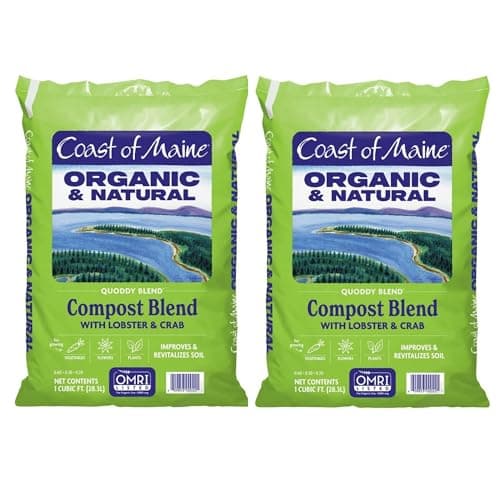
- Coast of Maine Bar Harbor: 8/10 — premium ready-to-use raised bed blend
- FoxFarm + compost 50/50: 9/10 — best performance when you mix your own
FAQ
Can I reuse potting soil from last season? Yes, with caveats. Refresh it by mixing in compost and slow-release fertilizer to replace nutrients depleted during the previous season. If any plants showed disease, sterilize the soil first (bake at 180°F for 30 minutes in an oven) or start fresh. After 2-3 seasons, replace completely.
Why are my container plants growing slowly even though I'm watering regularly? Usually either depleted soil nutrients or compacted soil that's lost its drainage structure. Check: does water pool on the surface instead of draining through immediately? If so, the soil has compacted and needs to be replaced or amended with perlite.
What's the difference between potting mix and garden soil? Garden soil is too dense for containers — it compacts in pots and prevents root growth. Potting mix is specifically engineered for containers: lighter texture, better drainage, won't compact. Never use garden soil in containers.
Do I need to fertilize plants in potting mix? Premium mixes like FoxFarm provide nutrients for 4-6 weeks. After that, plants need regular fertilizing. A balanced liquid organic fertilizer (fish emulsion, kelp) applied every 2 weeks keeps container plants producing through the season.
How much potting mix do I need? Calculate your container volume in cubic feet (length × width × depth ÷ 1728 for inches, or length × width × depth directly if in feet). A 16" × 16" × 12" container = 1.2 cubic feet. FoxFarm bags are 1.5 cu ft — plan one bag per large container.
The Bottom Line
FoxFarm Ocean Forest is worth the $25 if you're serious about container vegetables — the ingredient quality is genuinely better and plants respond to it. Espoma Seed Starter for anything germinating from seed. For budget large-volume planting, Miracle-Gro Performance Organics is the practical choice available at most stores.
The rule that matters most: don't use cheap potting mix for vegetable containers. The difference in plant performance is visible within 2-3 weeks.