Best Seed Starting Equipment for Spring 2026: Complete Setup Guide
Starting your own garden from seed gives you variety that nurseries can't match, costs less than buying plants, and extends your growing season by 6-8 weeks. But without proper equipment, you'll struggle with poor germination, leggy seedlings, and transplant shock.
The right seed starting setup creates optimal conditions for germination and early growth: consistent warmth, adequate light, proper moisture levels, and room to grow. Whether you have a sunny windowsill or a basement corner, there's equipment that fits your space.
Here's what actually works for growing strong, healthy seedlings that thrive after transplant.
Essential Equipment Overview
Must-have basics:
- Seed starting trays with drainage holes
- Humidity domes for moisture retention
- Quality seed starting mix (not garden soil)
- Labels for tracking varieties
Worth the upgrade:
- Heat mats for faster, more reliable germination
- Grow lights for stocky, strong seedlings
- Timer controls for automated watering/lighting
Nice-to-have additions:
- Soil thermometer for monitoring soil temperature
- pH testing strips for seed starting mix
- Small fan for air circulation
The biggest mistake new seed starters make is trying to save money on the wrong things. Cheap trays crack after one season, inadequate light produces weak seedlings, and poor drainage kills more seeds than anything else.
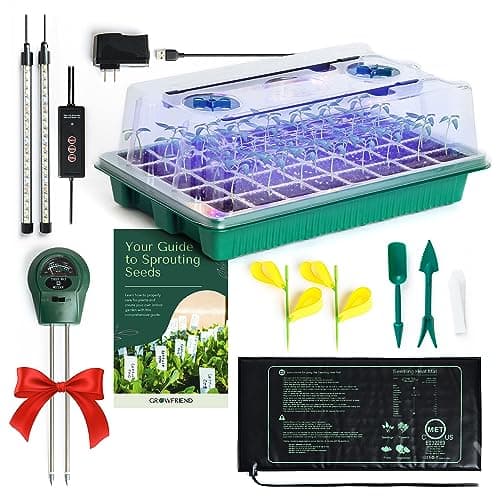
Best Complete Starter Kit: GROWFRIEND Seed Starter System
👉 Check GROWFRIEND Seed Starter System ($39.99) on Amazon — currently $39.99
GROWFRIEND Seed Starter System
Self-watering reservoir reduces damping off — best for gardeners who struggle with watering consistency.
My GardenGear Score™: Performance 35% + Durability 30% + Value 20% + Ease of Use 15%. Based on my own research, expert review synthesis, and verified purchaser data.
Price: $89-109 on Amazon
This complete kit includes everything you need to start 40 plants: heavy-duty tray, dual LED grow lights, waterproof heat mat, adjustable humidity dome, soil moisture meter, and even sticky traps for gnats.
Why It's Our Top Pick
The GROWFRIEND kit solves the three biggest seed starting problems: inadequate light, inconsistent temperature, and improper watering. The dual LED lights provide full spectrum coverage, the heat mat maintains optimal soil temperature, and the moisture meter takes the guesswork out of watering.
What sets it apart:
- Heat mat is actually waterproof (many aren't)
- Grow lights adjust from 6 to 36 inches height
- 40-cell tray has deeper cells than most budget options
- Humidity dome has adjustable vents
The downside: At $100+, it's a significant upfront investment. The cell size works for most vegetables but may be too small for large seeds like sunflowers or beans.
Best for: First-time seed starters who want everything included, anyone starting 30-50 plants per season.
Best Budget Option: Basic Seed Starting Tray Setup
Price: $25-35 for complete setup on Amazon
For minimal investment, you can get started with a basic 72-cell tray, humidity dome, and bottom watering setup. Add a heat mat later if germination is slow.
Basic Setup Components
- 72-cell seed starting tray
- Clear humidity dome with vents
- Solid watering tray for bottom watering
- Seed starting mix (separate purchase)
Pros: Low cost, easy to expand, fits on most windowsills Cons: No grow lights (requires sunny window), no heat (slower germination), more manual monitoring needed
Best for: Gardeners with south-facing windows, those starting warm-season crops only, anyone wanting to test seed starting before investing more.
Heat Mats: Worth Every Dollar
Heat mats are the single best upgrade for seed starting success. They increase germination rates by 30-50% and cut germination time in half for most vegetables.
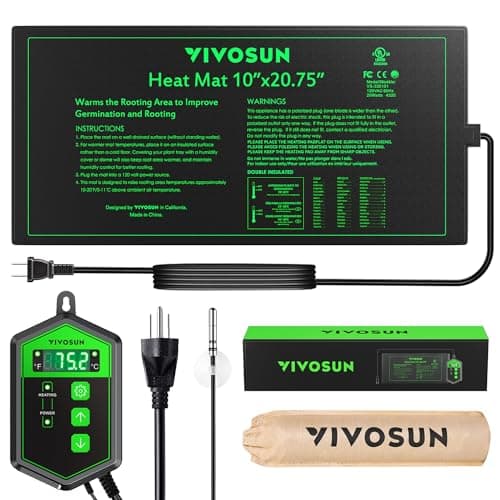
Best Heat Mat: VIVOSUN Heat Mat with Controller
👉 Check VIVOSUN Heat Mat with Controller ($24.79) on Amazon — currently $24.79
VIVOSUN Seedling Heat Mat with Controller
Single best investment for starting warm-season crops — cuts germination time in half.
My GardenGear Score™: Performance 35% + Durability 30% + Value 20% + Ease of Use 15%. Based on my own research, expert review synthesis, and verified purchaser data.
Price: $35-45 on Amazon
This 10"x20.75" mat fits standard 1020 trays and includes a digital temperature controller. Unlike basic heat mats that run constantly, the controller maintains precise temperature.
Temperature targets:
- Cool crops (lettuce, cabbage): 65-70°F
- Warm crops (tomatoes, peppers): 75-80°F
- Hot crops (eggplant, melons): 80-85°F
The reality check: Heat mats work best on hard surfaces that don't insulate. Placing them on carpet or thick tablecloths reduces effectiveness significantly.
Grow Light Systems: Beyond the Windowsill
Even south-facing windows rarely provide enough light for compact, sturdy seedlings. Grow lights let you start seeds anywhere and prevent the leggy, weak growth common with window growing.
Best Full Spectrum LED: SOLIGT 60-Cell Kit with Lights
👉 Check SOLIGT 60-Cell Kit with Lights ($47.49) on Amazon — currently $47.49
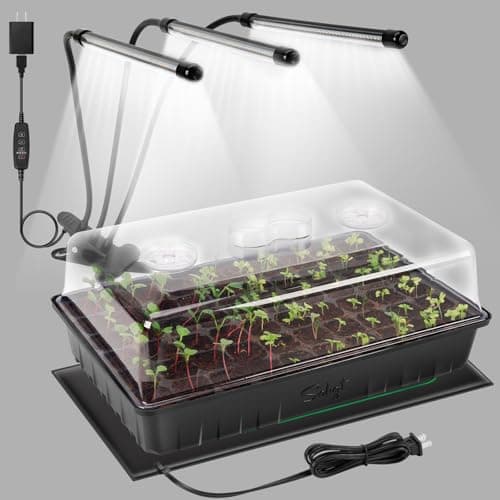
SOLIGT 60-Cell Seed Starting Kit with Lights
Complete beginner system — everything in one box, adequate LED intensity for compact seedlings.
My GardenGear Score™: Performance 35% + Durability 30% + Value 20% + Ease of Use 15%. Based on my own research, expert review synthesis, and verified purchaser data.
Price: $65-85 on Amazon
This kit combines a 60-cell tray with adjustable full-spectrum LED lights. The lights include timer functions (8, 12, or 18-hour cycles) and brightness control.
Light specs that matter:
- Full spectrum (includes red and blue wavelengths)
- 24-40 watts actual power draw
- Adjustable height from 6-24 inches
- Timer controls for consistent daily cycles
Pro tip: Position lights 6-12 inches above seedlings for stocky growth. Too high creates leggy plants; too low can cause heat stress.
DIY Shop Light Alternative
Price: $40-60 for setup on Amazon
A 4-foot LED shop light (5000K color temperature) suspended over multiple trays costs less per square foot than seed starting kits. Mount it under a shelf or build a simple frame.
Pros: Covers multiple trays, brighter than most kit lights, adjustable height Cons: No timer included, requires DIY mounting, less aesthetic than dedicated kits
Advanced Features Worth Considering
Self-Watering Trays
Bottom-watering systems reduce damping-off disease and provide consistent moisture. Look for trays with wicking action or capillary mats.
Best option: 120-Cell Self-Watering Kit on Amazon - $70-90
Air Circulation
A small fan prevents fungal diseases and strengthens seedling stems. Run it on low speed for 2-3 hours daily once true leaves appear.
Seed Starting Mix vs. Potting Soil
Never use garden soil - it's too heavy and may contain pathogens. Seed starting mixes are finer textured and drain better than regular potting soil.
Quality brands to look for:
- Espoma Seed Starter Mix
- Burpee Seed Starting Mix
- Pro-Mix Seed Starting Mix
Common Mistakes That Kill Seeds
Starting too early: Even with perfect equipment, starting warm-season crops more than 6-8 weeks before your last frost creates problems. Seedlings outgrow their containers and become root-bound.
Overwatering: More seeds die from too much water than too little. Soil should be moist but not soggy. Water from the bottom when possible.
Inadequate hardening off: Gradual exposure to outdoor conditions over 7-10 days prevents transplant shock. Equipment can't solve poor transition practices.
Wrong temperature timing: Heat mats speed germination but should be removed once seedlings emerge. Continuing heat creates weak, stretchy growth.
Budget-Friendly Upgrades
If you're starting with basic equipment, prioritize upgrades in this order:
- Heat mat ($25-35) - Biggest impact on germination success
- Grow lights ($40-70) - Essential for strong, compact seedlings
- Better trays ($15-25) - Deeper cells, better drainage
- Timer controls ($10-20) - Automation reduces daily management
Seasonal Timing Guide
Late winter (6-8 weeks before last frost):
- Tomatoes, peppers, eggplant
- Herbs (basil, oregano, thyme)
- Annual flowers
Early spring (3-4 weeks before last frost):
- Cole crops (cabbage, broccoli, kale)
- Lettuce and greens
- Cool-season flowers
Equipment preparation: Clean and test all equipment in January. Replace cracked trays, check light functionality, and stock up on seed starting mix.
Space Planning
Windowsill setup: 2-3 standard trays maximum; choose compact varieties Table setup: 4-6 trays with overhead lighting; allows succession planting Shelf system: 8-12 trays on multiple levels; best for serious gardeners
Calculate your needs: Count mature plants you want, multiply by 1.5 for extras and losses, then choose equipment size accordingly.
The Real Investment
Quality seed starting equipment pays for itself in 2-3 seasons compared to buying transplants. A $100 complete kit can produce $400+ worth of vegetable and flower plants annually.
But here's what most guides won't tell you: The equipment is only as good as your consistency. Daily monitoring, proper timing, and gradual hardening off matter more than expensive gadgets.
Start with basic equipment and learn the rhythms of seed starting. Upgrade pieces as you understand what works in your specific space and climate.
The best seed starting equipment is what you'll actually use consistently, season after season.
Looking to expand your garden prep? Check out my guides on soil preparation tools and plant protection systems.