Garden Soil Preparation Tools & Amendments for Spring 2026
Healthy soil is the difference between plants that survive and plants that thrive. Most garden failures trace back to poor soil preparation - compacted earth, nutrient deficiencies, or drainage problems that no amount of watering or fertilizing can fix.
Spring soil preparation sets the stage for the entire growing season. The tools and amendments you choose depend on your soil type, garden size, and what you're growing. But the investment pays dividends: properly prepared soil can double your harvest while reducing pest and disease problems.
Here's how to build soil that works for you, not against you.
Soil Preparation Fundamentals
Before buying anything, know your soil: A simple jar test reveals soil texture in 24 hours. Fill a jar 1/3 with soil, add water, shake, and let settle. Sand settles first, then silt, then clay floats on top.
Ideal garden soil breakdown:
- 40% sand (drainage)
- 40% silt (nutrients)
- 20% clay (water retention)
- 5-10% organic matter (the secret ingredient)
Most soils need help reaching this balance. Sandy soils drain too fast and need organic matter for water retention. Clay soils hold too much water and need sand and compost for drainage.
The biggest mistake: trying to fix everything at once. Soil improvement is a multi-year process. Start with what your soil needs most, then build on that foundation.
Essential Hand Tools for Soil Work
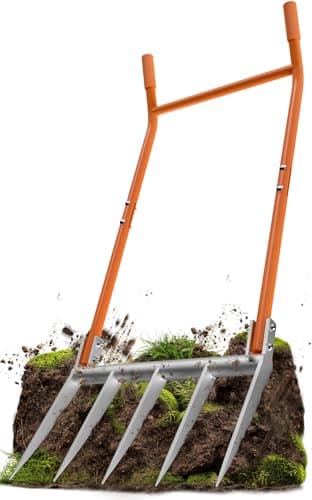
Best Broadfork: Valley Oak Tool Broadfork
👉 Check Valley Oak Tool Broadfork ($115.99) on Amazon — currently $115.99
Valley Oak Tool Broadfork
The organic gardener's deep aeration tool — no-till soil prep without a tiller.
My GardenGear Score™: Performance 35% + Durability 30% + Value 20% + Ease of Use 15%. Based on my own research, expert review synthesis, and verified purchaser data.
Price: $130-160 on Amazon
A broadfork breaks up compacted soil 12-18 inches deep without destroying soil structure like rototillers do. This is the single best tool for improving soil health long-term.
How it works: Drive the tines straight down, pull the handle back to lift and crack the soil, then move 6 inches and repeat. No mixing, no destroying beneficial soil layers.
Why broadforking beats tilling:
- Preserves soil organisms and mycorrhizal networks
- Doesn't bring weed seeds to the surface
- Creates drainage channels without compaction
- Works in wet conditions that would damage tilled soil
The downside: It's hard work. Expect to broadfork 100 square feet in an hour with good technique. Not practical for breaking new ground or heavy clay.
Best for: Established beds, annual soil decompaction, gardeners focused on soil health over convenience.
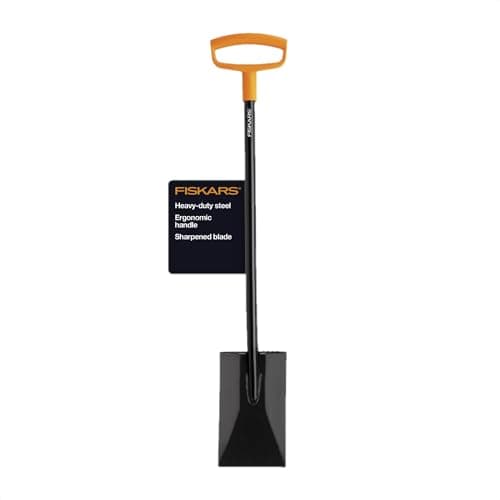
Best Garden Spade: Fiskars Digging Spade
👉 Check Fiskars Digging Spade ($34.98) on Amazon — currently $34.98
Price: $35-45 on Amazon
For small areas, amendments, and precision work, a quality spade is irreplaceable. The Fiskars has a sharp blade that cuts through roots and a comfortable grip that reduces hand fatigue.
Key features:
- Sharp, pointed blade for easy soil penetration
- Steel construction with powder-coated finish
- Ergonomic handle reduces wrist strain
- Lifetime warranty
Use cases: Digging planting holes, incorporating amendments in small areas, edging beds, transplanting.
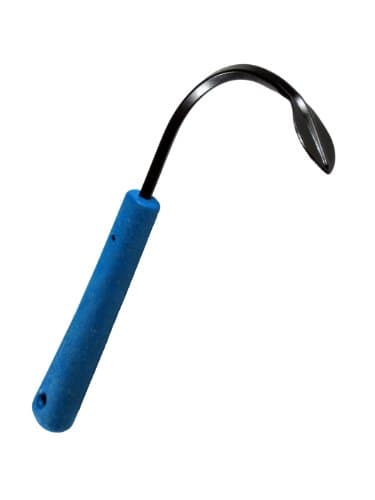
Best Cultivator: CobraHead Weeder & Cultivator
👉 Check CobraHead Weeder & Cultivator ($39.00) on Amazon — currently $39.00
CobraHead Weeder & Cultivator
Cult-favorite weeder with a curved blade that gets under taproots better than anything else.
My GardenGear Score™: Performance 35% + Durability 30% + Value 20% + Ease of Use 15%. Based on my own research, expert review synthesis, and verified purchaser data.
Price: $25-30 on Amazon
This odd-looking tool excels at surface cultivation, breaking soil crust, and working compost into the top 2-3 inches of soil. The curved blade design cuts through soil easier than straight tines.
Mechanical Soil Preparation
Best Mid-Size Tiller: Troy-Bilt Pony ES Rear-Tine Tiller
👉 Check Troy-Bilt Pony ES Rear-Tine Tiller ($59.56) on Amazon — currently $59.56
Price: $1,200-1,400 on Amazon
For breaking new ground or working large areas, a rear-tine tiller provides the power you need. The Troy-Bilt Pony has enough weight and power for heavy clay while remaining manageable for average users.
Specifications:
- 208cc OHV engine
- 16-inch tilling width
- Adjustable tilling depth up to 7 inches
- Counter-rotating tines for breaking hard soil
When to use a tiller:
- Breaking new ground for the first time
- Working in large amounts of amendments (2+ inches)
- Creating new beds in compacted or grassy areas
- Annual deep preparation of annual beds
When NOT to use a tiller:
- Soil is too wet (creates hardpan)
- Established perennial beds
- Soil with lots of perennial weeds (spreads them)
- Within 3 feet of tree roots
The honest truth: Rototillers are seductive but overused. They create long-term soil compaction below the tilling depth and destroy soil structure. Use them strategically, not habitually.
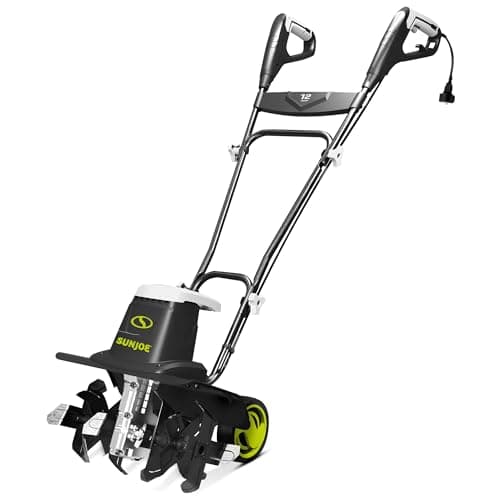
Best Electric Cultivator: Sun Joe TJ603E
👉 Check Sun Joe TJ603E ($99.97) on Amazon — currently $99.97
Sun Joe TJ603E Electric Garden Tiller
Best electric tiller for residential use — no gas, low maintenance, right size for garden beds.
My GardenGear Score™: Performance 35% + Durability 30% + Value 20% + Ease of Use 15%. Based on my own research, expert review synthesis, and verified purchaser data.
Price: $80-100 on Amazon
For light cultivation and amendment incorporation, this electric cultivator offers tiller convenience without the weight and maintenance of gas engines.
Best for: Working compost into beds, preparing small planting areas, breaking soil crust, maintaining established beds.
Limitations: 16-amp requirement needs heavy-duty extension cord, 12-inch width limits efficiency in large areas, struggles in hard clay.
Soil Amendments That Actually Work
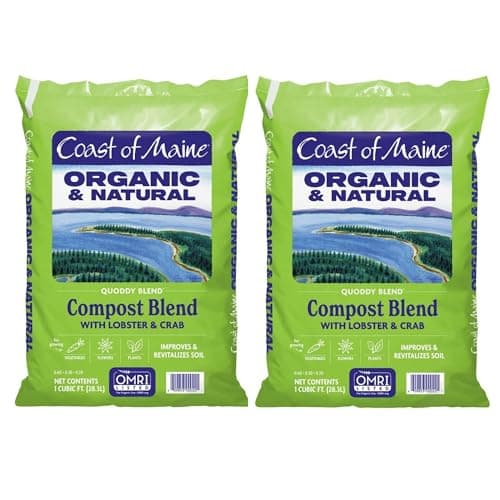
Premium Compost: Coast of Maine Lobster Compost
👉 Check Coast of Maine Lobster Compost ($42.13) on Amazon — currently $42.13
Coast of Maine Lobster Compost
Lobster shell chitin provides biological pest suppression alongside premium compost nutrition.
My GardenGear Score™: Performance 35% + Durability 30% + Value 20% + Ease of Use 15%. Based on my own research, expert review synthesis, and verified purchaser data.
Price: $8-12 per bag on Amazon
This composted lobster shell and seaweed blend provides slow-release nutrients and excellent soil structure improvement. Unlike raw manure, it's ready to use immediately.
Why lobster compost stands out:
- Naturally contains calcium from shells
- pH buffering from marine materials
- High in trace minerals often missing from land-based composts
- Lower salt content than fresh manure
Application rate: 2-3 inches worked into soil, or 1 inch as top dressing around plants.
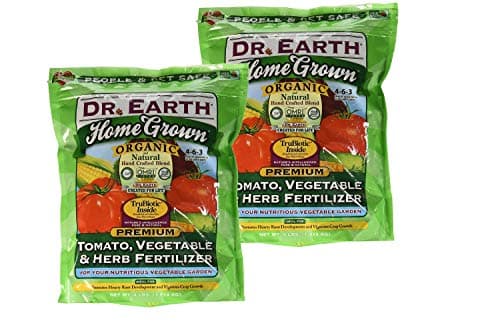
Best Organic Fertilizer: Dr. Earth Organic 5 Tomato & Vegetable Fertilizer
👉 Check Dr. Earth Organic 5 Tomato & Vegetable Fertilizer ($38.73) on Amazon — currently $38.73
Price: $15-20 for 4lb bag on Amazon
This blend combines fish bone meal, kelp meal, and beneficial soil microbes for sustained feeding throughout the growing season.
N-P-K analysis: 4-6-3 with added calcium and magnesium Feeding schedule: Apply at planting, then monthly during growing season Coverage: 4lb bag covers approximately 60 square feet
Best Soil Conditioner: Espoma Organic Humic-Tone
👉 Check Espoma Organic Humic-Tone ($16.13) on Amazon — currently $16.13
Price: $18-25 for 4lb bag on Amazon
Humic acid improves nutrient uptake and helps soil retain moisture without creating waterlogged conditions. This is especially valuable in sandy soils or areas with poor water retention.
How humic acid works: Creates charged sites that hold nutrients against leaching while improving soil structure at the molecular level.
Specific Soil Problem Solutions
Heavy Clay Soil
The problem: Poor drainage, compaction, slow to warm in spring Solutions:
- Add coarse sand (NOT fine sand) - 20% by volume
- Work in 3-4 inches of compost annually
- Plant cover crops in unused areas
- Use broadfork instead of rototiller
Best clay soil amendment: Expanded shale on Amazon - permanent drainage improvement that doesn't break down like organic matter.
Sandy Soil
The problem: Fast drainage, low nutrient retention, frequent watering needed Solutions:
- Add compost annually - 2-3 inches minimum
- Use mulch to reduce evaporation
- Choose drought-tolerant varieties
- Consider drip irrigation for water efficiency
Best sandy soil amendment: Coconut coir on Amazon - holds 10x its weight in water while improving soil structure.
High pH (Alkaline) Soil
The problem: Iron and manganese deficiency, poor nutrient uptake Solutions:
- Add elemental sulfur in fall
- Use acidic organic matter (pine needles, oak leaves)
- Choose alkaline-tolerant varieties
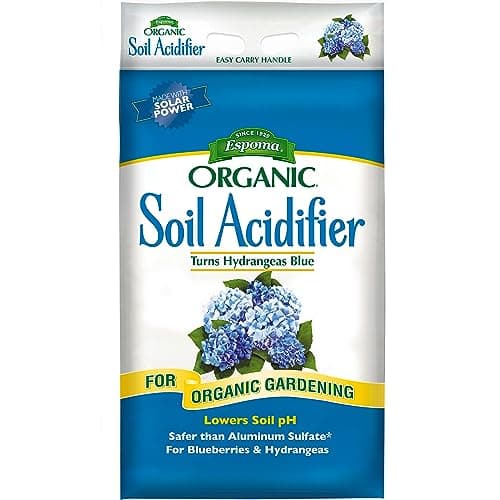
Best pH reducer: Espoma Soil Acidifier on Amazon - organic sulfur blend that lowers pH gradually.
Low pH (Acidic) Soil
The problem: Aluminum toxicity, poor bacterial activity Solutions:
- Add agricultural lime in fall
- Use wood ash sparingly
- Test pH annually to avoid over-correction
Best pH raiser: Espoma Garden Lime on Amazon - pelletized for easy spreading and faster action than ground limestone.
Spring Soil Preparation Timeline
Late Winter (February-March)
- Test soil pH and nutrients
- Order amendments and tools
- Plan bed layouts and cover crop termination
Early Spring (March-April)
- Spread compost and amendments when soil is workable but not muddy
- Work amendments into soil with broadfork or tiller
- Allow 2-3 weeks for soil to settle before planting
Late Spring (April-May)
- Final bed preparation with hand tools
- Create planting furrows and holes
- Install irrigation if needed
Soil readiness test: Squeeze a handful of soil. If it crumbles when poked, it's ready to work. If it stays in a ball, wait for drier conditions.
Money-Saving Strategies
Bulk Purchases
Compost, sand, and mulch cost 50-70% less when bought by the cubic yard instead of bags. A pickup truck holds approximately 2 cubic yards.
Municipal Compost
Many cities offer free or low-cost compost made from yard waste. Quality varies, but it's often suitable for soil building if not finished planting.
Cover Crops
Plant crimson clover or annual rye in unused beds. Till under in spring for free organic matter and nitrogen.
Best cover crop mix: Annual Rye and Crimson Clover on Amazon - $25-35 for 5lb (covers 1000 sq ft).
Tools vs. Time vs. Budget
Small garden (under 200 sq ft): Hand tools + bagged amendments - $150-250 total investment Medium garden (200-1000 sq ft): Electric cultivator + bulk amendments - $400-600 total Large garden (1000+ sq ft): Rototiller or professional service + bulk materials - $800-1,500 total
The reality check: Good soil preparation takes time. Budget 1 hour per 100 square feet for hand work, 30 minutes per 100 square feet with power tools.
Long-Term Soil Building
The best soil preparation happens over years, not weeks. Each season:
- Add organic matter - compost, aged manure, or cover crops
- Minimize compaction - use permanent paths, avoid working wet soil
- Feed the soil organisms - compost tea, fish emulsion, mycorrhizal inoculants
- Protect soil surface - mulch, cover crops, living groundcovers
Track your progress: Simple soil tests every 2-3 years show improvement in organic matter and nutrient levels.
What Actually Matters Most
After 20+ years of soil building, here's what makes the biggest difference:
- Consistent organic matter addition - more important than expensive amendments
- Proper drainage - fixes 80% of plant problems before they start
- Soil biology - healthy microorganisms do the work for you
- Patience - soil building is measured in years, not seasons
The fanciest tools and amendments can't replace understanding your specific soil and working with it consistently over time.
Ready to protect your investment? Check out my guides on plant protection systems and seed starting equipment.