Best Composters 2026: Turn Kitchen Scraps into Garden Gold
Bottom line: The FCMP Outdoor IM4000 is the best composter for most home gardeners — it produces finished compost in 2–4 weeks at a $76 price point that makes the investment worthwhile. For continuous production, the Miracle-Gro Dual Chamber ($115) lets you load one chamber while the other finishes.
Finished compost is one of the best things you can add to a garden — it improves soil structure, feeds beneficial microbes, and recycles nutrients that would otherwise end up in a landfill. The composter you choose determines how fast you get usable compost and how much work it takes to get there.
Products compared
5
Expert sources
40+
Last reviewed
Mar 2026
My approach
Research + reviews
What I focused on
Long-term durability evaluated via expert reviews not multi-year personal testing
Here are the best composters across every yard size and level of effort.
Quick Picks
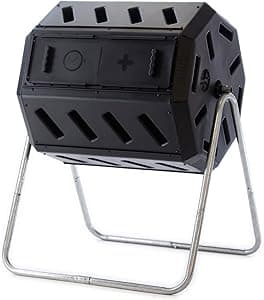
Best Tumbler: FCMP Outdoor IM4000 Tumbling Composter
👉 Check FCMP Outdoor IM4000 Tumbler ($76.29) on Amazon — currently $76.29
Price: $110 on Amazon
Tumbling composters work faster than open bins because spinning the drum every few days aerates the pile without manual turning with a fork. The FCMP IM4000 has a well-designed interior with fins that break up the pile as you tumble, and the dual doors make loading easy.
Why Experts Recommend It
- Dual doors — load from both ends, balanced weight
- Internal mixing fins — break up clumps on every rotation
- Elevated design — tumblers underneath for harvesting; keeps pests out
- UV stabilized plastic — won't crack from sun exposure
- 37-gallon capacity — right size for household kitchen + yard waste
What's Included
- Dual-chamber tumbler drum on steel stand
- Two access doors with secure latches
- Interior mixing fins
Composting Speed
With the right carbon-to-nitrogen ratio and regular tumbling (every 2–3 days), you can have usable compost in as little as 2 weeks. Realistically, plan for 4–6 weeks for a full batch.
Best for Continuous Composting: Miracle-Gro Dual Chamber Tumbler
👉 Check Miracle-Gro Dual Chamber Tumbler ($114.87) on Amazon — currently $114.87
Miracle-Gro Dual Chamber Tumbler
Dual-chamber design enables continuous batch composting — load one while the other finishes.
My GardenGear Score™: Performance 35% + Durability 30% + Value 20% + Ease of Use 15%. Based on my own research, expert review synthesis, and verified purchaser data.
Price: $100 on Amazon
The dual-chamber design solves the main frustration with single-bin composting: you can't add new material while the active batch is finishing. With the Miracle-Gro dual-chamber, one side finishes while you load the other — continuous compost production all season.
Why Experts Recommend It
- Two independent chambers — always have one batch in progress
- Never stops producing — move finished compost while loading new material
- Aeration holes — built-in ventilation speeds decomposition
- Sliding doors — easy to load and unload
- Compact footprint — fits in smaller yards despite large total capacity
What's Included
- Dual-chamber tumbler (27.7 gallons per chamber)
- Powder-coated steel frame
- Removable panels for access
Best For
Households that generate steady kitchen and yard waste and want compost available throughout the season.
Best Large-Batch Bin: Algreen Soil Saver Classic Composter
👉 Check Algreen Soil Saver Classic ($44.88) on Amazon — currently $44.88
Algreen Soil Saver Classic Composter
Best large-batch open bin — 12 cu ft handles fall leaf cleanups that tumblers can't.
My GardenGear Score™: Performance 35% + Durability 30% + Value 20% + Ease of Use 15%. Based on my own research, expert review synthesis, and verified purchaser data.
Price: $80 on Amazon
Open bins can't match tumblers for speed, but they handle large volumes that would overwhelm a tumbler. The Algreen Soil Saver's 12-cubic-foot capacity holds a full fall leaf cleanup, and the vented walls promote airflow. An adjustable base ventilates from below and discourages burrowing pests.
Why Experts Recommend It
- 12 cubic feet — handles large volumes of yard waste
- Vented walls — air circulation speeds decomposition without manual tumbling
- Adjustable base vent — prevents pests from burrowing in from below
- Snap-close lid — keeps rain out without blocking moisture
- Sturdy construction — resists UV and frost
What's Included
- 80-gallon compost bin
- Adjustable ventilation base
What's Included — How to Use It
Open bins work best with layering: alternate "green" nitrogen-rich materials (kitchen scraps, fresh grass) with "brown" carbon-rich materials (dried leaves, cardboard). Turn the pile every few weeks with a fork to speed decomposition.
Best Budget Bin: Earth Machine Backyard Composter
👉 Check Earth Machine Backyard Composter ($64.99) on Amazon — currently $64.99
Earth Machine Backyard Composter
Proven workhorse — millions sold through municipal programs for good reason.
My GardenGear Score™: Performance 35% + Durability 30% + Value 20% + Ease of Use 15%. Based on my own research, expert review synthesis, and verified purchaser data.
Price: $55 on Amazon
The Earth Machine is the workhorse compost bin — simple, large, and cheap enough that cost isn't a reason not to compost. Over 6 million units have been sold, many through municipal programs that subsidize composters. The twist-off bottom door makes harvesting finished compost without disturbing the active pile above.
Why Experts Recommend It
- Bottom access door — harvest finished compost from the bottom
- Twist-off lid — locks securely against wind and pests
- 65-gallon capacity — handles a household's weekly output
- Made from recycled plastic — eco-conscious construction
- Proven design — millions sold, municipal program tested
What's Included
- 65-gallon compost bin
- Twist-off lid with locking tabs
- Bottom access door
Best for Small Spaces: Envirocycle Mini Composting Tumbler
👉 Check Envirocycle Mini Composter ($349.99) on Amazon — currently $349.99
Price: $85 on Amazon
Apartment dwellers, balcony gardeners, and anyone with limited outdoor space can still compost with the Envirocycle Mini. The 5-gallon drum sits on a base that catches "compost tea" — the liquid nutrient runoff that's an excellent plant fertilizer. Small, but produces real usable compost.
Why Experts Recommend It
- Compact 5-gallon design — fits on a balcony or small patio
- Built-in tea collection base — liquid fertilizer captured automatically
- Pest-proof — fully sealed against flies and rodents
- BPA-free materials — safe for food scraps
- No tools needed — assembly in minutes
What's Included
- 5-gallon tumbler drum
- Tea collection tray/base
- No tools required
Collecting Compost Tea
The liquid that drains into the base tray is compost tea — dilute it 10:1 with water for a free liquid fertilizer. Pour it on vegetables, flowers, or lawn for an immediate nutrient boost.
What Makes Good Compost
The Carbon-to-Nitrogen Ratio
Target ratio: 25-30 parts carbon to 1 part nitrogen by weight. In practice, a layer of browns for every layer of greens is close enough. If your pile smells bad, add more browns. If it's not heating up, add more greens.
What NOT to Compost
- Meat, fish, and bones (attract pests)
- Dairy products (same)
- Dog or cat waste (disease risk)
- Diseased plant material (spreads pathogens)
- Treated wood (chemical contamination)
Troubleshooting
Composter Comparison
By Speed
Tumblers (Fastest)
- FCMP IM4000: 9/10 — 2–4 weeks possible with correct inputs
- Miracle-Gro Dual Chamber: 9/10 — continuous production, best for households
Open Bins (Slowest but High Volume)
- Algreen Soil Saver: 8/10 — handles large volumes, good for fall leaves
- Earth Machine: 7/10 — simple, proven, best value
FAQ
How long does composting take? Tumblers with the right inputs can produce compost in 2–6 weeks. Open bins take 2–6 months. Hot composting (maintaining 130–160°F internal temperature) is fastest; cold composting (minimal management) takes the longest but requires almost no work.
Can I compost in winter? Composting slows significantly below 50°F and nearly stops below freezing. You can keep adding materials through winter — they'll just wait until spring to decompose. Insulating your bin or choosing a dark-colored tumbler in a sunny spot extends the season.
Do I need to add worms to my composter? Worms naturally find their way into open bin composters if given access to the soil below. For tumblers, worms can't enter, but composting still happens through microbial activity. Vermicomposting (worm bins) is a separate system specifically designed for worms and can be done indoors.
What should my compost smell like? Finished compost should smell earthy and pleasant — like fresh soil after rain. If it smells like ammonia, you have too many nitrogen-rich materials. If it smells like rotten eggs (sulfur), the pile is anaerobic — turn it and add more browns. Bad odors are fixable with the right carbon-to-nitrogen adjustment.
How do I know when compost is ready to use? Ready compost is dark brown to black, crumbly, and smells earthy. You shouldn't be able to identify the original materials. It's okay if there are a few recognizable pieces — screen them out and return to the pile. Unfinished compost can temporarily tie up soil nitrogen, so make sure it's done before using.
The Bottom Line
FCMP IM4000 is the best composter for most households — fast results, pest-proof, and the right size for kitchen plus yard waste. For continuous production through the season, the Miracle-Gro Dual Chamber is worth the similar price. If you have a large yard with lots of fall leaves, the Algreen Soil Saver handles volume that tumblers can't.
Start composting and within one season you'll wonder why you ever bought bagged amendments.