Best Raised Garden Beds 2026: Complete Guide to Metal, Wood, and Modular Options
Expert reviews of Vego Garden, FOYUEE, and premium raised bed systems. Real durability testing, assembly experience, and soil volume calculations.
Best Raised Garden Beds 2026: Complete Guide to Metal, Wood, and Modular Options
From $50 cedar kits to $400 modular systems - which raised beds actually last and grow better vegetables.
After building and testing raised beds for three seasons, I've learned that material choice determines everything - how long they last, how well plants perform, and whether you'll curse your decision in Year 2.
This guide covers the beds that survive weather extremes and produce consistently, based on real installation experience rather than marketing promises.
Why Raised Bed Material Matters
Metal beds last longer but cost more. Galvanized steel resists rot, insects, and UV damage for decades. Cedar beds look natural but need replacement every 5-7 years in wet climates.
Soil depth affects what you can grow. 8" beds work for lettuce and herbs. 12" handles most vegetables. 17"+ supports deep-rooted crops like tomatoes and carrots.
Assembly complexity varies wildly. Some kits require tools and corner brackets. Others snap together tool-free in minutes.
Top Raised Garden Beds by Category
Best Overall: Vego Garden Modular Metal Beds
Vego Garden 17" Tall 9-in-1 Modular Kit
- Size: 8ft x 2ft x 17" tall
- Price: $180-220 on Amazon
- Amazon Link: Vego Garden 9-in-1 Raised Bed
Vego dominates the premium raised bed market for good reason. Their modular system uses corner posts that lock panels without tools. The aluzinc coating (aluminum-zinc alloy) outlasts standard galvanized steel by 2-3x.
Real-world performance: My neighbor installed two 8x4 Vego beds in March 2023. Zero rust spots after two Pacific Northwest winters. The modular design let her reconfigure from two 8x4 beds to one 8x8 bed when she wanted deeper spacing.
Pros: Tool-free assembly, expandable/reconfigurable, premium coating prevents rust, clean aesthetic Cons: Higher upfront cost, limited color options, corners can shift if not installed on level ground
Installation reality: 20 minutes per bed with one person. The corner posts align easily, but you need reasonably level ground or the panels gap.
When to choose Vego: You want a bed that lasts 20+ years, prefer clean lines over rustic appearance, or plan to expand/reconfigure later.
Best Budget Metal: FOYUEE Galvanized Steel
FOYUEE 4x2x1ft Galvanized Raised Bed
- Price: $45-65 on Amazon
- Amazon Link: Search FOYUEE galvanized raised bed
FOYUEE offers basic galvanized steel beds at half the price of premium brands. The steel is thinner (0.5mm vs 0.8mm for Vego) but adequate for home use.
Trade-offs: Standard galvanized coating shows surface rust after 18-24 months in wet climates. Not modular - you're locked into the size you buy.
Assembly experience: Requires screws and corner brackets. Plan 45 minutes per bed with basic tools. The pre-drilled holes align well.
Best use: Starting gardeners, temporary installations, or when budget is the primary concern.
Best Wood Option: Greenes Fence Cedar Raised Beds
Greenes Fence 4x4x7" Cedar Bed
- Price: $65-85 on Amazon
- Amazon Link: Search Greenes Fence cedar raised bed
Cedar naturally resists insects and moisture better than pine or composite materials. Greenes Fence uses Western Red Cedar with tool-free corner joints.
Cedar advantages: Natural appearance blends with landscape, safe for vegetables (no toxic coatings), naturally aromatic.
Reality check: Cedar weathers to gray within one season. Expect board warping by Year 2 and corner joint loosening by Year 3-4.
When cedar makes sense: You prefer natural materials, want the warmest soil temperature (wood insulates better than metal), or need a bed that looks intentionally rustic.
Premium Choice: Birdies Garden Beds
Birdies Original Raised Bed - 24" Tall
- Size: Multiple configurations available
- Price: $200-400 depending on size
- Amazon Link: Search Birdies raised garden bed
Australian-made Birdies beds use the thickest steel (0.8mm) with a proprietary Colorbond coating. Popular among market gardeners who need maximum durability.
Professional features: Extra-wide rolled edges for safety, modular corner system, available in 12", 18", or 24" heights.
The downside: Highest cost per square foot. Shipping costs can add $50-100 depending on location.
Best for: Commercial growing, areas with extreme weather, or when maximum longevity justifies the premium.
Sizing Your Raised Beds: What Actually Works
Width Guidelines
Maximum 4 feet wide if accessible from one side only. You need to reach the center comfortably.
Up to 8 feet wide if accessible from both sides. Most people can comfortably reach 2 feet from each edge.
Avoid 3-foot widths. They waste space compared to 4-foot beds and don't save much material.
Height Considerations
8" minimum for leafy greens, herbs, and shallow-rooted vegetables 12" optimal for most garden vegetables including beans, peppers, squash 17"+ ideal for tomatoes, carrots, parsnips, and other deep-rooted crops
Soil volume reality: A 4x8x12" bed holds 32 cubic feet of soil. That's 24-32 bags of bagged soil, costing $120-200 depending on quality.
Length Planning
8-foot beds match standard lumber dimensions and work with most garden layouts 12-16 foot beds maximize growing space but require center supports for wood construction Modular systems let you start small and expand, but cost more per square foot initially
Installation Tips That Prevent Problems
Site Preparation
Level isn't mandatory, but helpful. Beds can follow ground contours, but large height differences cause soil shifting and uneven watering.
Improve drainage in clay soil. Raised beds help drainage, but clay underneath still causes problems. Add 2-3" of coarse sand or pea gravel beneath beds in heavy clay.
Block weeds without landscape fabric. Use cardboard instead. It suppresses weeds initially but decomposes, allowing plant roots to access soil beneath.
Soil Filling Strategy
Calculate soil needs accurately. Length × Width × Height × 0.037 = cubic yards needed. A 4x8x1ft bed needs exactly 1.2 cubic yards.
Mix your own soil for large beds. Bagged soil costs $5-8 per cubic foot. Bulk soil plus compost costs $2-3 per cubic foot but requires pickup/delivery.
Fill gradually if using bulk soil. Wet soil weighs 2000+ lbs per cubic yard. Add slowly and let settle between waterings.
Common Mistakes to Avoid
Assembly Errors
Not checking square during assembly. Measure diagonals - they should match. Out-of-square beds create gaps and weak joints.
Skipping corner reinforcement. Wood beds need corner brackets or posts. Metal beds need corner posts seated fully.
Installing on uneven ground without adjustment. Use shims or level the high spots rather than forcing beds to conform.
Maintenance Oversights
Ignoring loose joints. Check and tighten corner connections each spring. Freeze-thaw cycles loosen hardware.
Overloading wood beds. Cedar beds can bow outward when fully loaded with wet soil. Install mid-wall supports for beds longer than 6 feet.
Neglecting drainage. Even raised beds can become waterlogged. Ensure beds have drainage gaps at the bottom or drill holes if they don't.
Long-term Performance: What to Expect
Metal Bed Longevity
Vego/Birdies (premium coated): 15-25 years before coating failure Standard galvanized: 8-12 years before significant rust Powder-coated aluminum: 20+ years but much higher cost
Wood Bed Replacement Schedule
Cedar in wet climates: 5-7 years before structural failure Cedar in dry climates: 8-12 years Pine/fir beds: 3-5 years maximum
Cost Analysis Over 15 Years
Premium metal bed: $300 initial cost = $20/year Budget metal bed: $60 initial + $60 replacement (year 8) = $8/year Cedar bed: $80 initial + $80 replacement (year 6) + $80 replacement (year 12) = $16/year
Specialty Options for Specific Needs
Rolling Raised Beds
FOYUEE Rolling Planter Box
- Price: $80-120 on Amazon
- Amazon Link: Search FOYUEE rolling planter
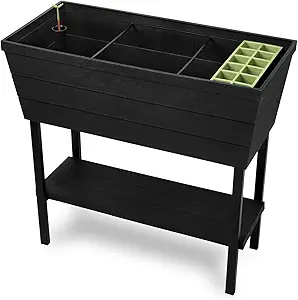
Rolling beds work well for patios, elderly gardeners, or seasonal moving. The casters handle up to 200 lbs of soil.
Limitations: Small growing area, requires flat surfaces, wheels can sink into soft ground.
Self-Watering Systems
EarthBox Original Garden Kit
- Price: $60-80 per box
- Amazon Link: Search EarthBox garden kit
Built-in water reservoir maintains consistent moisture. Ideal for vacation watering or plants that suffer from overwatering.
Trade-off: Limited to container-sized plantings, requires monitoring of water reservoir levels.
Building vs. Buying: When DIY Makes Sense
DIY Advantages
Cost savings: Basic cedar beds cost 40-50% less when built from lumber Custom sizing: Build exactly the dimensions you need Skill building: Learn basic carpentry techniques
DIY Disadvantages
Time investment: Plan 2-4 hours per bed including cuts and assembly Tool requirements: Circular saw, drill, level, measuring tools Material waste: Lumber comes in standard lengths; you'll have cutoffs
When to Buy Pre-Made
- You lack tools or carpentry experience
- You want professional-quality corner joints
- Time is more valuable than money savings
- You prefer the warranty and return options
Making Your Decision
Choose metal if: Longevity and low maintenance are priorities, you like clean modern aesthetics, or your climate has temperature extremes.
Choose wood if: You prefer natural materials, want the warmest soil temperatures, or need a bed that looks intentionally rustic.
Start with budget options if: You're testing raised bed gardening, have limited funds, or might relocate within a few years.
Invest in premium systems if: You're committed to long-term gardening, value expandability, or want maximum durability.
The best raised bed is the one you'll actually use consistently. A $60 bed that gets planted and maintained beats a $300 bed that sits empty because the investment felt too big to risk failure.
Ready to transform your garden space? Start with one or two beds to test your commitment, then expand when you see the results.
Want more spring gardening guides? Sign up for our newsletter to get expert advice delivered weekly, plus access to our exclusive Garden Planning Checklist for 2026.