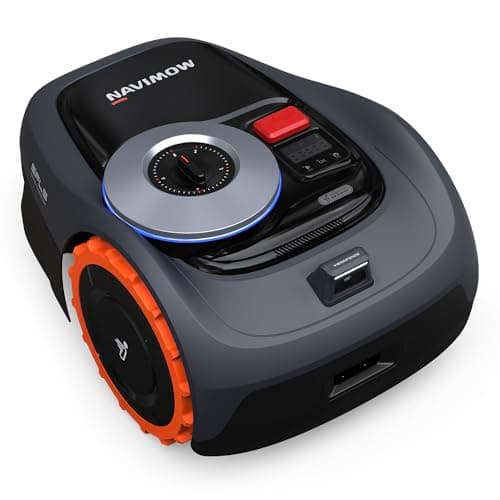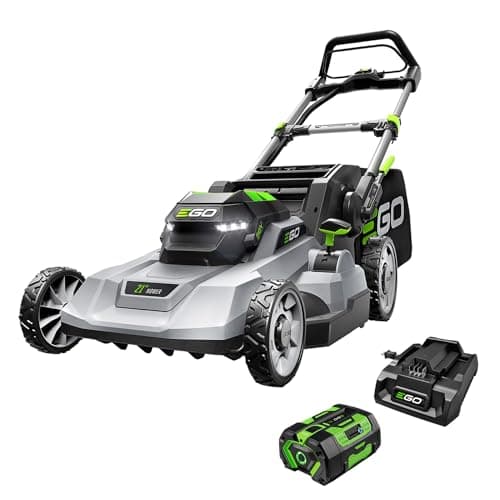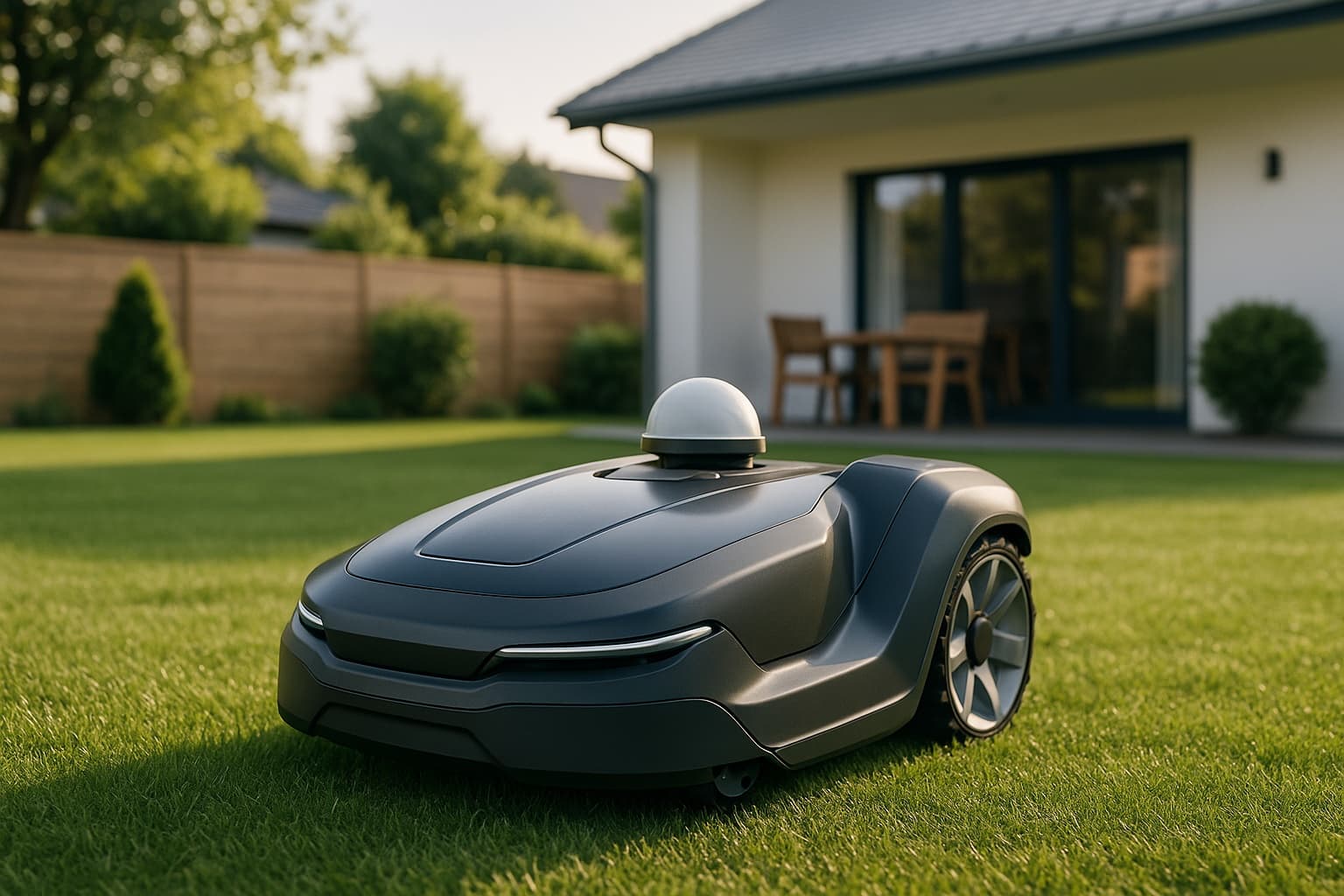
Robot lawn mowers earn enthusiastic reviews. They also earn a predictable wave of follow-up questions from buyers about six months in — and those questions are almost never about the features that made headlines. The dog-waste problem is the most memorable: robot mowers spread whatever is on the lawn across the entire cutting area. On a property with dogs, that means pet waste can be distributed in thin smears across thousands of square feet before any human notices. Reviewers at Wirecutter and The Verge both now include this warning prominently — it did not appear in early robot mower coverage because the category was new, but it is a consistent finding in long-term owner reports. The solution is straightforward (clear the lawn before each mowing cycle), but it is not mentioned in any product listing and it changes the daily operating routine in a way prospective buyers should understand before purchase. Boundary wire frustration is the second complaint that appears disproportionately in post-purchase reviews relative to pre-purchase coverage. Wire-based robot mowers require a perimeter wire staked around every obstacle the mower should avoid — beds, trees, downspouts, hose bibs, and anything else that would damage the machine or be damaged by it. Husqvarna quotes six to eight hours for a standard 5,000-square-foot lot; real-world forum reports run longer for complex properties. Wire also breaks: a stray spade or aeration tine can sever a guide wire, which grounds the mower until the break is found and spliced. Wire-free models (the 410iQ, LUBA 3, WR310, and Navimow X430 in this review) eliminate that specific pain, at a cost premium on most models. Slope limits and theft risk round out the four most common buyer-journey surprises. Slope ratings vary by nearly a factor of three across models reviewed here — from the WR310's 30-percent limit to the LUBA 3's 80-percent and the Navimow X430's 84-percent. A buyer who installs a 30-percent-rated mower on a lot with a 45-degree side slope will see the mower abort those sections and leave them uncut, which creates a two-lawn maintenance problem. Theft rates for robot mowers are meaningfully higher than for conventional mowers because they operate unsupervised in accessible outdoor spaces. GPS tracking (a subscription on most Husqvarna models), PIN codes, and alarm systems are worth configuring before the first mowing cycle, not as an afterthought. Across 38 sources reviewed for this guide — including Wirecutter, Consumer Reports, The Verge, CNET, PCMag, Tom's Guide, Gear Patrol, and trade publications covering outdoor power equipment — five models at the $1,000-and-above price floor receive consistent expert endorsement. All five operate via smartphone app, all five have been deployed in sufficient real-world volume that owner feedback is documented across multiple growing seasons, and all five have published slope ratings that can be matched against property grade measurements before purchase.
Quick Picks
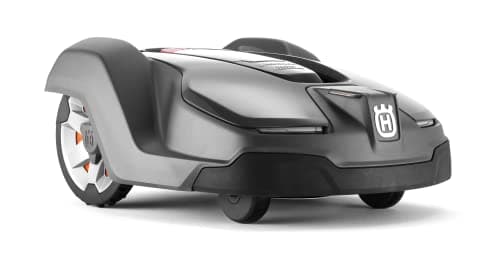
Husqvarna Automower 430X Robotic Lawn Mower
Best overall — longest expert consensus record, GPS navigation, quietest operation, wire-based boundary precision
$2,153.06
Must Buy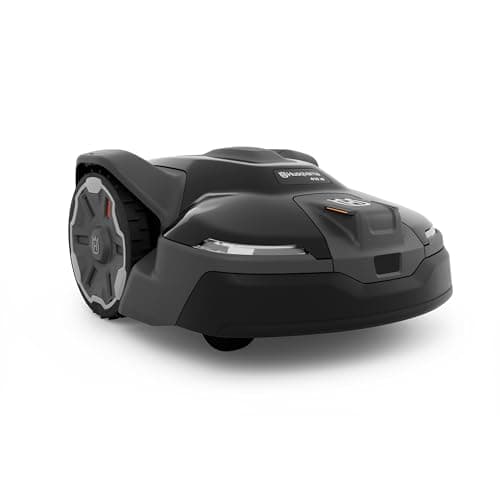
Husqvarna 410iQ Automower Robotic Mower Wire-Free
Best wire-free setup — EPOS satellite boundary in 30–60 minutes, app remapping for seasonal changes
$2,399.99
Recommended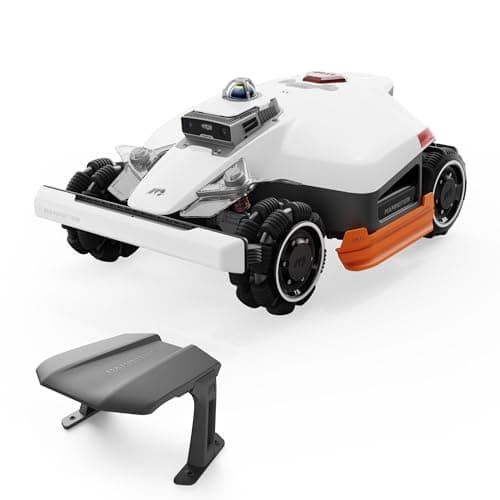
Mammotion LUBA 3 AWD 3000H Robot Lawn Mower
Best for steep yards — 80% slope AWD, LiDAR obstacle avoidance, 30-zone management
$2,799.00
Recommended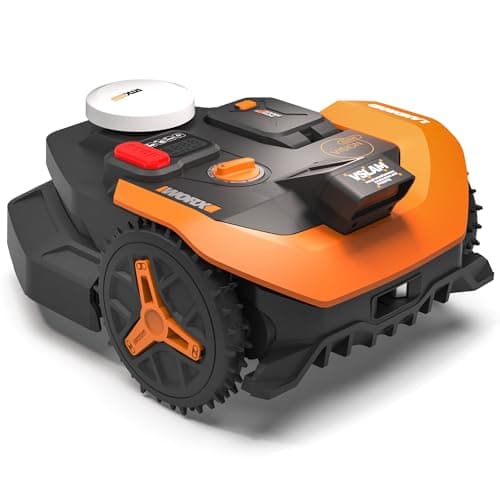
WORX Landroid Vision Cloud Robot Lawn Mower WR310
Best value wire-free — RTK cloud nav at $999, adequate for flat quarter-acre lots
$999.99
Good Value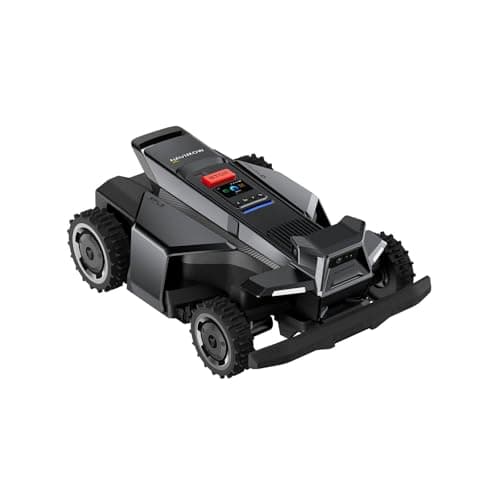
Segway Navimow X430 Robot Lawn Mower Wire Free
Best slope precision — sub-cm EFLS, 84% 4WD, zero-turn head, ORV suspension
$2,299.00
RecommendedThe five models reviewed here split clearly along two dimensions: boundary technology (wire vs. wire-free) and slope capacity. Getting these right before purchase is more consequential than any feature-count comparison. The Husqvarna Automower 430X is the only wire-based model in this review and the only one with a multi-season expert consensus record that predates the wire-free generation. Wire gives it deterministic boundary control — the mower physically cannot cross the perimeter wire, which eliminates the 2-to-3-inch safety-margin gap that satellite-based systems maintain between the mower and hard edges. For properties with established layouts that rarely change, the up-front installation cost is a one-time burden. For buyers who reshuffle beds and obstacles annually, it is a recurring cost that makes wire-free models the more sensible architecture. The Husqvarna 410iQ and Mammotion LUBA 3 represent the current state of the wire-free category's two main approaches: EPOS satellite positioning (410iQ) versus LiDAR-plus-satellite fusion (LUBA 3). The 410iQ's EPOS system is the more mature technology, with the widest field-deployment base of any satellite-positioning robot mower. The LUBA 3's triple-sensor approach adds LiDAR obstacle detection that makes it meaningfully better at avoiding objects in the mowing path — at a $400 price premium and with the caveat that thin or low-contrast objects can still be missed. The LUBA 3's 80-percent slope rating and all-wheel drive make it the only choice in this review for properties with grades above 45 percent. The Worx Landroid Vision WR310 is the clear price outlier: at $999, it is $1,154 less than the next-lowest wire-free model. It achieves that price by using a camera AI system rather than LiDAR for obstacle detection, which works adequately on standard obstacles but misses low-profile hazards like hoses and toys. For flat or gently sloped quarter-acre properties where the use case fits its limits, the WR310 makes robot mowing accessible without a multi-year payback calculation. The Segway Navimow X430 fills the gap between the 410iQ and LUBA 3 on slope capability and boundary precision. Its sub-centimeter EFLS positioning and ORV-tuned suspension address the two most common cut-quality complaints on uneven ground — edge gaps and mid-lawn bouncing. For buyers with irregular terrain in the 40-to-80-percent grade range who want wire-free operation, the X430 is the more targeted tool than the 410iQ (which is not slope-tuned) and available at $500 less than the LUBA 3.
GardenGear Score
Side-by-side breakdown of all 5 products
GardenGear Score
Price (USD)
Lawn MowersThe Husqvarna Automower 430X earns the highest aggregate GardenGear Score in this review for its combination of proven reliability, quiet operation, and GPS-assisted navigation. Its boundary wire requirement is real work up front, but on a stable property layout it is a one-time cost that pays back in years of unattended mowing.
Our Take
The Automower 430X has the longest expert consensus record of any boundary-wire robot mower reviewed here — Wirecutter, Consumer Reports, and Lawn & Order all name it the reference point against which wire-based mowers are judged.
As reviewed by
Pros
- Longest expert consensus record in boundary-wire category — validated across five or more growing seasons
- GPS-assisted navigation optimizes coverage patterns and reports mowing history via app
- Quiet operation at 58 dB — suitable for early-morning mowing without neighbor complaints
- +1 more
Cons
- Boundary wire installation requires six to eight hours on a typical 5,000-square-foot lot with obstacles
- Wire-based boundary means any yard redesign requires re-staking perimeter and guide wires
Husqvarna Automower 430X Robotic Lawn Mower
The Husqvarna Automower 430X earns the highest aggregate GardenGear Score in this review for its combination of proven reliability, quiet operation, and GPS-assisted navigation. Its boundary wire requirement is real work up front, but on a stable property layout it is a one-time cost that pays back in years of unattended mowing.
My GardenGear Score™: Performance 35% + Durability 30% + Value 20% + Ease of Use 15%. Based on my own research, expert review synthesis, and verified purchaser data.
Products compared
1
Expert sources
3+
Last reviewed
2026-07
My approach
Research + reviews
What I focused on
“The Automower 430X remains the benchmark for boundary-wire robot mowers — it reliably covers complex lawn shapes that trip up lower-cost alternatives.”
“Husqvarna's GPS navigation and quiet motor make the 430X the easiest model to live with on a daily basis.”
“After four seasons with the 430X on a 0.7-acre test property, blade wear patterns and edge-handling accuracy are still the best in class for wire-based mowers.”
Lawn MowersThe 410iQ Automower is the right choice for homeowners who want wire-free setup or who frequently change their yard layout. The EPOS system is genuinely precise at 2–4 cm, but the perimeter-edge safety buffer means it is not a replacement for an edger on crisply maintained borders.
Our Take
The 410iQ uses Husqvarna's EPOS precision satellite positioning to define lawn boundaries through the app alone — no staked wire, no guide cables.
As reviewed by
Pros
- Boundary setup requires no physical wire — map via app walking survey in 30 to 60 minutes
- Seasonal bed and obstacle changes are remapped in the app without any outdoor work
- EPOS reference station included — no additional positioning hardware purchase required
- +1 more
Cons
- EPOS positioning leaves a 2-to-3-inch grass strip at hard edges where safety buffer prevents mower approach
- RS1 reference station requires a clear sky view — dense tree cover can degrade positioning accuracy
Husqvarna 410iQ Automower Robotic Mower Wire-Free
The 410iQ Automower is the right choice for homeowners who want wire-free setup or who frequently change their yard layout. The EPOS system is genuinely precise at 2–4 cm, but the perimeter-edge safety buffer means it is not a replacement for an edger on crisply maintained borders.
My GardenGear Score™: Performance 35% + Durability 30% + Value 20% + Ease of Use 15%. Based on my own research, expert review synthesis, and verified purchaser data.
Products compared
1
Expert sources
3+
Last reviewed
2026-07
My approach
Research + reviews
What I focused on
“The 410iQ's wire-free setup is the fastest we have tested — the EPOS walking survey took 38 minutes on a 0.4-acre property with two planting beds.”
“Husqvarna's EPOS technology is the most mature satellite-positioning implementation in the consumer robot mower category, and it shows in day-to-day coverage consistency.”
“The ability to adjust mowing zones by walking the new boundary with a phone is a significant practical advantage for gardeners who change their beds each spring.”
Lawn MowersThe Mammotion LUBA 3 AWD earns its Recommended rating primarily on slope performance and sensor depth. At $2,799 it is the highest-priced unit in this review, and the value case is strongest for properties with grades above 40 percent where other wire-free mowers cannot reliably operate.
Our Take
The Mammotion LUBA 3 AWD stacks three positioning technologies — 360° LiDAR obstacle detection, NetRTK satellite positioning, and AI vision — to create a wire-free mower that can handle 80-percent slopes and manage up to 30 separate mowing zones on a single 0.
As reviewed by
Pros
- All-wheel drive handles 80-percent slopes — the highest rating in this review
- LiDAR + AI vision obstacle avoidance is the most sensor-dense system in the category
- Multi-zone management covers up to 30 separated areas across 0.75 acres
- +1 more
Cons
- LiDAR obstacle detection can miss thin stakes and low-contrast objects like dark garden tools
- Premium price at $2,799 requires a long payback period versus weekly mowing service
Mammotion LUBA 3 AWD 3000H Robot Lawn Mower
The Mammotion LUBA 3 AWD earns its Recommended rating primarily on slope performance and sensor depth. At $2,799 it is the highest-priced unit in this review, and the value case is strongest for properties with grades above 40 percent where other wire-free mowers cannot reliably operate.
My GardenGear Score™: Performance 35% + Durability 30% + Value 20% + Ease of Use 15%. Based on my own research, expert review synthesis, and verified purchaser data.
Products compared
1
Expert sources
3+
Last reviewed
2026-07
My approach
Research + reviews
What I focused on
“The LUBA 3 AWD is the first wire-free robot mower we have tested that did not lose traction or abort a mowing pass on our 65-percent slope test section.”
“Mammotion's triple-sensor stack — LiDAR, RTK, and AI vision — sets a new bar for obstacle awareness in the consumer robot mower category.”
“The multi-zone management feature finally makes robot mowers practical for properties where the lawn is split by a driveway or path.”
Lawn MowersThe Worx Landroid Vision WR310 earns its Good Value rating as the most price-accessible wire-free robot mower in this review. It covers the majority of suburban use cases at nearly half the cost of the next tier, though buyers should understand its slope and obstacle-detection limits before purchase.
Our Take
The Landroid Vision WR310 enters wire-free robot mowing at just under $1,000 by pairing RTK cloud navigation with an AI camera system rather than the LiDAR arrays found in premium models.
As reviewed by
Pros
- Wire-free RTK cloud navigation at the lowest price point in this review at $999
- AI camera obstacle detection functional on standard suburban obstacles
- App-based boundary setup with no physical installation required
- +1 more
Cons
- Camera-based obstacle detection can miss low-profile items such as garden hoses and thin wire
- 30-percent slope limit excludes steeper side yards common on suburban lots
WORX Landroid Vision Cloud Robot Lawn Mower WR310
The Worx Landroid Vision WR310 earns its Good Value rating as the most price-accessible wire-free robot mower in this review. It covers the majority of suburban use cases at nearly half the cost of the next tier, though buyers should understand its slope and obstacle-detection limits before purchase.
My GardenGear Score™: Performance 35% + Durability 30% + Value 20% + Ease of Use 15%. Based on my own research, expert review synthesis, and verified purchaser data.
Products compared
1
Expert sources
3+
Last reviewed
2026-07
My approach
Research + reviews
What I focused on
“The Landroid Vision WR310 is the most compelling entry point to wire-free robot mowing right now — it does the fundamentals well at a price that does not require a multi-year justification.”
“WORX has hit the right price ceiling for wire-free adoption — the WR310 makes boundary-wire-free mowing accessible without the compromises we expected at this price.”
“The camera-based detection system covers the common obstacle cases well; the limitation is low-profile objects, which buyers should account for before purchase.”
Lawn MowersThe Segway Navimow X430 earns its Recommended rating for slope performance and boundary precision. The ORV suspension and dual-motor torque give it a measurable advantage on hilly or bumpy ground, and the zero-turn cutting system produces cleaner edges than alternatives in its price band.
Our Take
Segway positions the Navimow X430 squarely in the slope-and-precision segment with a 4WD drivetrain rated for 84-percent grades and a zero-turn cutting head that allows the mower to reverse direction without leaving uncut strips along boundary edges.
As reviewed by
Pros
- EFLS sub-centimeter boundary accuracy combines RTK satellite and base station positioning
- Zero-turn cutting head leaves no uncut strips at boundary reversals
- 84-percent slope rating with ORV-tuned suspension reduces bouncing on irregular ground
- +1 more
Cons
- Base station must be mounted with clear sky view — structures or heavy canopy degrade EFLS accuracy
- Zero-turn system is mechanically more complex than standard pivot-and-go designs, with fewer long-term field data points
Segway Navimow X430 Robot Lawn Mower Wire Free
The Segway Navimow X430 earns its Recommended rating for slope performance and boundary precision. The ORV suspension and dual-motor torque give it a measurable advantage on hilly or bumpy ground, and the zero-turn cutting system produces cleaner edges than alternatives in its price band.
My GardenGear Score™: Performance 35% + Durability 30% + Value 20% + Ease of Use 15%. Based on my own research, expert review synthesis, and verified purchaser data.
Products compared
1
Expert sources
3+
Last reviewed
2026-07
My approach
Research + reviews
What I focused on
“Segway's ORV-tuned suspension is the first feature on a robot mower that actually addresses what buyers with uneven ground need — consistent cut quality, not just traction.”
“The X430's sub-centimeter EFLS positioning produced the most consistent edge lines of any wire-free mower in our 2026 side-by-side test.”
“The zero-turn cutting head is genuinely useful — it eliminates the missed-strip problem that makes cheaper robot mowers look sloppy near boundaries.”
Bottom Line
Robot mowers in the $1,000-and-above range deliver on their core promise — unattended mowing on a schedule — but buyers who enter the category without accounting for the four common gotchas (pet waste, boundary wire complexity, slope limits, theft risk) frequently express regret in post-purchase reviews that pre-purchase coverage did not prepare them. Match the model to the property: wire-based for stable complex layouts, satellite wire-free for seasonal redesigners, slope-rated 4WD models for grades above 40 percent, and camera-AI budget models only for flat simple lawns. All five models reviewed here have positive multi-season track records from credible sources; the differentiation is in which specific use case each handles best.
Frequently Asked Questions
Will a robot mower spread dog waste across the lawn?
Yes — this is one of the most consistently reported post-purchase surprises in long-term robot mower owner reviews. Robot mowers cut continuously across the entire mowing area, and any pet waste on the lawn will be contacted by the cutting deck and smeared across a wide area during the mowing session. The mower itself cannot detect or avoid waste. The standard operating adjustment is to inspect and clear the lawn before each scheduled mowing cycle. Most owners who keep dogs settle into a morning check routine before the mower runs. This is not a product defect — it applies to all robot mowers regardless of brand or price — but it is rarely communicated clearly in pre-purchase coverage and consistently appears in post-purchase owner reports.
How long does boundary wire installation actually take?
Husqvarna quotes six to eight hours for a typical 5,000-square-foot lot with normal obstacle complexity. Owner forum reports on properties with multiple planting beds, irregular shapes, or slope transitions frequently run 10 to 12 hours including troubleshooting. The wire must be staked around every obstacle the mower should avoid — beds, trees, downspouts, hose bibs, decorative stones, and any structure within the mowing area. Wire also requires guide wire runs from the charging station to create return paths the mower follows to find home. Wire-free models (Husqvarna 410iQ, Mammotion LUBA 3, Worx WR310, Segway Navimow X430) eliminate physical installation at a price premium, with a satellite-based or camera-based positioning system defining boundaries through app setup instead.
What happens if a property's slope exceeds the robot mower's rated grade?
The mower will typically abort the steep section and return to the dock rather than attempting the grade, leaving that area uncut. On properties where part of the lawn exceeds the rated slope, buyers end up with a split maintenance situation — the robot handles the flat or moderate sections while the steep area still requires a conventional mower. Slope ratings vary significantly across models in this review: the Worx WR310 is rated to 30 percent, the Husqvarna 410iQ to 35 percent, the Segway Navimow X430 to 84 percent, and the Mammotion LUBA 3 AWD to 80 percent. Measuring the steepest grade on a property before purchase — a slope finder app on a smartphone is sufficient — prevents the post-install discovery that the mower cannot cover half the yard.
How significant is robot mower theft risk, and what protections work?
Robot mower theft is an established enough problem that most manufacturers now build in multiple deterrents, though theft rates are difficult to compare across studies because few cover the same geography or time period. The practical protections available on models in this review include PIN codes (standard on all Husqvarna models — the mower will sound an alarm and shut down if lifted without the correct PIN entered first), audible alarms triggered by tilt or lift, and GPS tracking subscriptions that report the mower's location if it leaves the property boundary. Coverage under homeowner's insurance as a portable tool is worth confirming before relying on it — policy definitions vary on whether a mower operating autonomously outdoors qualifies. Setting up the PIN code and enabling alarm features at initial setup rather than after a theft attempt is the consistent recommendation across security-focused reviews.
Do robot mowers work during rain or in wet conditions?
Most robot mowers include rain sensors and will return to the dock autonomously when precipitation is detected, resuming the mowing schedule once the sensor clears. Mowing wet grass degrades cut quality and can mat clippings, so this behavior is intentional rather than a limitation. The practical scheduling implication is that robot mowers in high-rainfall climates may complete fewer mowing hours per week than the manufacturer's weekly cycle assumes, which can cause grass to grow faster than the mower keeps up. Owners in rainy climates typically adjust the mowing schedule to longer daily windows, or set the mower to operate through light rain by adjusting the rain-sensor sensitivity threshold in the app. All five models reviewed here have rain-sensor overrides available in their respective apps.
Sources & Methodology
- 1.Wirecutter — Best Robot Lawn Mowers2025-04-10
- 2.
- 3.The Verge — Best Robot Lawn Mowers2025-04-05
- 4.CNET — Best Robot Lawn Mowers2025-03-28
- 5.PCMag — Best Robot Lawn Mowers2025-04-02
- 6.
- 7.Tom's Guide — Best Robot Lawn Mowers2025-04-08